


Quantum Computing Can Solve the Hardest Port Scheduling Problems
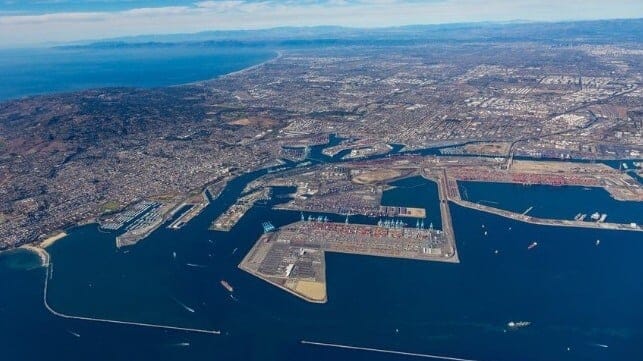
Maritime shipping is inherently a real-time optimization challenge. Vessel schedules shift mid-voyage. Ports operate under tight labor and equipment constraints. Weather, congestion and geopolitical disruption ripple across global networks. Even decisions that appear local to a terminal or fleet propagate across rail, trucking, warehousing and customer delivery commitments.
The industry has responded with better analytics and more computing power. Yet many of the most valuable planning problems remain difficult in a way that can’t be solved by adding more servers. In practice, planners narrow the scope, reduce the number of scenarios and/or accept “good enough” answers because fully exploring the decision space is computationally unrealistic.
This is where quantum computing shines – not as a replacement for classical systems, but as a complementary tool for tackling the hardest optimization bottlenecks in maritime logistics. The near-term reality is hybrid. Classical platforms manage data and workflows. Quantum routines are applied selectively to the most complex, constraint-heavy decisions.
The core challenge is not data volume
Maritime logistics handles vast amounts of data. The harder problem is how quickly the number of possible decisions burgeon as constraints accumulate.
Common maritime problems such as vehicle routing with time windows, multi-depot fleet scheduling, berth allocation, crane sequencing and container loading all fall into this category. Each is manageable in simplified form. Each becomes significantly more complex when real-world constraints are introduced, including tides, labor rules, fuel limits, emissions targets, yard congestion, and downstream intermodal capacity.
As variables increase, the time required to search for optimal solutions grows exponentially. Classical platform decisionmaking tools remain essential, but they impose limits. When disruption occurs, planners frequently face a tradeoff between solution quality and response time.
Quantum computing is directly applicable because it explores optimization landscapes differently. In hybrid workflows, quantum solvers can be used to evaluate candidate solutions or subproblems that are particularly difficult for classical methods, improving decision quality under time pressure.
Where quantum computing maps cleanly to maritime operations
Quantum’s early value in maritime applications comes from problems that share three characteristics: dense constraints, many interacting assets and clear operational costs when decisions are suboptimal.
Drayage route and fleet optimization are prime examples. Vehicle routing with multiple depots and delivery windows extends naturally to feeder coordination, drayage assignment and rail appointment planning. Even small improvements in these areas can reduce fuel use, improve on-time performance and lower operational friction.
Port operations are another strong fit for quantum computing. Berth allocation and crane scheduling directly affect vessel turnaround times and yard congestion. These scheduling problems involve sequencing tasks across constrained resources, a structure that aligns well with quantum optimization formulations.
Container loading and yard utilization also stand out for quantum applicability. Optimizing stowage to reduce wasted capacity while respecting stability, safety and regulatory constraints is computationally demanding, particularly when plans must adapt to late changes.
Example: Replanning under pressure
A container vessel is six hours from berth when conditions change. High winds reduce crane productivity. A yard equipment failure blocks access to key import stacks. At the same time, a rail operator advances its departure cutoff.
In a traditional workflow, planners simplify. They freeze parts of the schedule, reduce constraint sets and re-run heuristics. The resulting plan works, but often increases re-handles, extends truck turn times and/or pushes cargo into dwell.
In a hybrid quantum-classical workflow, the terminal’s digital twin still runs on classical infrastructure. But the hardest subproblem, combined crane, yard, and gate sequencing under the new constraints, is passed to a quantum optimization routine. The output is not a single answer, but a set of high-quality candidate schedules that are then validated against business and safety rules.
Momentum in ports and logistics hubs
Maritime shipping is not waiting for fault-tolerant quantum computers to begin experimentation. Ports and logistics hubs are well suited to early pilots because optimization outcomes can be measured directly in throughput, turn times, and asset utilization.
In Los Angeles, a public initiative at Pier 300 combined quantum computing with AI to optimize terminal operations. In Dubai, logistics leaders such as DP World have publicly acknowledged exploring quantum technologies as part of broader smart trade and digital infrastructure strategies.
The emergence of maritime-focused quantum forums in the UAE further reflects growing ecosystem engagement endeavors. These efforts are not about immediate large-scale deployment, but about building familiarity, technical fluency and realistic expectations.
Why abstraction matters for shipping teams
One of the biggest barriers to quantum adoption is not hardware maturity. It is software accessibility.
Many quantum frameworks still require developers to work at the gate or circuit level, which requires effort and specialized skills. For maritime organizations, this is impractical. Operations teams need to express routing, scheduling and loading constraints in a way that reflects business intent. Model-based approaches address this gap by letting the developer model the problem in an accessible language, then translating the resulting code into a format that a quantum computer can use. This reflects traditional developer practice and helps future-proof early investments.
What maritime technology leaders should do now
Quantum computing will mature incrementally. The most effective strategy today is structured preparation.
First, identify optimization-heavy workflows where current methods consistently rely on simplifications or slow re-optimization cycles. Second, plan explicitly for integration with existing TMS, WMS, ERP and port operating systems. Third, invest in modeling skills rather than gate-level quantum expertise. Finally, leverage partnerships across software providers, cloud platforms and hardware vendors to reduce risk and accelerate learning.
Conclusion
Maritime shipping operates in a world of constant constraints. As networks grow more interconnected, optimization challenges become harder, not easier. That reality makes the sector a natural candidate for quantum-assisted decision-making.
The value proposition is practical: faster replanning under disruption, better asset utilization, and more reliable service commitments. Early initiatives in ports such as Los Angeles and Dubai show that the industry is engaging deliberately and pragmatically.

that matters most
Get the latest maritime news delivered to your inbox daily.
For maritime leaders, the question is not when quantum computing will replace existing systems. It is how to position your organization so that, as the technology matures, you are ready to apply it where it delivers measurable operational advantage.
Simon Fried is Vice President of Corporate Communications at Classiq.
The opinions expressed herein are the author's and not necessarily those of The Maritime Executive.
