


Op-Ed: People Are the Powerbase of the Shipping Business
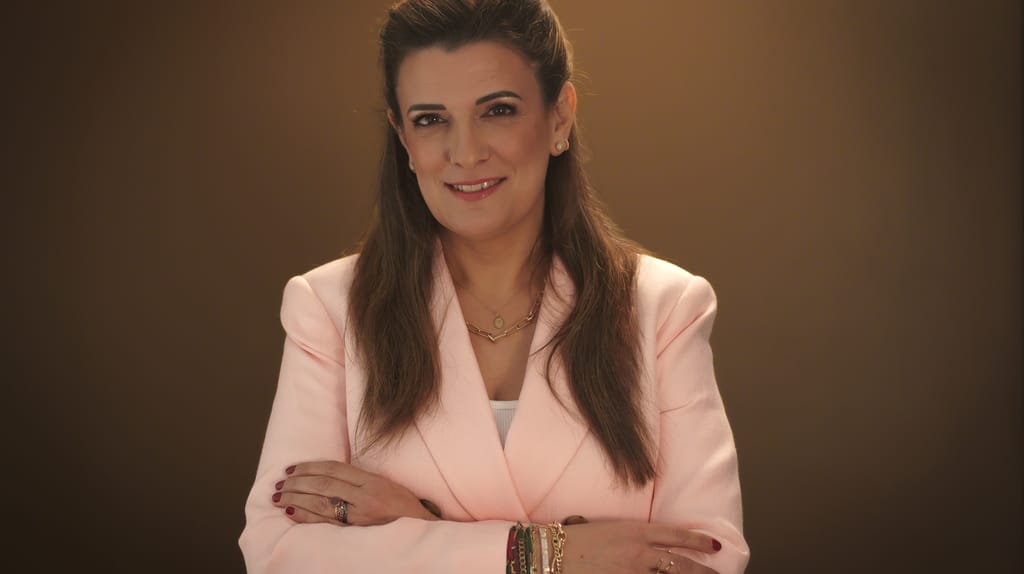
Decarbonisation, digitalisation, shifting patterns of global trade and an increasing level of influence from Asia are continuing to reshape the shipping, logistics and trading sectors. With this year’s WISTA International AGM and Conference taking place in Kuala Lumpur, the association’s president, Elpi Petraki, explains why there are important lessons to learn from the region as the challenges facing the industry demand more than new technologies and innovation.
As the world’s largest maritime market, Asia offers an extraordinary degree of maritime capabilities and specialities. It is home to the world’s leading shipbuilding nations, some of its largest ports, many major shipowners and a multitude of maritime service providers. Its financial centres are globally significant, while regional governments are powerhouse investors in decarbonisation, digitalisation and emerging technologies.
According to Clarkson’s Research and United Nations Trade and Development (UNCTAD), China, the Republic of Korea and Japan accounted for 91% of ships completed globally in 2025. Meanwhile, Singapore retained its position as the world’s leading maritime centre for the 13th year running in the 2026 Xinhua-Baltic International Shipping Centre Development Index (ISCDI). And the Philippines remains the world’s largest supplier of STCW-certified seafarers, with approximately 460,147 active Filipino seafarers according to the 2026 BIMCO and International Chamber of Shipping (ICS) Seafarer Workforce Report.
As such, Asia’s influence on international shipping is growing. Across the region, new technologies and operating models are being developed, tested and deployed, with innovation seen in digital twins, AI and autonomous vessels, and in alternative fuels and smart-port infrastructure.
China, Japan, South Korea, and hubs such as Singapore, are also providing real-world environments for developers to move from concept to reality. While Hong Kong, Malaysia and other maritime centres contribute critical expertise across finance, professional services, ports and logistics.
But the scale of maritime operations and willingness to invest in new technology offer only part of the explanation for Asia’s success. Across the region, governments, industry and educational institutions are also coming together to form highly integrated clusters that invest not only in technology and infrastructure, but also in people.
This year’s Maritime Singapore Master Plan, for example, identifies the development of a future-ready maritime workforce as one of four key strategies through which it will continue its long-running success story. Several other government programmes are running to support new career pathways, upskilling and leadership development whose content includes modules specifically designed to encourage people to consider and nurture a career in the industry.
Regionally, the maritime focus is far from unique. In India, targeted initiatives such as the government’s Saga Mein Samman programme aims to create a gender equitable workforce, improve women’s welfare and significantly increase their participation in the sector, as it looks to achieve a 12% increase in the number of women employed in technical maritime roles by 2030. Similarly, the IMO-Republic of Korea SMART-C Women’s Project, provides specialised training and leadership skills development for women in fields related to digitalisation and decarbonisation.
In a region encouraged by sustained growth across the maritime space, these investments and collaborations are opportunities to attract new and more diverse talents to industry. They demonstrate a clear understanding that a maturing industry cannot prepare for the future without investing in the renewal and revitalisation of its workforce.
People are at the heart of the industry’s transformation, and success will be reliant on recognising this and securing access to the widest possible talent pool. Because maritime’s greatest asset has always been its people, and research consistently shows that diverse teams are more effective.
From advocacy to action
However, as I have said many times during my tenure as WISTA International President, inclusion is not about replacing men with women. Rather, it is about working together to empower everyone and acknowledging that women have the skills and experience to lead effectively, make decisions and address the challenges facing the industry.
Over recent years, the conversation around diversity and inclusion in maritime has changed. There is greater awareness of the challenges women face, better data on representation and growing recognition of the link between inclusive leadership, a future ready workforce and a strong, resilient industry.
WISTA International has played a key role in changing the narrative surrounding gender equity and equality in maritime and has worked closely with its partners to enhance research, professional development, leadership and collaboration across the sector. The 2024 IMO-WISTA Women in Maritime Survey has provided important benchmarks for monitoring progress, and the IMO-WISTA-WMU Gender Inclusive Leadership and Empowerment Training Course, for example, addresses the need for a stronger, more sustainable leadership pipeline.
There have also been encouraging signs that the industry is moving from simply understanding the importance of inclusion to embedding it within policy and professional standards.
The 2024 Women in Maritime survey indicated a modest increase in the number of women in C-suite positions in multiple sectors and found that companies with women in leadership positions were also more likely to have policies in place that enhance diversity and inclusion.
Elsewhere, few can be unaware of the 2017 and 2021 surveys conducted by WISTA International, Anglo Eastern, the International Seafarers Welfare and Assistance Network and the International Chamber of Shipping, and the shocking levels of bullying, harassment and sexual assault women working on ships experience. Accordingly, STCW Code amendments which - from 1 January 2026 - made training to prevent and respond to violence and harassment mandatory for all seafarers are wholly welcome.
This represents an important shift. Now, creating a safe and respectful workplace is no longer simply a matter of individual commitment or corporate policy; it is recognised as part of the professional standards required for those working at sea.
But awareness alone is not enough. The challenge that remains is how to turn recognition into lasting change and create the conditions in which women and other under-represented groups can join and succeed in a maritime career. That means continuing to challenge assumptions, investing in skills and leadership development, and making inclusion integral in how organisations operate rather than something to be discussed separately.
Greater visibility and representation are important, but we must be careful not to confuse visibility with equality, or progress with completion.
The next chapter
The upcoming WISTA International AGM and Conference in Kuala Lumpur comes at an key moment for the shipping, logistics and trading sectors. Co-hosted by WISTA Hong Kong SAR China, WISTA Malaysia and WISTA Singapore, the conference reflects WISTA’s long-standing commitment to collaboration and will bring together perspectives from across the region to advance conversations around sustainability, technology and inclusive leadership.
The maritime industry is changing. We have more data, greater awareness and a better understanding of the important role diversity and inclusion play in shaping the future of the industry.
The global maritime industry can also learn a lot from Asia, where long-term investment, structured approaches and coherent responses to opportunities have played a profound role in shifting the centre of global economics.
But for WISTA, it has never been about just one president, one conference, or even one initiative. It has always been about working together to enhance diversity and inclusion, and to create an industry that empowers and respects everyone.

that matters most
Get the latest maritime news delivered to your inbox daily.
As my presidency comes to an end, I encourage the industry to continue to listen, to learn, to collaborate and remember that people are our greatest asset. For when our goals are clear and the frameworks supporting equity, equality and diversity are robust, we can create the conditions for meaningful and lasting change.
Elpi Petraki is President of WISTA International.
The opinions expressed herein are the author's and not necessarily those of The Maritime Executive.
