


Panama Canal Traffic Up While ACP Downplays Reports of High Auction Prices
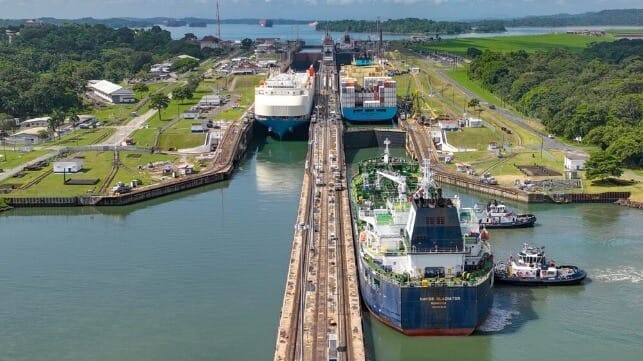
The Panama Canal Authority (ACP) said it is working to handle increased demand since the start of the Iranian war, the closure of the Strait of Hormuz, and shipping avoiding the Red Sea. While reporting a just under four percent increase in the number of ships transiting the Panama Canal during the first six months of its fiscal year, it, however, also revealed that the average auction price for slots soared 185 percent between March and April.
The ACP confirmed that demand has been strong in recent months, saying the daily average number of transits was 34 in January and rose to 37 in March. It said peak days have recently surpassed 40 transits.
It emphasizes that it offers several advance reservation mechanisms, as well as last-minute reservations, with the majority of vessels making the transit with their reservations. However, the ACP also makes available via an auction mechanism between three and five transit slots per day.
During the drought during the first half of the FY in 2023-2024, auction prices had soared, and long waits developed at the canal. In April, the ACP reports the prices are again up, with an average of $385,000 versus between $135,000 and $140,000 in March. Canal officials have sought to downplay media reports of exorbitant prices being paid, but according to data from Argus, the top auction price was $1.7 million for a Panamax slot this month and $4 million for a slot at the Neopanamax locks. The ACP confirmed “some vessels have paid over $1 million at auction,” saying these figures reflect “only temporary conditions driven by high demand.”
ACP reports the largest increase in the number of ships is coming from container vessels and LPG carriers. Overall, it says energy products are playing an increasingly important role in the volumes at the Panama Canal. In the first six months of the FY (October through March), it said the total number of ships was up 3.6 percent, while on a tonnage basis, it reported approximately a 5 percent increase.
"The Panama Canal is open and fully operational, thanks to the dedication of some nine thousand Panamanians who keep this waterway running," said Administrator Ricaurte Vásquez Morales. "Amid all the geopolitical complexities in the world today, the shifts and various factors affecting international trade, the Panama Canal remains open and reliable. With water levels currently at optimal levels, we are accommodating an ever-growing volume of traffic."

that matters most
Get the latest maritime news delivered to your inbox daily.
It emphasizes that despite the increased demand, it has been able to keep the waits and queues for transits low. The online dashboard currently shows 24 vessels (20 Panamax and 4 Neopanamax) waiting, with half waiting less than a day. The average wait, however, shows it is up from less than a day to 4.8 days northbound and from under 2 days to 3.8 days southbound. The longest wait currently is 15 days.
One of the major concerns is the water levels after the devastating impact of the last drought. Deputy Administrator Ilya Espino de Marotta, however, said during the briefing that they are monitoring water levels closely and that unusually heavy rainfall during the dry season was keeping the reservoir lakes at maximum levels. They are monitoring for the potential effects of a predicted strong El Niño later this year, and reports have said the plan is to maintain transits at the current levels despite the current increase in demand.
