


Panama Canal Preemptively Lowers Draft Levels Due to El Niño Forecast
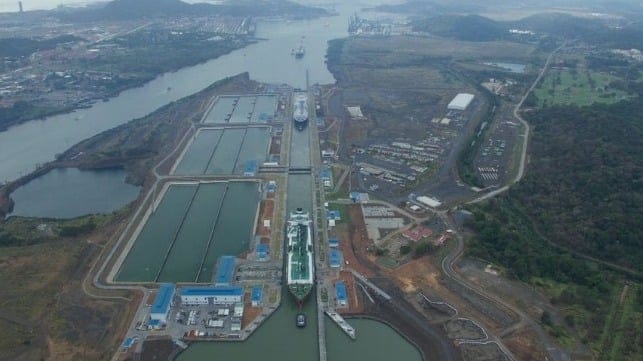
The Panama Canal Authority issued an advisory to shipping companies announcing that it plans to reduce the maximum authorized draft for the Neopanamax locks. It emphasizes that this is a precautionary step based on the lessons learned during the 2023-2024 water shortage and should have a limited immediate effect on shipping, but raises concerns as transit levels are at peak levels.
The restriction will lower the draft limit by half a foot to a maximum of 49.5 feet (15 meters), effective July 1. The authority reports that the decision is a precaution based on its experience and the current and projected water levels in Gatun Lake, which is the primary reservoir of the operations. As late as mid-May, the Authority had said it did not anticipate needing to start restrictions but that it was monitoring the situation carefully.
Panama had an unusually wet rainy season with the rainfall levels continuing into the typical day period. The authority also reported that, as early as December 2025, it was taking additional water-saving measures. The concern, however, comes from the increasing forecasts with almost a certainty that Pacific trade winds will weaken and water temperatures will rise in a phenomenon called “El Niño.” The National Oceanic and Atmospheric Administration (NOAA) and others are increasingly expecting a super season, with NOAA noting the last major events were in the 2015/2016 and 1997/1998 seasons and far exceed what was experienced in recent years, including 2023/2024.
The last El Niño in 2023/2024 severely impacted operations at the Panama Canal. They announced repeated steps lowering the draft to the 43-to-44-foot range and going to a low of 38.5 feet, but stopped the decreases by instead lowering the number of daily transits. It causes extensive delays at the canal and forced large container vessels to offload portions of the cargo and transship containers across the isthmus by train. Maersk suspended a route, instead having ships offload containers on each coast and transfer loads by train to another ship to avoid the ships making the transit.
The Panama Canal has already seen an estimated eight percent increase in traffic this year, reports the trade association BIMCO. It pointed to the increased volume of tankers and gas carriers, in part due to the closure of the Strait of Hormuz and increased U.S. exports to Asia, attempting to make up for the shortfall from the Middle East.
Online data from the Panama Canal show that as of June 5, there are 58 booked vessels waiting for transits and nine non-booked vessels. The wait time for non-booked vessels traveling southbound has skyrocketed to an average of 10.6 days. Northbound, however, remains at 2.2 days after peaking at 13.6 days in mid-May.

that matters most
Get the latest maritime news delivered to your inbox daily.
The backlog is likely to increase in the coming days as the east lane of the Gatun Locks is closed for dry lock maintenance from June 9 to June 17. Ships will have to alternate in a single lane, with transits scheduled to fall to just 16 booked slots through the Panamax locks. It is down by approximately half versus the normal operations of up to 40 transits per day between the Neopanamax and Panamax locks.
The Panama Canal Authority said its specialists are closely monitoring weather conditions. They will review projections weekly to assess the potential impact. They will continue to consider potential actions in the coming months to manage the possible challenge to operations.
