


Maersk and Hapag-Lloyd Restore Another Gemini Route to Suez
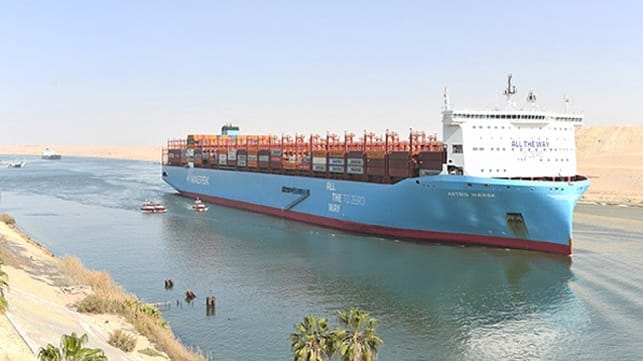
The slow transition of containerships back to the Suez Canal is continuing, with Maersk and Hapag-Lloyd reporting that an additional route of their Gemini Cooperation has been restored to the trans-Suez route. It is the first service the carriers have returned to the route since the Houthi rebels announced a blockade of Saudi Arabian vessels and resumed attacks in July.
The announcement highlighted a thorough assessment of the security situation in the Red Sea area. In the past, Maersk has warned that if the security situation deteriorated, it might revert to the Cape of Good Hope and that it had contingency plans in place. So far, the attacks have only been against tankers linked to Saudi Arabia, although this weekend, there were reports of attacks also on neighboring ports.
The Gemini Cooperation route AE19, which runs from Asia to the Suez Canal and Port Tangier, is the latest to revert to the trans-Suez corridor, the carriers reported. It starts with the Berlin Maersk (17,480 TEU), one of the company’s newer vessels built in 2025, which is currently making its way from Malaysia.
The ship will be making stops in Egypt, which had come under attack last month by Iran, which was targeting LNG vessels. The route will also include a stop in Jeddah, Saudi Arabia. Maersk also reported that Gemini’s AE15 route, which had returned to the trans-Suez route last month, will also now be adding a stop in Jeddah.
Maersk emphasized the Suez routing as the “faster, most sustainable, and most efficient way” for its customers. It said it would provide more efficient transit times for customers. To allay any customer fears, it notes that it offers Maersk Cargo Insurance as an option.
For the carriers, the resumption of the trans-Suez routing is double-edged. They save distance and cost and speed up transits, but it is also likely to free up capacity that was required for the longer routes. The capacity could come at a time when the industry is already concerned about excess availability.
Maersk advises customers that it will continue to study the routes and anticipates a gradual return to a trans-Suez network. However, it says it does not have any plans for immediate further changes or a specific timeline for the returns. So far, it has only returned secondary routes that feed into the Mediterranean to the Suez, leaving its flagship routes to Northern Europe to transit around Africa.
Some other carriers have also carefully moved back into the Red Sea and Suez. CMA CGM has operated among the most crossings, including sending some of its largest vessels through the Red Sea and Suez.

that matters most
Get the latest maritime news delivered to your inbox daily.
The defensive European operation EUNAVFOR Aspides marked 30 months and continues to patrol the Red Sea region. It reported that as of the start of August, it had supported over 2,260 merchant vessels. It said that 128 seafarers had been rescued in operations, while 19 UAVs, 2 USVs, and 4 missiles had been intercepted.
