


Two LNG Carriers Hit in Apparent Drone Attack on Egypt's Port of Damietta
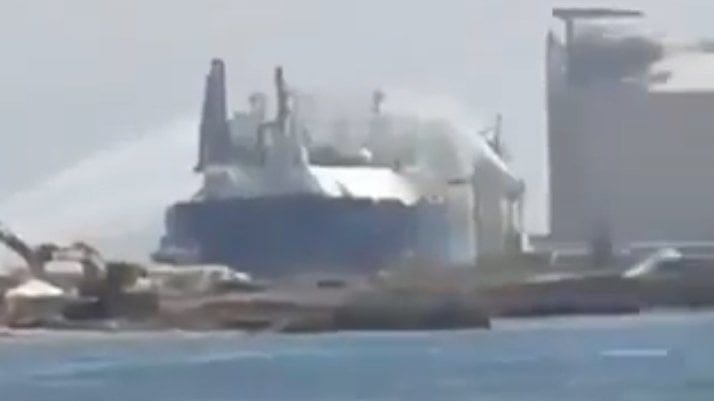
Two LNG carriers have been attacked in the Egyptian port of Damietta, which lies on the Mediterranean coast at the eastern end of the Nile Delta, in an apparent dramatic widening of the war in the region.
The Damietta LNG terminal originally was the export terminal for Egyptian-produced gas until domestic demand reduced the amount of gas available for export. But this week, Eni and TotalEnergies took the Final Investment Decision to develop the Cronos gas field in the Cypriot Exclusive Economic Zone, which will be connected to Damietta by pipeline to revive its role as an LNG export terminal.
Two dockside LNG vessels were hit simultaneously at 14.20 GMT on Wednesday afternoon. Both impacts caused fires, which local services were able to extinguish, and there were no casualties reported on either ship. The two ships attacked were the Bermuda-flagged LNG carrier Gaslog Salem (IMO 9638915), whose crew extinguished a small fire, and the Marshall Islands-flagged FSRU Energos Winter (IMO 9256614), which was moved off the quayside before the fire was extinguished.
The location of the attack was fortuitous: Egyptian harbor responders were quickly on the scene, both from the land side and with fire and rescue tugs. They were able to prevent what could have been a major disaster if the fire had spread on board either ship or to the terminal infrastructure alongside.
The Iranian Threat Network: A drone struck the U.S.-owned gas tanker Energos Winter at Egypt’s Damietta port pic.twitter.com/h6vZxhh9BV
— Basha ???? (@BashaReport) July 29, 2026
????????U.S.-owned LNG regasification vessel hit by UAV at Egypt’s Damietta Port
— Suppressed News. (@SuppressedNws1) July 29, 2026
The Marshall Islands-flagged ENERGOS WINTER FSRU, a U.S.-owned and operated LNG regasification vessel serving as Egypt’s fourth LNG import terminal, was struck by at least one UAV while docked at Damietta… pic.twitter.com/16GHms0Ilj
It is not clear yet which members of the Axis of Resistance launched the attack. There are three candidate perpetrators: Hezbollah, firing at a range of 300 miles, Iraqi Iranian-controlled PMF forces firing from Iraq at 750 miles range, and the Houthis firing from the launch sites in Hajjah or Amran Governorates at a range of 1,250 miles.
The relatively limited impact of the explosive hits on both ships suggested a drone attack, and that the size of the warhead had been reduced to meet the extended range requirement - suggesting a best guess that the drones had been fired by the Houthis at longer range.

that matters most
Get the latest maritime news delivered to your inbox daily.
Since Egypt has no conflict with the Axis of Resistance members, it is possible that the strike was orchestrated by Iran in an attempt to widen the war and drag other combatants into the fight. They have already sought to do so by mounting attacks on Saudi oil infrastructure from Iraq, which again cannot be characterized as retaliation, but more as a provocation and challenge.
The Saudis are now assembling a coalition of nations impacted by the disruption caused by the attacks in the Red Sea and beyond, not wishing to be drawn into a solely bilateral contest with the Houthis – which the Houthis would like as a means to improving their bargaining position in the ongoing peace negotiations to end the Yemeni civil war. Egypt is likely to be a prominent member of this coalition, having tried to minimize its ground role in Yemen in recent years.
