


Europe Doubles Down on the Arctic to Bypass Risky Red Sea Internet Route
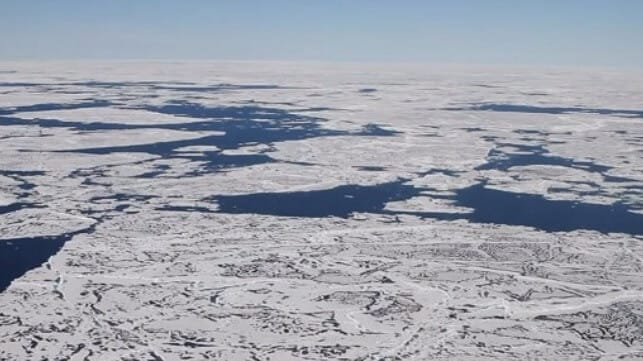
With growing instability in the Middle East, the European Union (EU) is considering using the Arctic as a bypass for its internet traffic. Over the past decade, Europe has been investigating the viability of the Arctic as a secure digital corridor. The war with Iran has accelerated these efforts, at a time when network engineers have already expressed concerns over the security of subsea cables in the Red Sea and the Persian Gulf regions.
Currently, around 90 percent of Europe’s internet traffic passes through the Red Sea. Europe sees this as a massive risk to its digital sovereignty.
In line with these concerns, the EU, in a report early this year, highlighted the Arctic as an important alternative. The report further called for the Arctic connection to be a prioritized initiative for Europe. Two connections are envisaged, which include the Far North Fiber expected to link Europe and Japan through the North-West Passage between Greenland and Canada. The second one is Polar Connect, which follows a more direct route through the North Pole, towards North America and East Asia.
The Polar Connect cable has received priority, and the EU has so far put in about $10 million for preparatory work. Overall establishment costs are estimated to be $2.3 billion. Some of the preparatory works include a route survey for the cable, planned for this summer. Nordic countries are taking a leading role in the project, and discussions are underway to involve Japan and South Korea.
The organizations participating in this early phase of planning include the Nordic academic network operators (NORDUnet), the Swedish Polar Research Secretariat, and the Nordic telco firm GlobalConnect Carrier. A report prepared by the consortium justified the Arctic route as the most effective solution for long-range transmission of large data volumes in Europe.
“Looking at the globe from the North Pole, it is obvious that a route through the Arctic region is the shortest between Northern Europe and Asia. Further, since the connections will pass through virgin territory, they will be fully independent from congested regions,” said the report led by NORDUnet. “For instance, the existing route through the Suez Canal and the Red Sea is used by multiple connections, which is a high-risk factor, even if the geopolitical tensions in that region had not existed.”

that matters most
Get the latest maritime news delivered to your inbox daily.
But Europe is attempting an Arctic subsea cable project where others failed, a subject that has raised viability concerns. The US-based telco provider Quintillion was initially formed to build a subsea cable from Japan to Europe via the North Pole. The company only managed to deploy a North Alaskan subsea cable. Quintillion has been recently acquired by the Alaskan telco company GCI after several years of operational challenges.
Quintillion’s cable suffered a major outage in 2023 due to shifting sea ice. Without an icebreaker, the repairs had to wait for months for the ice to disperse, which significantly affected the company's revenues. Europe might face a similar set of challenges, as there are no cable ships with icebreaking capabilities. Again, deploying a cable from Europe through the North Pole, passing the Bering Strait to reach Tokyo, will require at least two ships. One for cable laying and at least one icebreaker. This could drive up costs, not to mention that cable maintenance will also require almost the same set of vessels.
