
Strait of Hormuz Delays Are Translating into Downstream Production Losses
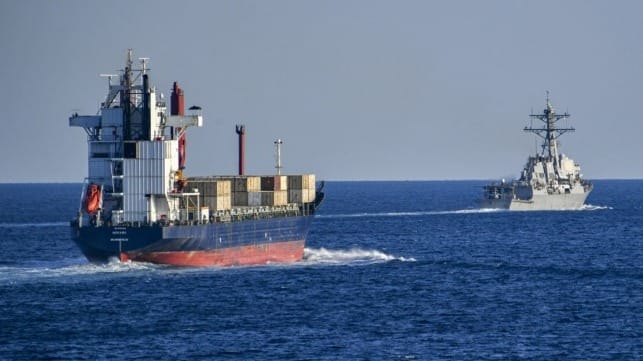
The disruption in the Strait of Hormuz is often described in geopolitical or energy-market terms: oil prices, LNG flows, naval posture, and regional escalation. That framing, while accurate, understates the more consequential development now unfolding across global industry. The principal risk is no longer simply whether cargo can move through the Strait of Hormuz, but how detention, delay, and uncertainty at this maritime chokepoint are cascading into downstream production losses far removed from the waterway itself.
In practical terms, the Strait of Hormuz is functioning as a delay amplifier. Cargo continues to exist, contracts remain nominally performable, and alternative routes are technically available. Yet transit times have stretched, detention risk has increased, and delivery schedules have become volatile in ways that downstream manufacturing systems—designed around predictability—are not equipped to absorb.
Detention Without Closure: The Operational Reality
Unlike a formal closure under international law, the current conditions in the Strait of Hormuz are better characterized as navigable but commercially unstable. Transits have dropped sharply, rerouting decisions are made on short notice, and war-risk premiums and security advisories frequently drive operational behavior more than any legal prohibition on passage.
Vessels may loiter, delay entry, divert mid-voyage, or await clearer guidance—not because transit is impossible, but because the commercial and insurance risk profile has shifted during performance. This distinction matters. Much of modern industrial production is not structured around absolute availability or non-availability of inputs; it is structured around timing. When inputs arrive late—rather than not at all—the downstream consequences are often more disruptive, and more difficult to allocate contractually, because supply chains depend on timing precision, so delays disrupt operations more than shortages and blur contractual responsibility.
The Transmission Mechanism: From Delay to Production Loss
The downstream effects of the Strait of Hormuz disruption are increasingly following a repeatable pattern:
Upstream detention and extended transit times: Cargoes of petrochemicals, ammonia, aluminum feedstocks, industrial gases, resins, and other specialized inputs are delayed or rerouted.
Loss of delivery certainty at destination terminals: Even relatively modest variances can result in missed berthing windows, port congestion, or storage bottlenecks at receiving facilities and reverberate beyond the port, disrupting scheduled trucking, rail transfers, and inland logistics networks that depend on synchronized cargo flow.
Plant-level disruption: Many downstream facilities—particularly in chemicals, fertilizers, metals, and food processing—operate continuous or near-continuous processes. Missed input timing forces partial shutdowns, underutilization of capacity, or costly re-sequencing of production.
Migration of contractual and insurance exposure downstream: What begins as a maritime delay is reframed as business interruption, delay damages, or force-majeure-based disputes between suppliers and buyers who never controlled the vessel or routing decision.
In many cases, the resulting losses exceed the value of the delayed cargo itself. The economic harm lies not in the goods, but in the idle productive capacity the goods were meant to sustain.
Why Delay Has Become More Dangerous Than Shortage
The current disruption exposes a structural feature of modern supply chains: they are far less resilient to timing instability than to outright scarcity. Strategic reserves, spot markets, and alternative sourcing can mitigate shortages, but do little to resolve unpredictability.
While energy markets have dominated headlines, more acute downstream effects are emerging in fertilizers, aluminum, and industrial gases—inputs several steps removed from the Strait of Hormuz but highly sensitive to delivery schedules. Delays in these inputs translate directly into agricultural disruption, construction and automotive slowdowns, and broader manufacturing inefficiencies. The result is not a single shock, but a rolling cascade of mismatched timelines spanning multiple industrial sectors, with compounded effects across interdependent production networks.
Legal and Commercial Consequences Downstream
From a legal perspective, the nature of the disruption complicates traditional risk allocation:
Force majeure defenses are weakened where performance remains technically possible but commercially degraded.
Delay-driven claims increase, particularly where production output or uptime commitments trigger liquidated damages.
Insurance disputes migrate from cargo loss toward business interruption (BI), contingent BI, and delay-in-start-up scenarios.
Downstream counterparties—often several contractual tiers removed from the vessel—may face real losses without clear contractual privity to the maritime decisions that caused them. This diffusion of risk is not well addressed by traditional maritime or supply-chain frameworks.
Mitigating Downstream Risk: Practical Steps for Corporations
Although companies cannot control geopolitical developments or maritime security conditions, meaningful risk mitigation is possible.
Contractual Alignment for Delay-Based Risk: Supply, shipping, and offtake agreements should be reviewed with specific attention to delay-driven disruptions, not just impossibility of performance. Clear treatment of prolonged delay, alternative performance, and production-based exposure can prevent losses from falling into contractual gaps.
Insurance Structure Review: Many companies discover only after disruption occurs that timing-based losses fall between cargo, marine liability, and operational policies. Coordinated review of cargo, business interruption, and contingent BI coverage is critical to ensure that upstream detention does not translate into uninsured downstream loss.
Operational Timing Resilience: From an operational standpoint, risk mitigation increasingly requires planning for input-timing variability, not merely alternative sourcing. Flexible unloading windows, diversified routing assumptions, and selective buffer inventory for time-critical inputs may significantly reduce exposure to production shutdowns.
By addressing these issues early—before delay crystallizes into production loss or dispute—companies can materially reduce uncertainty and protect operational continuity in an increasingly volatile maritime environment.
Conclusion
The most significant consequence of the Strait of Hormuz disruption may not be measured in barrels, tonnage, or freight rates, but in lost productive hours on factory floors thousands of miles away. As detention and delay replace outright denial of transit, risk is migrating downstream—from hulls and cargoes to plants, contracts, and balance sheets.
Understanding that shift is essential for companies assessing exposure, insurers evaluating claims, and counsel advising not only on what is moving, but when it arrives—and when it does not.

that matters most
Get the latest maritime news delivered to your inbox daily.
Moore & Van Allen PLLC attorney Gary English, a former U.S. Navy Surface Warfare Officer, focuses his practice on admiralty, maritime, and cross-border commercial matters. He represents global clients in all facades of international shipping and the international multi-modal transportation sectors. In addition to his 20 years with the Navy, he served for a decade as an in-house maritime attorney for Maersk Line, Limited.
Samuel Person is an associate on Moore & Van Allen's Litigation team. In addition to commercial litigation, he focuses his practice on transportation, infrastructure and logistics matters, working to develop practical solutions that address clients’ legal and business needs. Additionally, Samuel has experience defending motor carrier clients in high-risk cases involving death and catastrophic injury and advises motor carriers on risk management.
The opinions expressed herein are the author's and not necessarily those of The Maritime Executive.
