


Design for Large Ammonia-Powered Containership Achieves Key Milestone
Classification society DNV reports that it has awarded an Approval in Principle (AiP) to an emerging design for a 21,700 TEU ammonia-powered mega-boxship. This key step, which confirms the feasibility of the design and ensures no major technical hurdles to meeting class, comes as the shipping industry continues to flirt with ammonia as an emerging alternative power source.
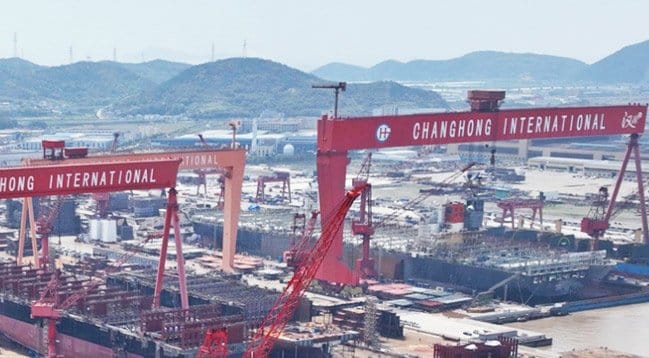
The design for the vessel was developed by a joint consortium of MSC Mediterranean Shipping Company, shipbuilder Zhoushan Changhong International, and CIMC ORIC. MSC has a long-standing relationship with the Chinese shipbuilder, which has built some of the company’s largest containerships currently in service.
“We are proud to see our 21,700 TEU ammonia-dual fuel design recognized with DNV’s AiP,” said Yin Xunbin, General Manager of CIMC ORIC. “This vessel concept offers shipowners an option for a high-capacity, energy-efficient, zero-carbon container ship as part of the next-generation sustainable global liner services. This milestone validates our commitment to providing future-ready vessels that meet global trade demands while reducing emissions.”
DNV reports the proposed 21,700 TEU container ship integrates the latest-generation of ammonia dual-fuel main engines alongside oversized C-type ammonia tanks. The hull design, with a new vertical bow, optimized stern, and hull lines, alongside low-resistance coatings, high-efficiency propellers, and energy-saving hydrodynamic features, targets improved fuel efficiency. Validation of the design was undertaken through CFD simulations and model tests.
The design has also been optimized for a high load-to-capacity ratio and efficient hold utilization. In addition, the twin-island deck layout and foredeck design allow additional 40-foot container bays to increase cargo capacity while maintaining port and operational compatibility.

that matters most
Get the latest maritime news delivered to your inbox daily.
“Ammonia-dual fuel options are firmly in the decarbonization race,” says Norbert Kray, DNV Senior Vice President and Maritime Regional Manager for Greater China. “We have gone from concept to orders, and soon will see the first deliveries. The AiP demonstrates that the design is in line with industry’s leading safety and design standards, reinforcing confidence in ammonia as a viable fuel for large container vessels.”
The design reaches this key step in the process as the first ammonia combustion engines are poised to enter the commercial market. As the project develops, the consortium will proceed towards more detailed design and safety analyses, including ammonia mitigation and gas handling, and integration into the fuel system.
