


Canadian Coast Guard Fires Captain Who Willfully Disregarded Distress Call
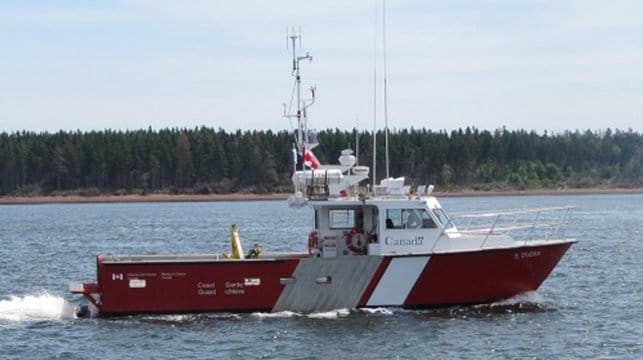
The Canadian Coast Guard disciplined a veteran captain with 18 years of experience, firing him after an incident in which it found he “willfully disregarded a distress call.” The captain, who still contends he did nothing wrong, lodged an appeal to Canada’s Federal Public Sector Labour Relations and Employment Board, which found that the Coast Guard had “just and reasonable cause to discipline” the captain and that the termination was “justified.”
The board, in its synopsis of the decision, writes that upon hearing the distress call, Captain Lou Callaghan turned down his radio, continued on his planned course for 17 minutes, and did not render assistance until he was specifically directed to. It concluded that willfully disregarding the distress call was misconduct that justified discipline. Further, it concluded that Callagan’s actions were significant both in terms of the Coast Guard’s reputation and public safety.
Callaghan was commanding a fishery protection vessel named S. Dudka that was based on Prince Edward Island. The patrol boat is 31 gross tons and approximately 15 meters (49 feet) in length with a crew that day of three plus the captain. CBC and The National Post reconstructed the events of the day in their reporting, drawing from the board’s report, which was released after its January 30 decision on the case.
The boat was on a patrol on May 13, 2024, when a distress call went out at 0826 for a fishing boat with five people that had gone aground in Malpeque Harbour on the northwestern coast of Prince Edward Island. The call had come from a second boat that was attempting to aid the grounded boat, and according to the reports, it was a dangerous situation as the tide was coming in and waves were crashing over the boat, which was being used to retrieve mussels. The five people aboard the sinking boat climbed onto the roof of the boat as it was taking on water.
It was alleged that Callaghan ignored the call and lowered the volume on the patrol boat’s radio. He later told investigators that he did not hear the first call, although the other three crewmembers reportedly said they had heard the call and asked if they were responding. A second mayday was issued at 0833 with the position of the sinking boat, and according to the reporting, the captain waited approximately 10 more minutes before calling the marine communications center asking whether they should respond.
He reportedly asked the center if the situation was under control and was told it would be “great” if he could respond. They allege he waited another five minutes before being told for a second time by the center to go to Malpeque Harbor. They report it was not until between 0851 and 0855 that the patrol boat changed course, having to backtrack as it had passed the area and had not diverted from its course toward the boat in distress.
By the time the patrol boat arrived at the location, the five people had been rescued by the local fire department. They luckily were uninjured.

that matters most
Get the latest maritime news delivered to your inbox daily.
Callaghan told the investigators and asserted to the board that he committed no wrongdoing. He said Coast Guard vessels have to wait to be tasked before responding to calls. He also alleged he thought the patrol boat was 27 nautical miles from the position of the distressed boat when the reports say it was in fact between 6.3 and 9.6 nautical miles away.
The board accepted the testimony of the crew that the first distress call had been heard on the patrol boat. Callaghan said he did not hear the call, but that he might have lowered the volume if the radio was too loud. He reportedly blamed a faulty radio, an inexperienced crew, and said the S. Dudka risked also running aground in the difficult channel, according to the National Post’s recounting of the case.
The Coast Guard suspended the captain after the incident and later fired him. Callaghan had served for 18 years with an “otherwise distinguished service” history. He contended that he was made a scapegoat and railroaded and appealed to the board. The grievance was denied, and the board’s decision is final.
