


Chevron Plans to Buy Oil From Sable's Controversial Santa Ynez Unit
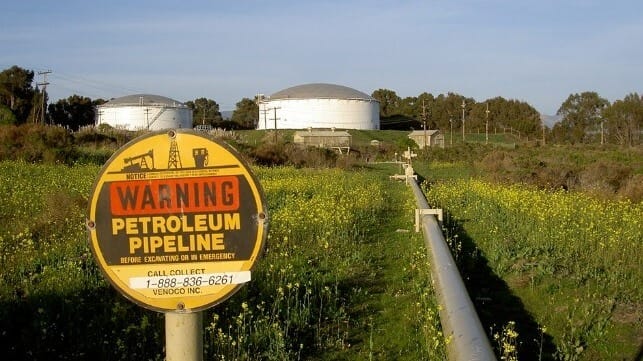
Houston-based Sable Offshore, owner of the Santa Ynez platform complex and pipeline in Santa Barbara County, has a buyer for its production. Chevron says that it will begin buying 20,000 barrels per day from Sable now that the Trump administration has approved a restart of the former Santa Ynez pipeline, the oil major announced Tuesday.
"We’re going to run Sable’s crude at El Segundo in April," Chevron president of downstream Andy Walz told Bloomberg. "We’re taking American crude oil, putting it in American pipelines, running an American refinery and selling those products to American motorists — and it’s going to be cheaper than importing."
The former Santa Ynez pipeline was shut down in 2015 after a significant oil spill caused by corrosion (under previous ownership). Sable bought the entirety in 2024 and has been seeking state permission to restart the line, now known as the Las Flores pipeline. In an executive order signed last Friday, the White House invoked the Defense Production Act to overrule California state regulators and allow Sable to bring production and pipeline exports back online.
California has filed suit to block the executive order and keep the pipeline shut down. The state claims that the White House decision "illegally asserts exclusive jurisdiction over two California onshore oil pipelines," which the state government has not given permission to restart. On Saturday, for extra measure, California's parks department ordered Sable to physically remove the pipeline from Gaviota State Park, which the line crosses. Environmental nonprofits have also filed suit to block the line's operations; the Environmental Defense Center (EDC) of Santa Barbara alleges that the aging pipeline is corroded, and should be more rigorously inspected before operations begin.
California has the highest gasoline and diesel prices in the lower 48 states, thanks to refinery closures, isolation from the rest of the U.S. energy market, and exposure to the demand signal from critically-undersupplied East Asian markets.

that matters most
Get the latest maritime news delivered to your inbox daily.
The state is heavily dependent upon imported oil, receiving more than 60 percent of its crude from foreign producers. It cannot source refined products or crude via pipeline from the rest of the country, and its isolated market has higher pricing, intrinsically linked to the Asia-Pacific refineries where California gets one-fifth of its refined fuel. Asia and Oceania currently face a serious energy crunch due to the disruption in the Mideast, with supply outages and rationing measures reported in Thailand, Sri Lanka and other localities. In a free-trading Pacific market, California competes with Asian buyers, with an effect on price: diesel prices at the pump in the state now average more than $7 per gallon, and climbing.
Top image: Dreamyshade / CC BY SA 4.0

