

CENTCOM Mirrors Naval Blockade With "Iron Gate" for Iran's Borders
US Central Command has announced a new land border task force to complement the effects of the US naval blockade on Iranian ships and ports.
Admiral Cooper, Commander CENTCOM, announced on November 7 the formation of Task Force Iron Gate, a small mixed civilian and military staff working within his headquarters in Tampa, Florida, whose purpose is to coordinate both military and civil agency efforts to prevent the movement of weapons systems, dual-use technologies, sanctioned materials, and illegal revenue streams, both across Iran’s land borders and the Caspian Sea.
Aside from the movement of a very small number of tankers carrying LPG, the naval blockade appears to be completely effective, and is thus shutting out 80% of trade which previously entered Iran by ship, principally through Bandar Abbas. Through bulk volumes alone, this blockade is having immediate impact, principally on the civil economy.
But the naval blockade does not impact financial transactions, and the IRGC is focused on getting high-value, low-volume imports needed by the IRGC’s military units into the country - a sanctions-evading task for which they have developed considerable expertise over the years in order to support proxy militias abroad. This material now needs to be delivered into Iran across the borders for which Task Force Iron Gate has been given oversight responsibility, a task they will no doubt be conducting in close coordination with the US Treasury’s Operation Economic Outcast.
One immediate impact of increasing US focus on the borders covered by Task Force Iron Gate can be seen in the Caspian Sea. Until now, merchant traffic plying the waters between Russia and Iran usually traveled with AIS systems switched on. In recent days, the approaches to Bandar Anzali, Nowshahr and Amirabad in the southern Caspian, and to Makhachkala, Olya and Astrakhan in Russian waters to the north are now devoid of any AIS signals. The only AIS signals showing up now in the Caspian are for East-West traffic between Baku in Azerbaijan and ports in Kazakhstan and Turkmenistan on the eastern seaboard.
Clearly, both Russian and Iranian vessels anticipate being under threat, though none of the other littoral states in the Caspian would entertain any intervention in the Caspian which used their air or sea territorial space. The sea route between Russia and Iran, employing ships flagged to either of these two countries, would be the safest route for the IRGC to use to bring in sanctioned and military-related material in volume.
Freight traffic on the railway routes into Iran through Turkmenistan, from Russia through the Inche-Burun border crossing and China through Sarakhs, has increased by as much as 40% in recent months. But the IRGC will not have confidence that the Turkmen authorities will be prepared to turn a blind eye to the movement of sanctioned materials.

that matters most
Get the latest maritime news delivered to your inbox daily.
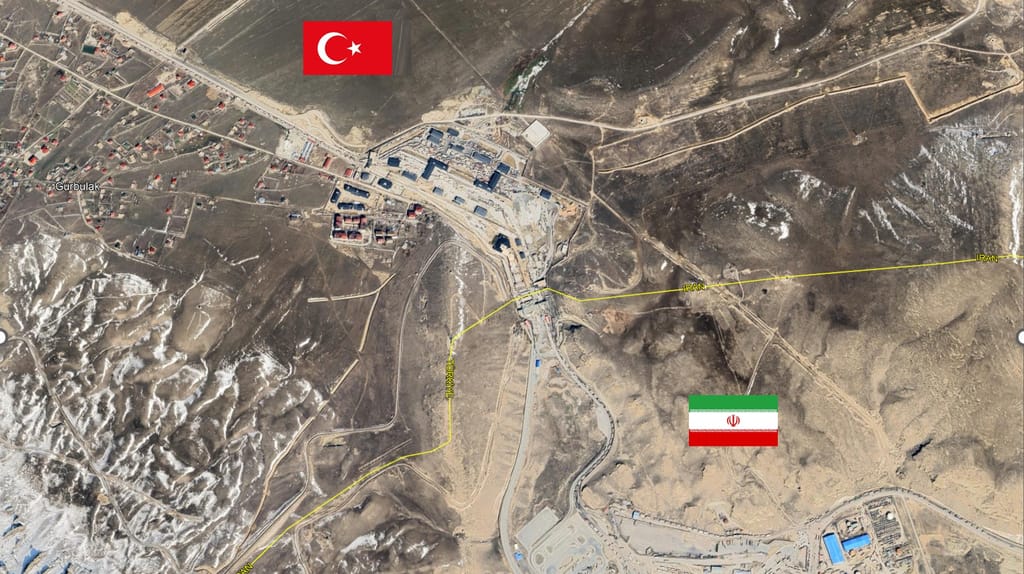
The biggest challenge presented to the Task Force Iron Gate staff is likely to be the truck traffic into north-west Iran from Turkey. Turkey, as a NATO member, is aligned with the United States - but it wants to remain on working terms with its neighbor Iran for practical purposes, and with Russia, with whom it shares in effect a sea border. Turkey is likely to stick to the rule book, enforcing United Nations and international sanctions.
Moreover, the Turkish authorities will probably be disinclined to put a priority on clearing the heavy congestion at customs posts along the Iranian border. Trucks are now apparently queuing for five days to get through the border crossing point at Bazargan, and practical limitations of moving freight over long trucking routes through difficult terrain in winter probably mean that volumes are never going to fully offset the impact of the naval blockade. But that still leaves plenty of opportunities for the well-practiced professional smugglers in the specialist IRGC logistic units to exploit the ambiguities and opportunities presented by dual-use materials, false-front companies and fraudulent customs paperwork.