

Arabian Sea Ports are Booming as the Conflict Drags On
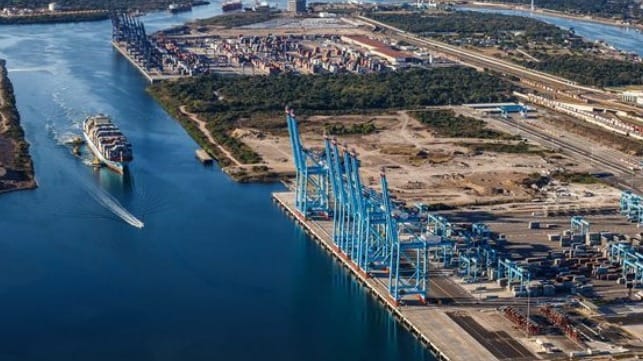
As the conflict in the Gulf continues, with shipping disrupted in the Strait of Hormuz, logistics companies are not waiting for the war to end and for peace to break out, but are instead adapting to the new risk realities. The world of commerce is always looking for new shipping and logistics routes to overcome obstacles, each striving for better ways of doing business than those offered by rivals and competitors.
In many respects, private enterprise is better at finding cost- and time-optimized solutions than government planners, tending to uncover better solutions more quickly than any government-led initiative would. The best solutions in these circumstances tend to be where private enterprise identifies the need, develops a new trade route, and then seeks government help to speed things up, removing obstacles and bureaucratic delays.
AD Ports Group and Gulftainer operate the ports on the UAE's Gulf of Oman coast, at Fujairah, Khor Fakkan and Dibba. TEU traffic from these ports to inland distribution centers, in particular Jebel Ali, has reached about 3,500 TEU per day, representing a 30% increase in traffic within 3Q26 alone. Since the war began in earnest, DP World has moved more than 1 million TEUs from Emirati east coast ports to Jebel Ali.
Inevitably, facilities built for smaller throughput have struggled to handle these volumes, and DP World is planning to build new container-handling and cargo facilities on the east coast at Al Rugaylat and Dibba. But in the meantime, ships are now having to wait for berths off Fujairah for about 9 days, with a further 15 days to get containers off the dockside. Such delays add massively to transportation costs, and these anchorages are also vulnerable to shorter-range IRGC drones.
Besides being farther away from IRGC drone launch sites, port facilities 'round the corner' on the Arabian Sea are faring better, because the ports in Duqm and Salalah were built to cater to substantial planned increases in traffic, and therefore have spare capacity immediately available. At the end of October, waits offshore at Duqm averaged 3 days.
Asyad, the Omani shipping and logistics group, is capitalizing on Duqm's advantages by introducing a green corridor from Duqm to AD Ports Group's Al Khalifa Port via the Khatm al Shiklah border crossing and the Al Ain Dry Port, with movements covered by an integrated customs clearance procedure. CMA CGM has operated a regular container service to Duqm since December 2025. The Duqm-Khalifa Port green corridor complements a similar green corridor that Asyad already operates between Sohar and Jebel Ali.

that matters most
Get the latest maritime news delivered to your inbox daily.
Even before the war, the port of Salalah, managed day-to-day for the present by A.P. Moller-Maersk, was enjoying substantial growth. It has been very busy as a major global transshipment hub, ranking third globally (and first in the Arab world) in the S&P Global Container Port Performance Index. Waits off Salalah are minimal, currently measured in hours. In the first half of 2026, 2.33 million TEUs were handled, an increase of 15% over the same period last year.
Also a surprising beneficiary of increased trade and changing traffic flows has been the port of Khasab on the Musandam peninsula. Being in the middle of the southern side of the Strait of Hormuz, Khasab might be thought to have suffered from a loss of shipping, and very little appears in AIS signals. But with guidance from Hutchison, the operator of the port at Sohar, and notwithstanding the war, tonnage shipped through the port has increased by 7% this year, carried generally on smaller coastal feeder ships, and mostly re-exported immediately to Ras al Khaimah and the UAE's northern emirates.