

Trump Administration Auctions Deep Sea Mining Areas at 20 Cents Per Acre
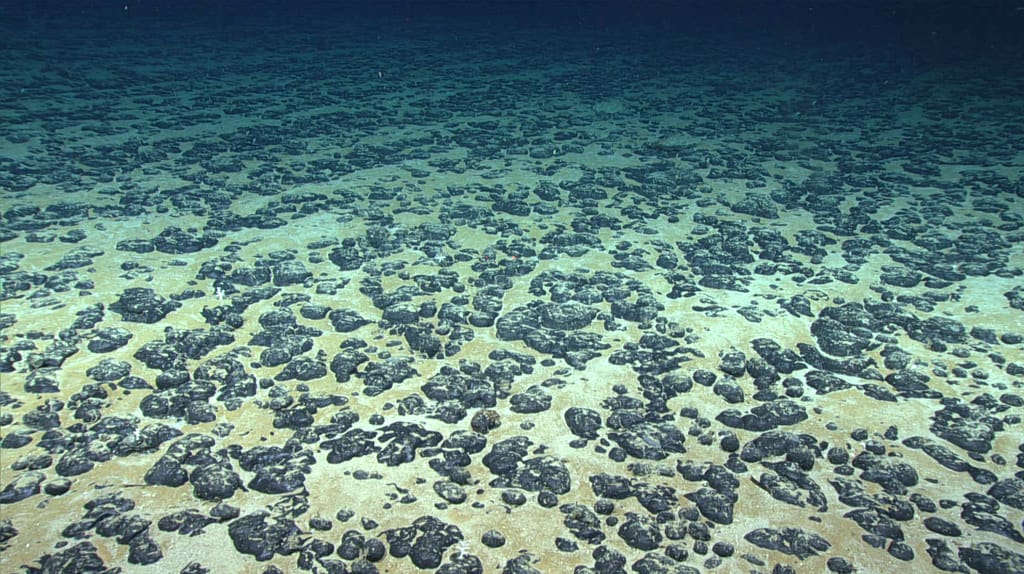
The U.S. Marine Minerals Administration (formerly BOEM and BSEE) has completed its first sale of a seabed mining lease area on the U.S. continental shelf, a landmark decision for aspiring resource extraction firms. The leases are within the bounds of U.S. law and territorial control, but run counter to the regulatory aspirations of the International Seabed Authority (ISA).
The oral live-bid auction included seabed acreage next to Rose Atoll, a remote, protected marine sanctuary east of American Samoa. The area may hold a substantial quantity of polymetallic nodules, as well as the species and ecosystems that have evolved around them.
The auction brought in revenue approaching 20 cents per acre for an area totaling 31 million acres. Taxpayers will also receive a royalty of two percent in the first five years of production, rising to five percent thereafter. The revenue gain is small, but for the administration, the primary goal is to secure a strategic domestic supply of critical minerals for the defense and tech industries.
“Critical minerals are essential to modern electronics, clean energy technologies and national defense,” said Acting MMA Director Mike Olsen. “A dependable supply chain helps American manufacturers withstand disruptions, and any future development would be subject to rigorous U.S. safety and environmental standards.”
To authorize the lease, MMA leveraged a provision of the Outer Continental Shelf Lands Act to hold a U.S.-only lease sale, outside of the supervision of the International Seabed Authority (ISA) - avoiding a thorny debate over how and whether ISA should authorize mining activity and the concomitant environmental risk.

that matters most
Get the latest maritime news delivered to your inbox daily.
Environmental concerns include the possibility that the seabed habitats targeted for mining will not readily recover after extraction. Polymetallic nodules support ecosystems that are not well-studied, and if removed, the habitat is altered semi-permanently; the nodules take about two to three million years to regrow. The other possible risk, conservation advocates say, is that mining sediment containing heavy metals could be spilled into the water column and spread to sensitive areas.
MMA noted that the lease auction is not a permit to begin work. The leaseholder gets permission to survey the area for resources and come up with a mining plan, which must then be reviewed and approved by the relevant federal agencies before extraction can begin.