

Europe Launches Prototype Vessel for Protecting Undersea Cables
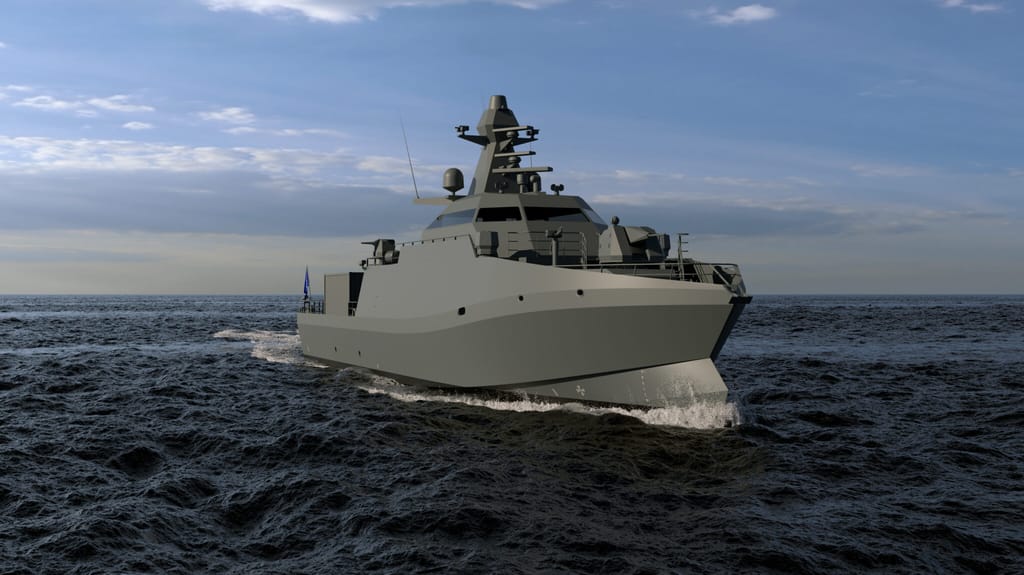
Europe has made a major stride in its quest to build a specialized vessel to protect undersea cables and other critical infrastructure in the Baltic Sea with the launch of the Euroguard, a semi-autonomous naval vessel designed to strengthen the bloc’s maritime defense capabilities.
Five years after the European Commission embarked on the Euroguard project, the bloc is announcing that Estonian shipbuilding company Baltic Workboats has completed the first modular warship prototype following the launch of the 45-meter (148-foot) Euroguard vessel.
Estonian President Ülle Madise christened the vessel at Baltic Workboats’ yard in Nasva. The vessel is now expected to proceed to the next phase of construction, which will involve outfitting, equipping with critical technological systems and conducting sea trials.
The European Commission is financing the construction of the Euroguard by contributing €65 million ($71.2 million) out of a total budget of about €95 million ($104 million). The project of building the vessel involves a collaboration between 23 enterprises and the cooperation of 10 Member States.
The consortium is under the leadership of Baltic Workboats and includes partners like France’s Naval Group and Thales, Italy’s Leonardo, Spain’s Navantia, Norway’s Kongsberg and Dutch shipbuilder Damen, among others.
“Europe's first modular warship prototype of its kind demonstrates that we are now capable of building military vessels. This project shows that even smaller allies can make a decisive contribution to strengthening Europe's collective defense capabilities,” said Margus Vanaselja, Baltic Workboats CEO.
Slated for completion next year, the Euroguard is being billed as a critical asset in Europe’s determination to strengthen maritime surveillance in the Baltic Sea. Specifically, the vessel will be deployed to protect undersea cables and energy infrastructure from sabotage, mainly from Russia. It will also be used to protect other strategic maritime routes across the bloc’s vast coastlines.

that matters most
Get the latest maritime news delivered to your inbox daily.
The vessel is 9.4 meters (31 feet) wide, has a maximum draft of 3.0 meters and is designed to carry up to 100 metric tons of payload. Critical is the fact that apart from protecting undersea infrastructure, the vessel can carry out other missions including maritime surveillance, mine detection and clearance, and search and rescue.
Being a semi-autonomous prototype, the vessel can operate with or without a crew on board, with its capabilities including autonomous navigation, threat detection, secure communications and remote operation. Its hybrid propulsion system, which has a minimum speed of 20 knots, is designed to ensure environmental sustainability.