


Philippine Coast Guard Orders Salvage Operation After Fatal Ferry Fire
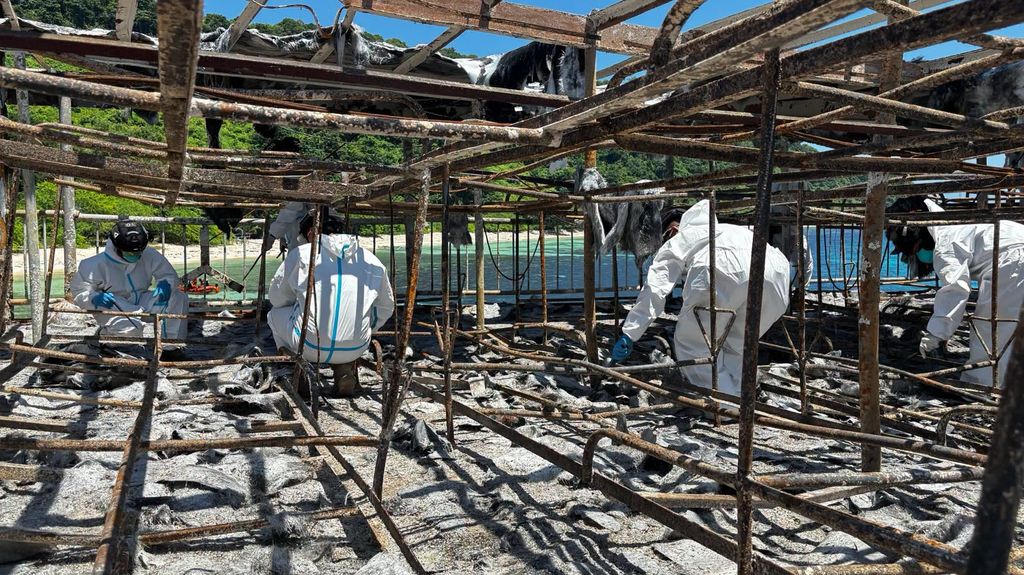
The Philippine Coast Guard has completed its search of all passenger spaces aboard the burned-out ro/ro ferry June Aster, which caught fire off Palawan last Wednesday and subsequently ran aground. PCG responders have now fully searched the bridge, crew accommodation, economy passenger berthing and air-conditioned passenger accommodation areas, and are about two-thirds of the way through the cargo decks.
So far, a total of 76 bodies have been recovered. Escaping passengers awaking to the smoke and fire would have encountered rows of densely-packed, double-height bunk racks on the top deck and interior, photos provided by the PCG show.
"These areas have been 100% penetrated by our response teams. A secondary sweep will be conducted to ensure the recovery of any remaining evidence and other materials relevant to the ongoing investigation," PCG spokesperson Commodore Noemie Cayabyab said in a statement.
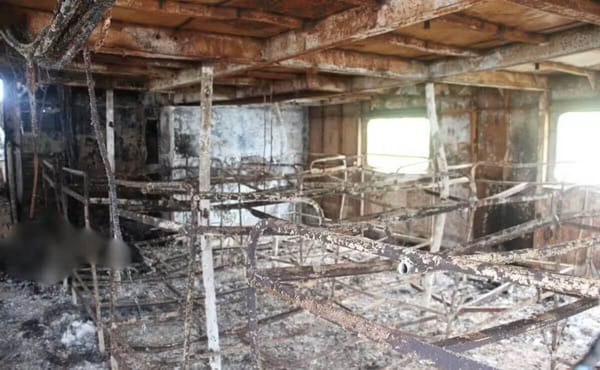
A body (blurred, left) is visible in this image of June Aster's passenger berthing. Upright pillars show signs of deformation from the fire (PCG)

that matters most
Get the latest maritime news delivered to your inbox daily.
The PCG has issued a letter of demand to the shipowner with instructions to appoint a qualified salvor in short order. The ship is aground, its hull integrity is in unknown condition, and it is taking on small amounts of water in the engine room. The PCG has been dewatering oily waste out of the compartment and storing it in containers, but it wants to conduct the ordinary transfer of responsibility for pollution-abatement and salvage to a qualified private contractor.
Damage to the vessel is extensive, and its structural integrity would need to be evaluated. Photos of the interior show that the fire swept through the car deck with intensity, burning off paint and leaving only steel and charred debris behind. Videos obtained by first responders on the night of the fire showed sections of the hull heated to such an intensity that areas glowed dully red, indicating steel temperatures in excess of 1,300 degrees Fahrenheit - consistent with the combustion temperature of burning cars. Steel heated to that temperature can warp and deform; depending upon the circumstances, key physical properties may also be altered by the heating and cooling process, according to DNV, creating an additional factor for salvage planning.
