


Russian Military Freighters May Be Slipping Intelligence Officers Ashore
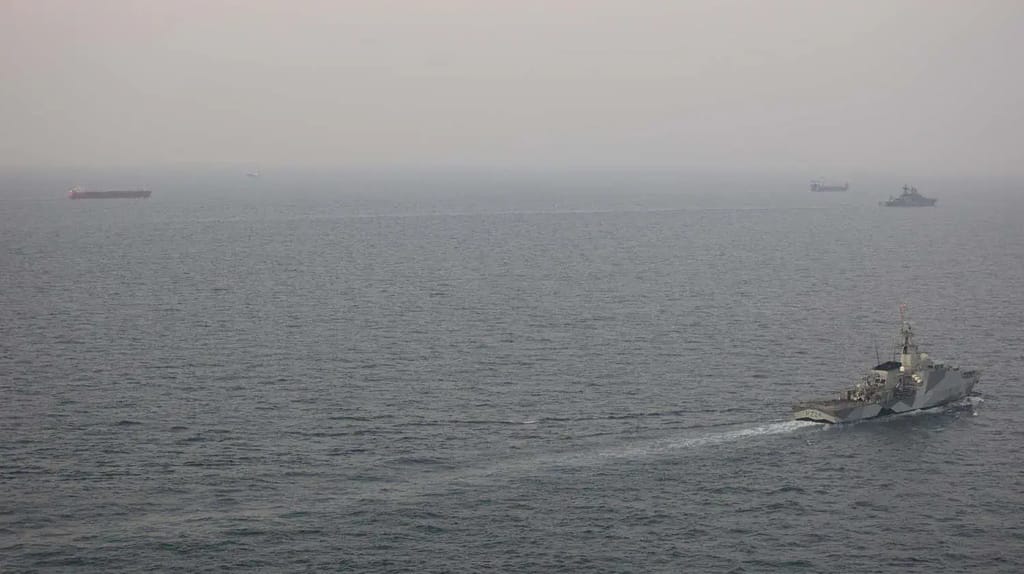
The Dossier Center, an investigative organization funded by the Russian billionaire exile Mikhail Khodorkovsky, has published the results of an investigation into suspicious passengers being carried aboard a fleet of civilian Russian-flagged cargo ships that move Russian military exports to countries in Africa. Besides transporting military cargos, these ships - once unloaded - have increasingly been seen at anchor off sensitive coastlines, often for months, and for no apparent purpose; the Lady Mariia (IMO 9220641) is currently anchored off Port Said, the Yuriy Arshenevskiy (IMO 8406705) is reportedly still dallying in the Dardanelles and the Lady D (IMO 9349289) spent months loitering off Famagusta.
There is a very well established pattern of movements of Russian cargo ships used to ship military equipment to Africa, primarily for use by the state-sponsored Africa Corps mercenary organization.
Ships typically load in the naval port of Baltiysk in the Russian Baltic exclave of Kaliningrad, and have made cargo runs in recent years to Conakry in Guinea, Bata in Equatorial Guinea, Lomé in Togo, Madagascar and to Tobruk in Libya. Cargoes unloaded in these coastal states are sometimes then run through to land-locked countries in Africa serviced by the Africa Corps, namely Burkina Faso, the Central African Republic, Niger and Mali, most of which used to host French garrisons.
All of the Russian-flagged ships identified as being involved in this military cargo trade are now sanctioned, and most belong to Astrakhan-based MG-Flot, including the Adler (IMO 9179854), Anastasiia (IMO 9349291), Ascalon (IMO 9198226), Baltic Leader (IMO 9220639), the Lady D and the Lady Mariia. Two other companies are also involved, the Moscow-based Oboronlogistika LLC operating the Ro-Ro cargo vessel Sparta (IMO 9268710), and the St Petersburg-based Baltic Freight Group operating the Yuriy Arshenevskiy.
The Dossier Center has identified 28 passengers who embarked at Kaliningrad, but were not apparently on board when the ship concerned returned to the Baltic. These passengers are ‘ghosts’ in that they have false names, which do not appear on common and easily-accessed databases in Russia, such as those storing driving license details, voter records or telephone directories.
These passports were issued by offices previously known to have prepared Russian Military Intelligence (GRU) documents, likely printed in an older format that lacks a biometric chip, and are numbered sequentially - as if produced in a batch. The passports have never been tracked again, for example through international Advance Passenger Information (API) systems, after having been used one time on the ship’s outward journey.
The Dossier Center’s explanation for the presence of these ‘ghosts’ is that they are on board to escort the military cargoes being delivered. But there should be no need to hide the identities of military personnel serving in such a routine role - nor does it explain why once the ‘ghosts’ disembark, their identities are never heard of or seen again.
Instead, it may be that once a ‘ghost’ disembarks – either en route or at the final destination – the individual then travels on to a further destination with another identity. This pattern of movement is consistent with the planting of an illegal agent in a target country, where there is a need to disguise how he or she entered. The GRU has made much heavier use of illegal agents since the wholesale expulsion of GRU officers with diplomatic cover from embassies across the world, in the wake of the 2018 attempted GRU murder in Salisbury, England of Colonel Sergie Skripal and his daughter Julia.

that matters most
Get the latest maritime news delivered to your inbox daily.
Use of cargo vessels by those seeking to leave a country either illegally or unnoticed is hardly novel, and many merchant captains will have encountered it. But for a national-level intelligence organization to use this method for the purpose of illegal agent insertion would be somewhat laborious, especially when the GRU could instead use military flights to smuggle in personnel. But the GRU’s operations have suffered some embarrassing public compromises in recent years, and the agency might see maritime transport as a safer bet.
The Dossier Center has a hostile view of the Putin-led government in Russia, but it is careful to outline quality evidence for its findings and employs investigators familiar with the internal workings of the Russian intelligence services. The likelihood is that the ‘ghosts’ on board these Russian-flagged cargo vessels, which often travel with AIS systems turned off and through international waters with military escorts, have a covert and potentially hostile purpose. This is of greater significance in an unstable world today than it might perhaps have been a decade ago.
The opinions expressed herein are the author's and not necessarily those of The Maritime Executive.
