


White House Weighs Iran's Proposal to Reopen Strait of Hormuz
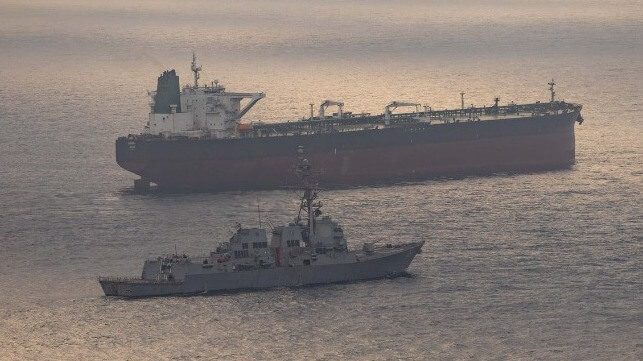
Iran's negotiating delegation has presented the White House with an offer to end the war and reopen the Strait of Hormuz, but with a price: the offer would be conditional upon pushing back the talks on Iran's nuclear program to an unspecified future date. If the Trump administration accepted, it would perpetuate the activities that the White House hoped to eliminate in launching the conflict4, notably including the continuation of Iran's uranium enrichment. The president does not like the Iranian proposal, multiple officials told the New York Times late Monday.
Under the plan, both Iran and the United States would relax their dueling blockades in the strait. That would allow commerce to flow freely to and from the Gulf states, restoring the world's access to Arabian oil - subject to the timelines needed for demining the waterway and rebooting shut-in oil wells. It would also allow Iran to fully resume oil sales to China, restoring the vital source of foreign exchange revenue that underwrites its military, its ballistic missile program and its nuclear enrichment activities.
Iran's foreign minister, Abbas Araghchi, went on a tour of regional capitals over the weekend to market the plan and hone the details. He flew to St. Petersburg to meet with Russian President Vladimir Putin, then to Islamabad, then on to Muscat, where (according to Al Jazeera) representatives from multiple foreign intelligence agencies were on hand to meet.
The White House has not confirmed the details of Iran's proposal, and a spokesperson told media that the administration will not negotiate through the press. The other option under consideration is to continue the U.S. blockade of Iranian shipping, hoping that the lack of tanker export capacity will force Iran to begin shutting in wells for lack of storage - potentially damaging its long-term production. The looming prospect of shut-ins will apply pressure to Iranian leadership to make a deal, this line of thinking goes; but it comes at a cost, as Iran will also continue its blockade of the Gulf's tanker traffic, limiting the world's supply of oil and keeping energy prices high. And opinions differ - inside and outside the administration - on whether the naval cordon's economic pressure will be enough to compel Iranian leadership to accept U.S. demands.

that matters most
Get the latest maritime news delivered to your inbox daily.
"The [U.S.] blockade was offered as a kind of silver bullet, but there is no such thing as a cost-free, purely economic solution to a fundamentally political and strategic problem the administration [is] facing with Iran today," said Danny Citrinowicz, a former head of Israeli Defense Intelligence's Iran desk. "All the talk about numbers, export levels, reserves, enrichment capacity, ultimately means very little if it does not translate into a change in Iranian positions in the negotiations. And at this stage, there is little indication that Iran is moving in that direction."
While the twin blockades continue, the oil market remains structurally undersupplied. In a research note published Monday, Goldman Sachs analysts raised their Q4 price forecast for the benchmark Brent contract to $90 per barrel, reflecting a prolonged supply shortage only partially offset by historic inventory drawdowns and demand destruction. In a "severely adverse" scenario in which the blockade runs through July, $120 oil is possible in Q4 if Gulf supply levels stay below normal, Goldman assessed.
