


Portugal Intercepts Maersk Boxship and Seizes 5 Tonnes of Cocaine
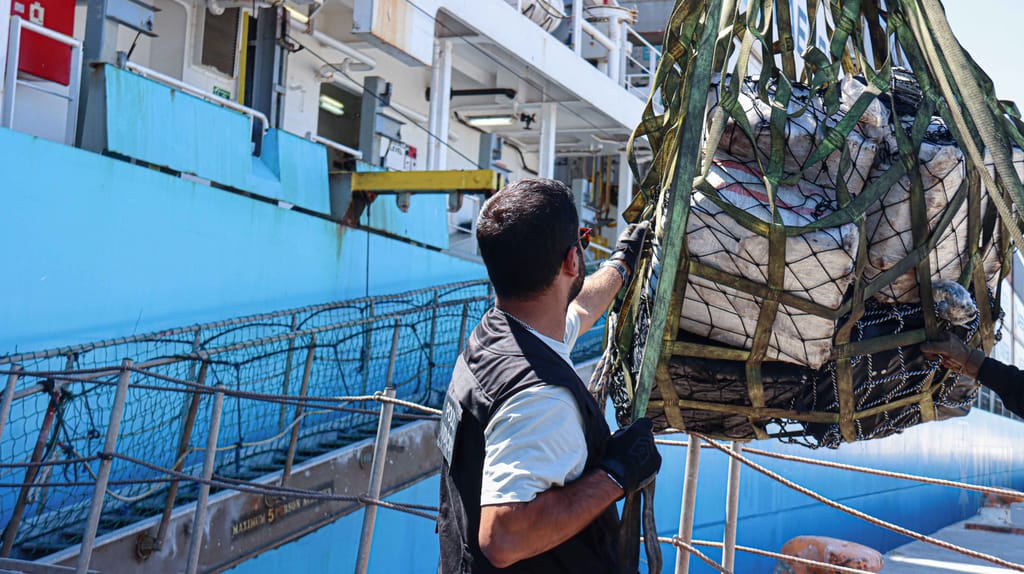
In a joint high-seas operation, Portugal's Judicial Police (PJ) and the Portuguese Navy intercepted a Maersk boxship in the Atlantic and diverted it to the port of Sines for inspection, resulting in the discovery of five tonnes of cocaine in internal compartments.
The vessel in question, Maersk Nokwanda, serves the banana-trade ports of Ecuador and the Colombian Pacific coast. These are some of the highest smuggling-potential ports of origin in the world, as cocaine trafficking gangs routinely piggyback on the banana supply chain to move their goods into Europe. On her most recent voyage, Maersk Nokwanda called at Posorja and Machala, Ecuador; Buenaventura, Columbia; Balboa and Colon, Panama; then crossed the Atlantic on an itinerary that would ordinarily take her to Tangier Med and other Mediterranean ports.
Instead, Portuguese military assets met her in the Atlantic off Vila do Porto, about 640 nautical miles west of Lisbon. On boarding, the authorities diverted the ship to the port of Sines, and they began an inspection. In interior compartments - appearing to be tanks or voids - they discovered five tonnes of cocaine in bales, plus equipment used in transferring the drugs at sea.
The team also found two stowaways who were aboard illegally and arrested them on suspicion of involvement in the shipment. Additionally, one crewmember was arrested for suspected collaboration with the smugglers.
The UK's NCA and Spain's Policia Nacional contributed to the bust, the Judicial Police said, and the Portuguese Navy and Air Force provided enabling assets.
Operação "Skydrop" liderada pela Policía Judiciária (PJ), acção de visita, abordagem, busca e captura de meios navais ("Visit, Board, Search, and Seizure", VBSS) envolvendo meios Marinha e Força Aérea Portuguesas, a 2 de Agosto de 2026, sobre o cargueiro Maersk Nokwanda (IMO… pic.twitter.com/pGlHAdm4c8
— Espada & Escudo (@EE_EspadaEscudo) August 6, 2026

that matters most
Get the latest maritime news delivered to your inbox daily.
The Judicial Police suspect that the smugglers intended to conduct a high-seas "drop-off" to transfer the drugs to fast-boat operators, who would then move the illicit cargo to the littorals of the Spanish or Portuguese coasts. This transport model is increasingly popular for smugglers looking to avoid heightened scrutiny at larger seaports, as it avoids all of the security measures that accompany port infrastructure.
These high-seas boat transfers sometimes get disrupted or go awry, leaving the cargo to float at sea or wash up on public beaches. Just last week, Portugal's Maritime Police found and seized two tonnes of abandoned cocaine near the Troia Peninsula.
