


US and UK Pile on Sanctions to Increase Pressure on Iran and Russia
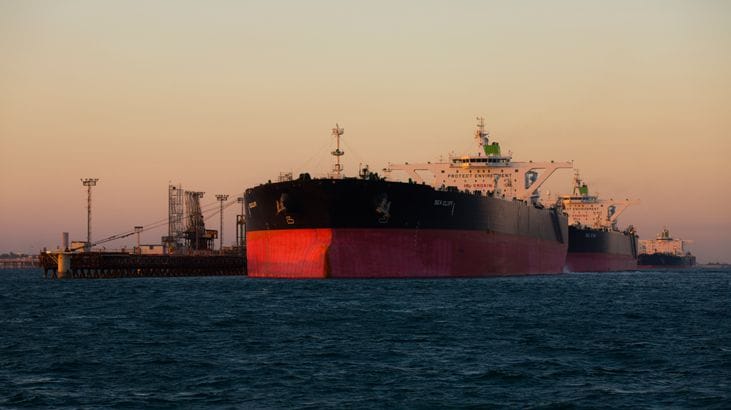
Sanctions remain one of the primary tools used by the West to increase pressure on both Russia and Iran. The UK launched its second package of sanctions in a week, going after Russia’s oil and financial interests, while the United States added sanctions targeting Iran’s petrochemical industry as part of the economic campaign launched in August.
The latest move by the United States was a coordinated action by the State Department and Treasury, with each taking aim at the shadow tanker fleet and petrochemical industry. The State Department said it was participating to further isolate the Iranian regime, including targeting a broad network of petrochemical traders based in Turkey and the UAE, as well as Iran. The Treasury Department said it was part of the program it dubbed Operation Economic Outcast, with its focus on more of the tanker fleet.
Treasury asserted that with the U.S. blockade of Iran’s ports and shipping, along with dwindling Iranian oil shipments outside the blockade, and its economic pressures, “the regime is running out of options to stabilize Iran’s failing economy.”
The operation is “taking action against remaining shadow fleet vessels that are continuing to evade U.S. sanctions by transporting Iranian petroleum and petrochemicals.” Treasury Secretary Scott Bessent asserted that the effort “effectively neutralizes the vast majority of Iran’s remaining shadow fleet.”
The action lists 17 additional tankers, with Treasury highlighting that the vessels involved are registered in more than a dozen jurisdictions and operate by an intricate web of international front companies. The vessels, which are mostly product tankers and LPG carriers, as well as two crude oil tankers, have flags including Comoros, Panama, the Bahamas, Mongolia, Palau, Cameroon, Zanzibar, Sierra Leone, Vanuatu, Hong Kong, San Marino, and Gambia.
While the U.S. asserted that the action targets “the vast majority of Iran’s remaining shadow tanker fleet,” the analysts at TankerTrackers.com wrote, “The only issue is: There are still 173 Iran-linked tankers which are not under US sanctions.” They pointed out that it was the first action in six weeks.
Treasury also took the unusual action of removing two vessels from its sanctions list. One, a containership formerly known as Hakuna Matata (IMO 9354167), was sold as of September and renamed Australian (80,282 dwt) under the Liberian flag. The second, also a 63,355-dwt containership, Pinocchio (IMO 9400112), was sold in August. The U.S. reports the buyers are non-sanctioned and U.S. aligned operators.
The State Department listed 10 entities, six individuals, and five additional vessels. In addition to the petrochemical traders, it targeted a customs broker based in India. It listed a Comoros-flagged LPG tanker managed from the UAE, three Honduras-flagged Asphalt tankers also managed from the UAE, and a product tanker flagged in Gambia and managed from the UK.
UK Adds Russian Sanctions
The recently installed UK government added its second sanctions package this month, calling it wide-ranging and saying it continues to target the sources of money for Russia and companies that support the war in Ukraine. The UK asserts that, with the addition of two more Russian oil companies, it now has over 90 percent of Russia’s total oil production capacity under sanctions.

that matters most
Get the latest maritime news delivered to your inbox daily.
It is adding 12 more oil tankers to the sanctions. The UK has over 600 vessels listed, including last week adding Russia’s newest Arctic LNG carriers.
The UK’s efforts also target crypto exchanges and two payment platforms that it asserts are helping to circumvent sanctioned financial services. The package also includes supplies of common goods, including machine tools, electronics, and materials used in the production of ballistic missiles and drones, on the sanctions list.
