


U.S. Launches New Wave of Strikes on Targets in Iran
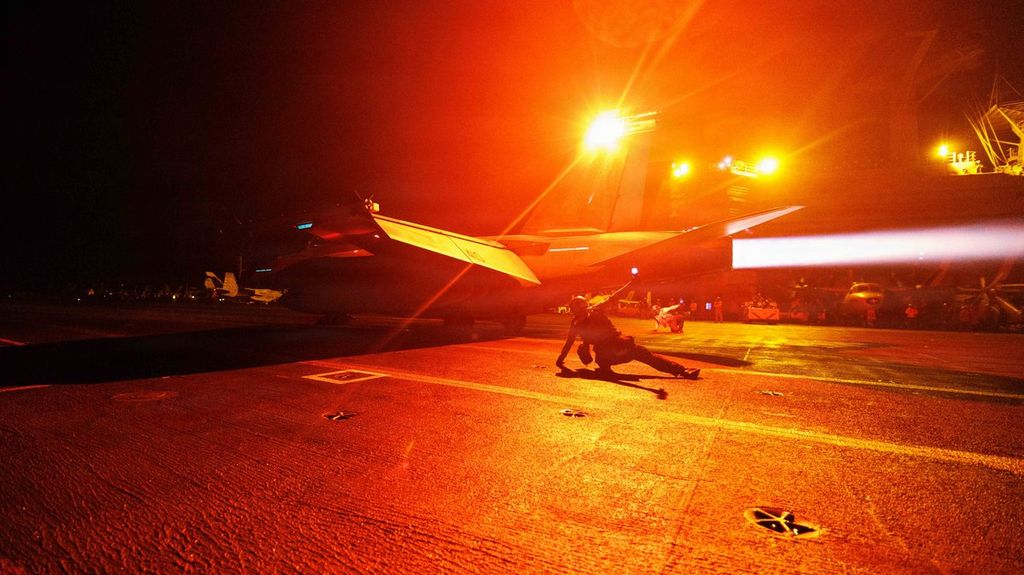
Overnight Wednesday, U.S. forces carried out another wave of strikes against targets in Iran, the fifth day in a row of a back-and-forth exchange of fire.
Targets in this wave included Iranian air defenses, missile and drone units, coastal surveillance facilities and command centers, all selected for elimination in order to reduce Iran's ability to target shipping in the Strait of Hormuz, according to U.S. Central Command.
Earlier in the day, Central Command's forces hit coastal defenses and missile launch sites on Iranian-occupied Greater Tunb Island in a rare daylight strike. Greater Tunb is one of three islands claimed by the UAE and held by Iran; its location has strategic utility for Iran's Islamic Revolutionary Guard Corps, which uses the island as a base for monitoring and controlling the Strait of Hormuz.
The president is said to be weighing options for further military escalation, according to the Wall Street Journal - potentially including a ground operation to seize Greater Tunb or the other disputed islands in the strait.
Amidst these ongoing hostilities and the persistent risk of new Iranian strikes on shipping, vessel operators have largely stopped using the southern transit route through Omani waters of the Strait of Hormuz. As of July 15, commercial transits were still occurring in limited numbers: Kpler counted 21 in total, including both AIS active and dark - but most chose to pass through the Iranian-administered northern lane, which runs past Qeshm.

that matters most
Get the latest maritime news delivered to your inbox daily.
Meanwhile, loading operations continue at Iran's Kharg Island oil terminal, according to Windward, with one tanker departing the eastern loading dock on Wednesday and another taking its place. 19 tankers are queued and waiting for later loading, providing Iran's oil producers with extra floating storage capacity. TankerTrackers.com estimates the total free tank space at present at roughly 60 million barrels, and more empty tankers will likely attempt to run the blockade to join the queue. As seen during the last instance of the U.S. blockade, tanker-based storage provides Iran with a runway to help smooth out the loss of export access and stave off the inevitable need to reduce production.
Between the start of the ceasefire period in June and the reimposition of the blockade, Iran managed to dispatch 80 million barrels of oil to market aboard "shadow fleet" tankers, according to TankerTrackers.com. All of it is bound for Asian customers. When the cargoes are sold and delivered, those barrels - worth about $6 billion - will keep funding flowing to the Iranian regime for months to come, helping to blunt the immediate economic effects of the blockade.
