


Study: Forced Labor Persists Aboard Fishing Vessels in South-East Asia
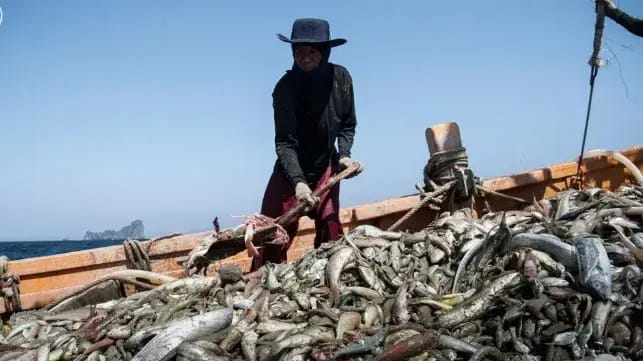
In Southeast Asia, some actors in the fishing and seafood processing sectors have long utilized various forms of forced labor to reduce costs. While there have been efforts to improve labor laws, a new report by the International Labor Organization (ILO) reveals that migrant workers continue to face labor abuses on board fishing vessels. The survey released last week is one of the largest of its kind, significantly expanding data available on migrant workers in the Southeast Asian fishing and seafood processing industries. The study is produced as part of ILO Ship to Shore Rights South Asia program, funded by the European Union (EU).
Migrant workers originating from countries such as Cambodia, Indonesia and Myanmar are recruited to work as deckhands onboard fishing vessels owned by China, Japan, Republic of Korea and Thailand. Using the ILO methodology for measuring forced labor, the study estimated that one out of eight migrant workers (around 13 percent) in the fishing and seafood processing sectors in the region were employed in situations of forced labor. This means that the migrant workers were working against their will and unable to leave their employment.
Forced labor was much more common among migrant fishers (20 percent) than seafood processing workers (0.4 percent). Notably, the study highlights that higher frequency of abuse was recorded on distant water tuna fishing vessels, where excessive work hours and extremely long periods at sea contribute to heightened vulnerability and coercive labor practices. In addition, tuna fishing is carried out in remote sea locations where law enforcement is limited, further exacerbating the risk for migrant fishers.
“Important advances have been achieved in increase adherence to international labor standards in the fishing and seafood processing industries in recent years. However, as the findings of this report clearly show, ensuring decent work for migrant workers is a regional challenge and much more needs to be done,” said Luisa Ragher, EU’s Ambassador to Thailand.
The blue economy contributes over 20 percent of the gross domestic product for some Asian nations. Out of approximately 62 million people working in fisheries and aquaculture globally, around 53 million work in Asia. The region is also home to the world’s largest fishing fleet, estimated to include 3.5 million vessels - equivalent to 71 percent of the global total, according to the UN Food and Agriculture Organization (FAO).

that matters most
Get the latest maritime news delivered to your inbox daily.
While fishing has historically ranked among the world’s most dangerous occupations, the industry last week achieved a safety milestone with coming into force of the Cape Town Agreement. Argentina became the latest country to accede to the treaty, helping reach the 28 countries needed for its implementation. The 2012 treaty will now come into force in 2027, closing a longstanding safety gap in the global fishing industry.
The Treaty sets out mandatory safety standards for more than 45,000 fishing vessels of 24 meters in length and above. This includes establishing binding requirements for vessel design, construction, stability, life-saving equipment and fire protections. Most of these standards are strictly enforced in merchant shipping, but fishing vessels were previously excluded.
