


Russian Dark Fleet Tactics on the Northern Sea Route
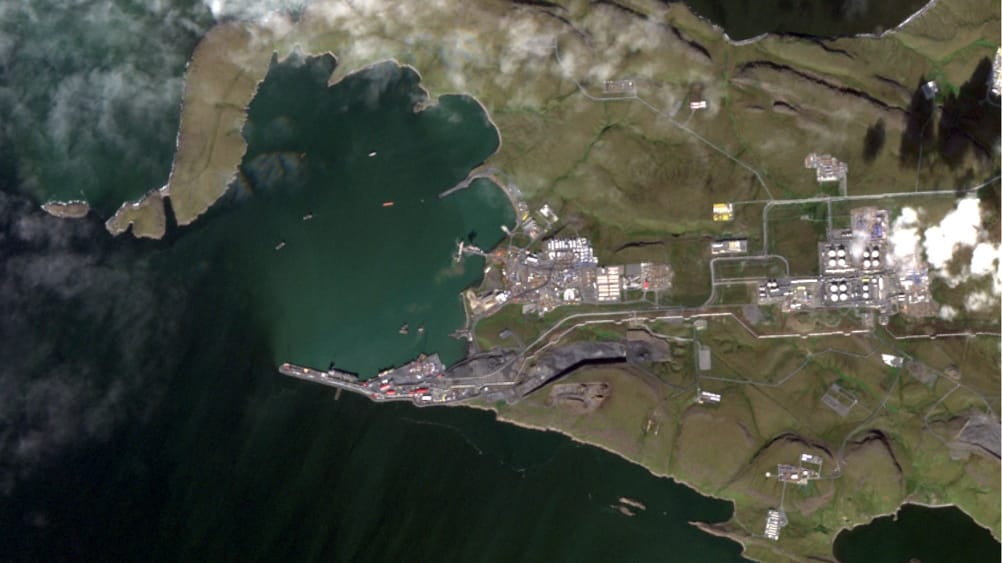
With the opening up of the Russian Northern Sea Route, exploiting the reduction in ice in the sea corridor running across Russia’s northern coastline, the way is now open for the movement of oil and LNG along a route firmly under Russian control, with reduced exposure to dark fleet interdictions by others, and with less risk of oil terminal attacks by the long-range Ukrainian sanctions program. This is in keeping with President Putin’s plan to develop the Trans-Arctic Transport Corridor in order to better tie together Russia’s Baltic region, the Arctic, and the Far East.
In future, Russian use of this route to move both oil and LNG will become more important, as pipelines are extended from the Volkhov region near St. Petersburg, where a number of trans-Russian pipelines already terminate, to Murmansk. But already the Baltic Pipeline System has a terminal in the far north at Varandey, and last month President Putin opened the Sever Bay Terminal, south of Dikson at the mouth of the Yenisei River, which will export output from the Gydan Arctic 2 LNG and Vostok Oil fields. The terminal lies at the end of a newly-constructed 500 mile pipeline built across the Arctic tundra.
The lead tanker in the Arc7 LNG class being built at the Zvezda shipyard to ply the Northern Sea Route (NSR), the Aleksey Kosygin (IMO 9904546) made its first journey to Sever Bay in December 2025, and its sister ship Pyotr Stolypin (IMO 9904675) will soon come on line too. But these two ships, plus feeder ships such as the shuttle tanker Akademik Gubnik (IMO 9842190) are already sanctioned, so the protection afforded by the use of the NSR only lasts the length of the corridor; standard dark fleet sanctions evasion procedures and Ship-to-Ship (STS) transfers need to be used thereafter, to protect the origin of the cargoes as they are delivered to China and other importers in SE Asia and further afield.

that matters most
Get the latest maritime news delivered to your inbox daily.
Dark fleet tankers heading East on the NSR from Primorsk, or post an intermediate STS in Murmansk, have hitherto used the relatively protected Nakhodka Bay to conduct STS transfers, with the Fokino base of the Russian Pacific Fleet not far away. The intelligence company SynMax has however spotted four dark fleet tankers, all sanctioned, conducting STS operations 65nm to the east of Chongin in North Korea, in an open area of the Sea of Japan. The tankers were the Omani-flagged Mirabel (IMO 9511521), passing oil to the Sierra Leone-flagged Lumin (IMO 9330599), and the Russian-flagged Jagger (IMO 9354301) transferring oil to the Cameroon-flagged Navistar (IMO 9296810).
As the loading of oil and LNG at Sever Bay ramps up, the use of this STS area (and Nakhodka Bay) is likely to increase, but unlike the Eastern Malaysia STS and anchorage box, this area of open sea is unlikely to be used to hold stocks afloat.
