
Caribbean Expects Large Cruise Season as Questions of Overcapacity Loom
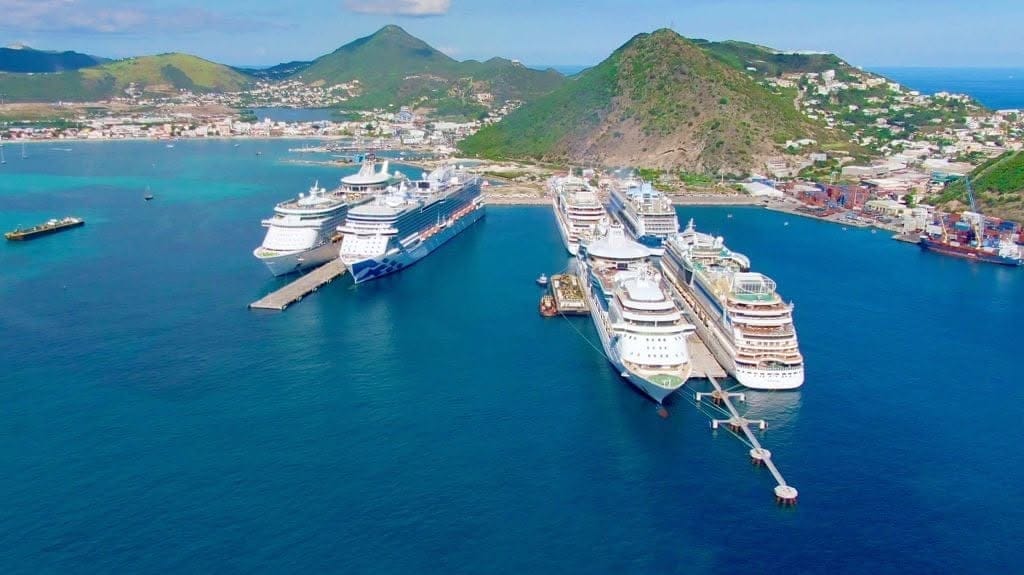
The Caribbean remains the cruise industry's most popular destination. The cruise lines are investing heavily in the region and continue to plan large new capacity additions, leading to questions about whether capacity is getting ahead of demand.
The modern industry got its start in the 1960s, with the Bahamas and the Eastern Caribbean being some of the earliest destinations. A seven-day run from Florida to ports including San Juan, St. Thomas, and the Dominican Republic became the backbone of the industry, earning the nickname of the “milk run,” and sixty years later it remains a staple of the industry. San Juan developed as a homeport as the popularity of fly-cruise grew, and a decade later, the Western Caribbean route, including Mexico, developed. Each remains at the core of the industry.
New data released by the Florida ports illustrates the market share that the Bahamas and Caribbean represent to the industry. PortMiami in FY 26 (October 2025 – September 2026) crossed a major threshold with a 23 percent growth rate, propelling it past 10.5 million passenger movements (embarkations and disembarkations). It is even more significant when Port Canaveral (9.18 million), Port Everglades (5.38 million), and Tampa (1.77 million) are factored in, with Florida’s cruise homeports collectively handling nearly 27 million passenger movements (approximately 13.5 million passengers). That is a third of the Cruise Lines International Association’s projection of 39.1 million cruise passengers worldwide in 2026.
Caribbean cruising makes up 71 percent of the market for Americans, according to a survey released by AAA, which bills itself as the largest membership organization and a leading provider of travel planning. It points to an overall growth of 57 percent in the number of American cruise passengers since 2019, with nearly four percent growth last year.
The survey highlights the proximity of the Bahamas and Caribbean destinations to the United States and the growth of the cruise line’s private destinations. Travelers pointed to the wider range of activities, entertainment, and dining options of the megaships sailing to the Caribbean as a key attraction.
The Caribbean is equally popular as a destination for international travelers from Europe and beyond. The Cruise Lines International Association (CLIA) says globally the Caribbean accounts for approximately 37 percent of the market. A travel advisor in the UK at Paramount Cruises, Patrick Hill, told Cruise Executive that in the first half of 2026, bookings for cruises from Miami and New Orleans accounted for more of his firm’s business than their Southampton, UK-based business.
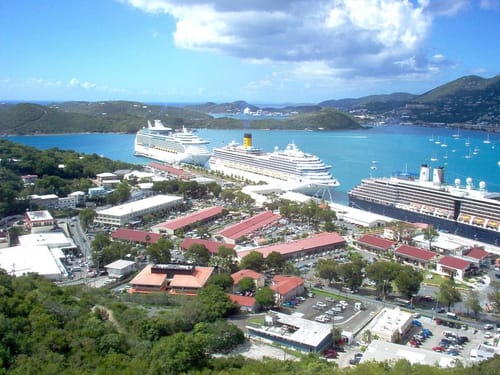
St. Thomas in the US Virgin Islands continues to be one of the leading ports (Virgin Islands Port Authority)
Another factor driving the surge in Caribbean business is the growth among the younger age bracket (25 to 34 years). Travel insurance provider Allianz Partners highlighted strong growth in the segment and strong enthusiasm for cruising. It said that among the younger adult travelers it surveyed, 72 percent who had taken a cruise were likely to book another cruise within the next 12 months.
PortMiami highlights that it is gearing up for its busiest year ever. During the 2026-2027 peak season, PortMiami reports its schedule includes 81 days when seven to 10 cruise ships will be in port. In addition to strong growth with the smaller, luxury cruise ships, PortMiami will become the homeport for Margaritaville at Sea Beachcomber (3,500 passenger capacity) in January, Carnival Firenze (4,126 passengers) in February, Norwegian Aura (3,879 passengers) in June, and Hero of the Seas (7,000 passengers) in August.
Port Everglades just saw the arrival of Legend of the Seas (7,000 passengers), which will homeport for the winter months, sailing to the Caribbean. Similarly, in Port Canaveral, MSC Grandiosa (6,334 passengers) arrived as part of MSC Cruises’ largest Caribbean deployment.
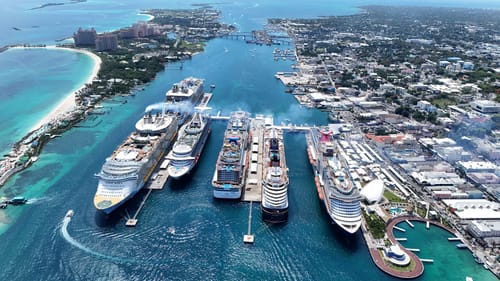
Nassau in the Bahamas, one of the cruise industry's first ports, set a new mark in June 2026 with over 33,200 passengers arriving in a single day (Nassau Cruise Port)
The surge in new ships, however, raised questions about overcapacity, which was further fueled by the cruise lines launching sales and promotions this fall. Goldman Sachs reported that cruise capacity would be up 11.5 percent for 2027, which means it is up 60 percent since 2019. CLIA, for example, points to a current growth rate for the industry of between five and eight percent, projecting that 40.3 million people will take an ocean cruise in 2027.
The frequency of the promotions led to reports that the industry was slashing prices. The Financial Times, for example, reported in October that the average price of a Caribbean cruise in January was down about 11 percent. Now there is a barrage of “Black Friday” sales appearing while travel advisors report lines are offering cabin upgrades, beverage or WiFi packages, onboard spending credits, and other bundles or incentives to attract bookings and not rely on discount fares.
Some of the promotions are factored into the business plan for the cruise lines. Some of the firms, such as Norwegian Cruise Line, are shifting pricing models. Norwegian says it will lead to steadier pricing and less close-in discounting to fill the ships. With low incremental costs, the cruise lines take great strides to fill the ships to capacity both to realize the onboard revenue streams and to ensure the flow of gratuities to contribute to the crew’s income.
Travel advisors point out that the cruise lines are working to further differentiate their offerings and also to drive bookings and support pricing. Patrick Hill notes that new ships give advisors a reason to start a conversation with travelers about a repeat cruise.
The private destinations have become a big draw for Caribbean cruises. Carnival Cruise Line reports that 3.5 million passengers visited its destination, Celebration Key, since it opened in July 2025 on Grand Bahama. Carnival has developed six destinations for its Caribbean, Bahamas, and Mexico cruises, and it is planning additional investments for Celebration Key that will increase total land-side capacity by 6,000 guests, with 3,000 added in each phase. Princess Cruises recently began sailing to Celebration Key in place of its destination on Eleuthera, as well as RelaxAway at Half Moon Cay, and the German brand AIDA will also make calls at Celebration Key. Similarly, after delays, Norwegian Cruise Line opened its waterpark at its upgraded Great Stirrup Cay. Royal Caribbean is investing in smaller beach clubs at select ports.
The cruise lines remain confident in the Caribbean. Royal Caribbean International, for example, reported that it will have a total of 11 cruise ships sailing to the Caribbean in the summer of 2028. This will include four of the world’s largest, the 248,663-gross ton Icon class ships.
MSC Cruises is also preparing for further growth in its Caribbean deployment. It points out that this year, for the first time, it has four cruise ships sailing from its MSC Miami Cruise Terminal. Its fourth World class cruise ship, the 215,863-gross-ton MSC World Atlantic (6,785 passengers), debuts in Port Canaveral in November 2027. The line also has orders to double the class to eight ships.
that matters most
Get the latest maritime news delivered to your inbox daily.
The orderbook points to long-term growth in the Caribbean. Carnival has three approximately 230,000-gross ton ships with accommodations for up to approximately 8,000 passengers on order at Fincantieri. Royal Caribbean has orders for three more Icons and one more Oasis class ultra-large cruise ship, and Norwegian has ordered five 227,000-gross-ton cruise ships, each with a capacity of at least 5,000 passengers.
The cruise lines are reporting record booking levels and have sold large portions of the capacity for 2027. Any short-term weakness or potential excess capacity, they believe, will be quickly filled, or, as the executives are fond of pointing out, ships can always be moved to other markets.