


Pirates Abandon Iranian Dhow After Being Hounded by EUNAVFOR for a Week
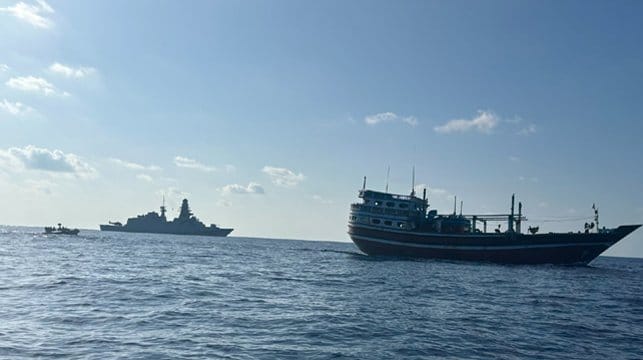
EUNAVFOR Atalanta is reporting that its forces confirmed that the suspected Somali pirates abandoned the Iranian-flagged dhow Al Waseemi after having held the vessel and its crew for nearly two weeks. Assets deployed to the EUNAVFOR operation had been tracking the vessel and pressuring the pirates while not moving in because of concerns for the safety of the hostage crew.
EUNAVFOR Atalanta currently has deployed the Italian frigate Emilio Bianchi and the Spanish frigate Canarias as part of its monitoring operations in the Western Indian Ocean. The first of their vessels had located the dhow approximately 480 nautical miles southwest of Mogadishu on March 27, 48 hours after they received the first report of the hijacking.
The warships closed the distance, with one beginning the surveillance using air assets on March 27 and the second warship arriving on March 30. At that point, EUNAVFOR reported the dhow had been isolated, and they believed it was no longer a threat to shipping. When the vessel was taken on March 24, they warned that the modus operandi reflected a high likelihood that the pirates planned to use the fishing boat as a mothership in an attempt to pirate larger vessels.
The teams continued to monitor the dhow and coordinated with the Somali maritime police forces ashore. Using surface and air assets, EUNAVFOR says it continued to pressure the hijackers with its presence, and they finally abandoned the dhow.

that matters most
Get the latest maritime news delivered to your inbox daily.
The naval forces boarded the dhow on April 5 to ensure the security of the crew. They provided food, water, and medical care.
EUNAVFOR Atalanta has been in place since 2008 in the Western Indian Ocean to assist with security and develop the regional resources. Since 2009, it estimates that over 2,600 hostages have been held along with 139 vessels. It reports a window of opportunity between about March and June during a lull in the monsoon seasons, and while the threat has been reduced, it continues to warn vessels to maintain security measures while transiting the region.
