


Panama Canal Revises Transit Booking System and Updates NetZero Requirement
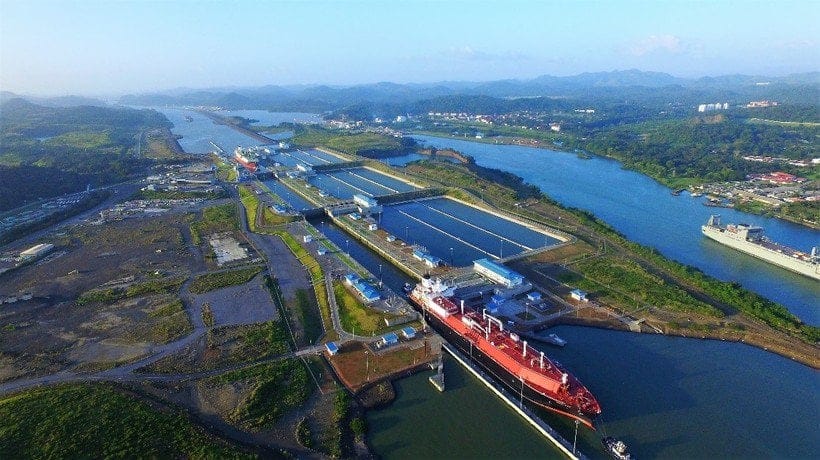
The Panama Canal has updated the criteria for reallocating transit slots that are canceled or become available during booking periods 1A and 2 at the Neopanamax locks. The changes, announced through an Advisory to Shipping, take effect immediately and restore the allocation criteria that were in place prior to July 2026.
Available slots during these periods will be offered through a special allocation process with priority given in the following order: Container ships, liquefied natural gas (LNG) carriers, liquefied petroleum gas (LPG) carriers, and vehicle carriers or roll-on/roll-off (RoRo) vessels. Within each vessel segment, Transit TEU Allowance (TTA) capacity will serve as the primary tiebreaker, where applicable.
NetZero
Through the same advisory, the Panama Canal also updated the eligibility requirements for vessels transiting the waterway for the first time to participate in the NetZero program. The initiative aims to continue supporting and encouraging investment in low-carbon, energy-efficient vessels.
Under the updated requirements, vessels must undergo a preliminary tonnage inspection conducted by the Panama Canal's Admeasurement Unit. To streamline participation in the program, these inspections may now be executed outside Panama.
Beginning November 1, 2026, vessel owners, operators, or authorized agents may request a preliminary inspection before their vessels arrive in canal waters. This will allow the Panama Canal to obtain the information needed in advance to calculate tolls, determine vessel tonnage under the Panama Canal Universal Measurement System (PC/UMS), identify engine types, and verify other requirements for participation in the NetZero program.
Applicants must submit the required technical documentation, pay all applicable fees and charges, and coordinate the necessary arrangements at the port where the vessel is located. The preliminary inspection does not replace the final verification or any additional inspections that may be required before transit.
Together, these measures reinforce the Panama Canal's commitment to encourage the adoption of low-carbon, energy-efficient vessels while maintaining clear and predictable criteria for allocating transit capacity.
The full provisions are available in Advisory to Shipping No. A-40-2026.
The products and services herein described in this press release are not endorsed by The Maritime Executive.
