


Panama Arrests 26 Port Workers Aiding International Cocaine Trafficking
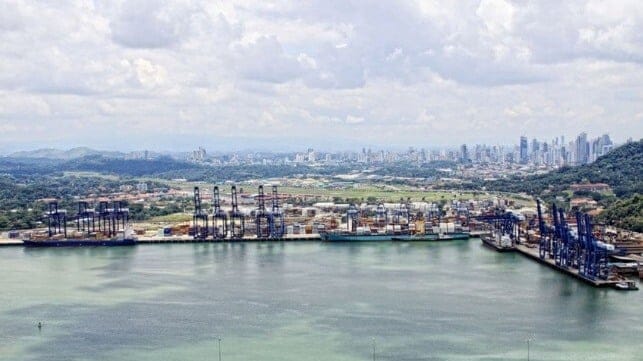
An international investigation that has been going on for two years resulted in the arrest of 26 port workers who are charged with turning the Panamanian port of Balboa into a hub of drug trafficking. Authorities in Australia are reporting that, working with their Panamanian and international counterparts, they have been able to dismantle an organized crime network responsible for trafficking cocaine targeting the lucrative Australian and European markets.
Drug cartels, mainly from Mexico and Colombia, are said to have been relying on corrupt port workers and contractors to traffic more than one tonne of cocaine intercepted in Australia and across Europe in recent years.
Following two years of extensive investigations, Panamanian authorities executed 37 search warrants across Panama on July 7, the outcome of which was the arrest of 26 people alleged to be workers from the Balboa Port.
The arrests were executed after intelligence shared between the Australian Federal Police (AFP), Australian Border Force (ABF), Panamanian National Police, the Panamanian Public Prosecutor's Office, and other international partners identified links between the alleged syndicate and multiple cocaine detections and seizures in Australia from October 2024 to present.
“Working alongside our Panamanian partners, we have struck at the heart of a major criminal organization that sought to exploit international supply chains to traffic large quantities of cocaine to Australia,” said Andrew Donoghoe, AFP Commander Americas.
He added that the operation demonstrated the strength of international law enforcement partnerships and the critical role intelligence sharing plays in combating transnational organized crime.
The Port of Balboa, which is located on the Pacific side of the Panama Canal, is Latin America’s leading transshipment hub. Owing to its strategic location connecting Asia and the Americas, the port handled 2.6 million TEU in 2025 across its five container berths and two multipurpose berths.

that matters most
Get the latest maritime news delivered to your inbox daily.
According to the U.S. Bureau of International Narcotics and Law Enforcement Affairs, Panama is a hotspot for drug trafficking largely because of its lengthy coastlines spanning 2,490 kilometers (1,547 miles) and densely forested border with Colombia.
Apart from taking advantage of the country’s ports that cumulatively handled over 9.9 million TEU in 2025, criminal networks also exploit Panama’s dollarized economy to run their trade, said the authorities.
