


Nigeria: Building on a Decade of Port Reform
[By: Maritime Anti-Corruption Network]
A decade of sustained collaboration between government and the private sector has delivered tangible improvements in Nigeria’s ports. The next phase will focus on embedding reforms, strengthening enforcement and ensuring progress is consistently reflected in day-to-day port operations.
Ten years into Nigeria’s port reform journey, there is clear evidence of what sustained Collective Action can achieve. A standing Project Steering Committee, the Nigerian Port Process Manual (NPPM) presenting harmonized Standard Operating Procedures (SOPs), and mechanisms for monitoring compliance have helped establish a foundation for more transparent, predictable and efficient port operations.
The results are tangible. The Maritime Anti-Corruption Network (MACN) HelpDesk in Nigeria has received more than 1,500 Pre-Arrival Notifications (PANs) and achieved a 98% resolution rate for complaints received. Average case resolution times have fallen from 7–10 days before the MACN HelpDesk to 1–8 hours since 2019.
These results demonstrate that, with the right preparation and support, operational challenges can increasingly be resolved quickly and effectively. The focus now is on the future: building on these achievements, embedding reforms across institutions, and ensuring progress translates into a consistently better experience for port users.
In September, during a week-long field engagement, MACN met with key government agencies and private-sector stakeholders to reflect on progress, strengthen partnerships and identify practical next steps for Nigeria’s port reform agenda.
“Nigeria’s experience shows that long-term collaboration can deliver practical improvements in port operations. The priority now is to build on that foundation by updating procedures, strengthening implementation and using data more consistently to address the challenges that remain. Government agencies, industry and port users all have a role in ensuring that reform is reflected in everyday operations,” said Cecilia Müller Torbrand, CEO of MACN.
Strengthening interagency collaboration
In Abuja, MACN hosted an engagement and experience-sharing session with the Independent Corrupt Practices and Other Related Offences Commission, the Technical Unit on Governance and Anti-Corruption Reforms (TUGAR), the National Drug Law Enforcement Agency, the Department of State Services, Port Health Services, the Nigeria Agricultural Quarantine Service and the United Nations Office on Drugs and Crime, alongside other key stakeholders.
The session recognized the state of Collective Action in Nigeria and the contributions made by government agencies and other stakeholders to date, while setting a shared ambition for the next phase of reform.
Discussions highlighted the need to strengthen implementation of the SOPs and NPPM, sustain data-sharing and capacity building, and support the Port Standing Task Team (PSTT) in driving compliance.
The NPPM itself demonstrates what interagency collaboration can achieve: a shared framework for clearer processes, greater consistency, and higher standards. The priority now is to ensure these standards are applied in practice, monitored consistently, and reinforced through effective accountability.
Turning data and reporting into effective enforcement
MACN also met with Dr. Pius Akutah, Director-General and Chief Executive Officer of the Nigeria Ports Economic Regulatory Agency (NPERA), which has succeeded the Nigerian Shippers’ Council as Nigeria’s port economic regulator. Discussions focused on putting the new regulatory framework into practice and strengthening enforcement. With its expanded enforcement mandate, NPERA has an important opportunity to help turn established standards into consistent outcomes for port users, working across agencies to reduce discretion, address bottlenecks and ensure that rules are clear and followed.
With the Port Standing Task Team facing resource constraints, the Port Service Support Portal can play an increasingly important role in incident reporting, complaint resolution, and collecting data to support enforcement. Ensuring that the portal is fully embedded in port operations will be important to sustaining progress.
At the Nigerian Ports Authority, MACN was hosted by Engr. Olalekan Abdul-Rahaman Badmus, Executive Director, Marine and Operations. Discussions focused on facilitating seamless trade and translating the NPPM into practical improvements in integrity and operational efficiency.
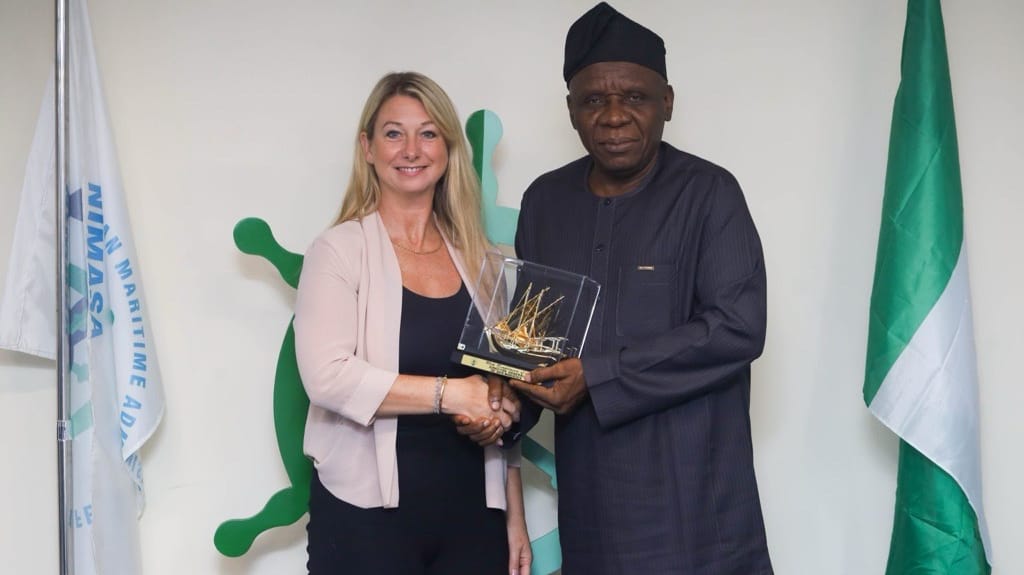
MACN also met with Engr. Fatai Taiye Adeyemi, Executive Director of Operations at the Nigerian Maritime Administration and Safety Agency. The discussion reinforced the role of transparency, accountability and data in building confidence in Nigeria’s ports and ensuring that public- and private-sector efforts deliver lasting results.
Updating and institutionalizing port procedures
At the Project Steering Committee, chaired by TUGAR under the auspices of the Federal Ministry of Marine and Blue Economy, participants from across Nigeria’s maritime agencies reflected on a decade of collaboration and the importance of sustaining momentum.
The continued existence of a standing Committee is a significant achievement. The next test is whether this coordination can drive the timely updating and institutionalization of SOPs. A decade on from the initial port integrity plans, Nigeria’s SOPs now need to be updated to rejuvenate and strengthen the NPPM, clarify expectations for port users and ensure relevant agencies have the support and mandate to monitor compliance and address persistent challenges.
Ongoing data collection is central to this effort. Evidence of how processes are working, and where they are not, must inform decisions, track progress, and hold institutions accountable. The challenge for all stakeholders is to move beyond agreement on reform towards demonstrable and measurable improvements across Nigeria’s ports.
The private sector’s role in sustaining reform
In Lagos, MACN welcomed representatives from across the maritime private sector alongside Mr. Kingsley Igwe, Registrar and Chief Executive Officer of the Council for the Regulation of Freight Forwarding in Nigeria, for an evening workshop.
The engagement provided an opportunity to connect with businesses across the wider maritime value chain and reinforce the role of port users in reporting challenges, using available tools and supporting continued reform.
“Nigeria’s success in enabling trade and tackling corruption demonstrates what can be achieved through sustained Collective Action. MACN, together with its partner CBi and committed local stakeholders, has worked persistently to bring the public and private sectors together around a shared goal: enabling trade. This kind of change does not happen overnight. It requires a long-term strategy and sustained commitment,” said Alexandra Belmonte, Chief Compliance Officer at A.P. Moller-Maersk
For businesses, the message is clear. While Nigeria should be approached as a high-risk operating environment, with the preparation and risk management that entails, it should not be written off as a place where efficient port calls are impossible.
Using MACN’s pre-arrival notification process, country-specific guidance and MACN HelpDesk support, alongside a clear understanding of applicable procedures and escalation channels, can help companies manage risks and resolve issues quickly. With the right preparation and engagement, port calls can be smoother and more predictable.
“MACN’s Collective Action has made a real contribution in promoting integrity and transparency. Through the MACN HelpDesk, anti-corruption training and guidance have helped ship operators. Combined with our own pre-call preparation and Master training, these resources help our Masters prepare for each port call and respond with confidence. Concerns are raised early; guidance is available when needed, and issues are handled in a timely and transparent way. We value MACN’s continued work, and we look forward to building on it together.” - Captain Akash Mittra, Director HSEQ, DPA & CSO at Teekay Tankers Ltd.
"It is greatly appreciated to know that we have reliable and trusted partners who are always willing to provide assistance. Without a doubt, this has immense positive impact towards our Masters and crew facing challenging situations.” - Captain Valentin Mavrinac, QSHE Manager and DPA at Columbia Shipmanagement.
From reform to everyday practice
Nigeria’s port reform journey demonstrates what sustained Collective Action can achieve. The task now is to consolidate those gains. Government agencies must continue working together to uphold standards, gather and use evidence to drive compliance and enforcement, and make reform part of everyday port operations. The private sector must continue to engage, prepare, and use the tools available.
Together, these efforts can help build a more transparent, competitive and reliable environment for maritime trade in Nigeria and across West Africa.
The products and services herein described in this press release are not endorsed by The Maritime Executive.
