

Naval Blockade Fuels Mass Micro-Smuggling into Pakistan
The US naval blockade of Iranian ports and ships is being complemented by growing restrictions on the flow of traffic across Iran’s land borders, even before CENTCOM’s Task Force Iron Gate has settled into its new mandate.
80% of Iran’s imports previously arrived by sea, none of which are now getting through. There are huge volumes of goods now being pushed through Iran’s land border crossings. Even in the best of circumstances, and if they doubled or tripled their throughput, land border crossing could only handle a very small fraction of the goods now forced off the high seas. But as it is, many Iranian border crossing points are struggling to maintain import volumes even at pre-war levels, let alone any increased traffic diverted by the naval blockade.
To illustrate, at the Iran-Turkey crossing at Barzagan, Iranian trucks are waiting three weeks to cross into Turkey, and Turkish trucks are waiting one week to get into Iran. On the Iraq border, the Shib border checkpoint has just reopened after a three week closure – only for the crossing at Sumar to be shut indefinitely. There have been widespread closures of crossings on the Pakistani border, at Gabd-Rimdan, Taftan, Mand and Chagai.
But these are all official crossing points, manned by customs and border control officers. And whenever there is widening arbitrage across borders between supply and demand, and in prices for similar commodities, then there tends to be an up-tick in smuggling.

that matters most
Get the latest maritime news delivered to your inbox daily.
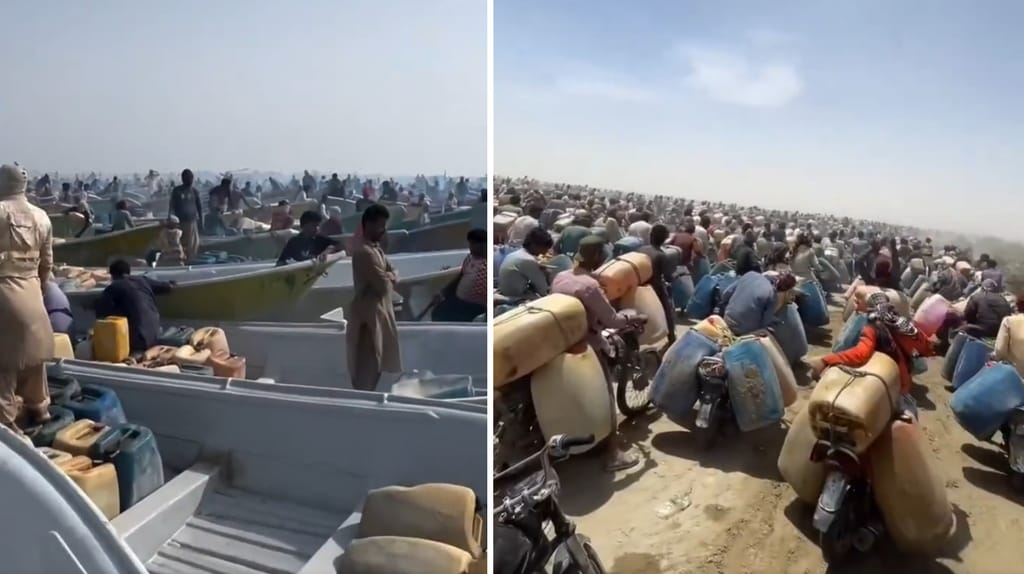
At present there are huge differences in supply and demand, and in prices, for petroleum products. Iran cannot export its production, and is drowning in domestically produced petrol, diesel and gas, whereas Pakistan is suffering drastic shortages of the same commodities. So while such a trade existed before the war, the micro-smuggling trade is booming across the Pakistan-Iran border, and is no doubt replicated on the border with Iraq. The price differential makes it worthwhile to smuggle even a five-gallon jerrycan of petrol across land or sea borders, with smugglers loading up using small boats, pickups, motorcycles and even donkeys.
@BashaReport and Iran International carry estimates that about 40,000 barrels of Iranian fuel enter Pakistan daily, rivaling President Trump’s planned imports of diesel from Russia. Whereas Iran’s IRGC elite are largely isolated from any shortages, this is perhaps one of the few areas where ordinary Iranians benefit from Iran’s isolation.