


Geopolitical Disruption Reduces Cargo Volume at Port of Antwerp
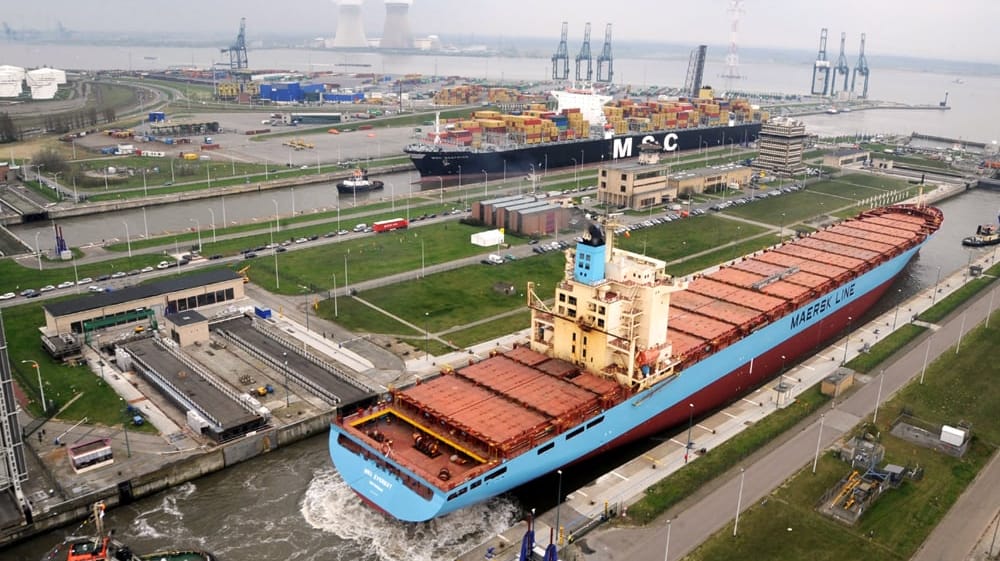
The Port of Antwerp-Bruges is feeling the impact of a myriad of domestic and global challenges after cargo throughput plunged during the first half of the year. In an indication of how international logistics chains remain vulnerable to disruption, Europe's second-busiest port saw throughput decline by 2.4 percent.
Over the six-month period, a total of 9,773 cargo ships and 77 cruise ships called at Antwerp-Bruges, representing declines in vessel calls of 4.4 percent and 8.3 percent respectively.
Antwerp-Bruges's first-half figures show that it handled 133.9 million tonnes of cargo in the first six months of 2026, down from 137.2 million tonnes in the same period last year. The decline was attributed to operational disruptions caused by industrial action, oil spills, the Middle East crisis, tariffs and a challenging economic climate in Europe.
During the period under review, the port recorded a decline in most of its business segments, with RoRo and dry bulk the only ones to post gains in performances. Container throughput, one of the mainstays of Antwerp-Bruges, was particularly under pressure and was the main cause of the drop in total cargo handling. The port's boxship terminals handled 6.8 million TEU, a 1.5 percent decline from 6.9 million TEU in 2025. In terms ddof tonnage, the contaidner business took a 3.6 percent decline to 74.2 million tonnes, compared with 77 million tonnes in the same period of 2025.
The container business was badly affected by operational disruptions. In March, a four-day strike resulted in an estimated loss of 100,000 TEU. The following month, an oil spill in the Deurganck dock caused an additional loss of approximately 85,000 TEU. Things got worse in June, when industrial action by pilots once again caused disruptions, resulting in an estimated loss of 75,000 TEU.
While container business took a thorough beating, other segments were not spared. This was especially evident for conventional general cargo and liquid bulk, which posted drops of 11.7 percent and 1.9 percent respectively. During the period, the port handled 4.2 million tonnes of conventional general cargo and 37.5 million tonnes of liquid bulk.
Disruption of trade flows due to the Middle East crisis is among the factors that affected Antwerp-Bruges' performance, particularly on energy flows. Over the first half, imports from countries around the Persian Gulf dropped by 57 percent, with LNG carriers adversely affected because of Strait of Hormuz closures.
While the U.S. maintained its status as Antwerp-Bruges' second most important trading partner, trade policies pursued by the Trump administration are having a negative impact on the port. During the period, imports of full containers from the U.S. fell by 10.4 percent, while exports declined by 16.5 percent.

that matters most
Get the latest maritime news delivered to your inbox daily.
"The first half of the year shows that the Port of Antwerp-Bruges continues to play its role as a gateway to Europe, even in exceptional circumstances. Trade flows are continually adapting to the new geopolitical reality. This demands flexibility from our port community and underscores the importance of continued investment in capacity, efficient infrastructure, and sustainable logistics," said Rob Smeets, CEO of Port of Antwerp-Bruges.
