


False Flag Ops Continue to Grow in Avoidance of Sanctions
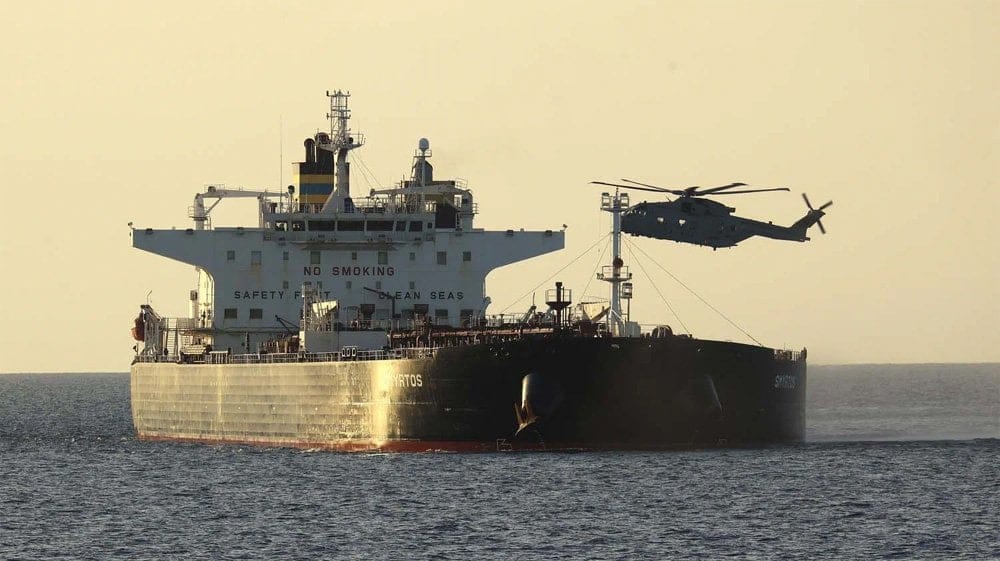
The challenge of false flag operations continues to spread as unscrupulous operators seek the latest techniques to avoid detection and sanctions enforcement. Maritime AI data analytics firm Windward released a new report detailing the growth of false flags and the challenges of tracking down the perpetrators.
In its Q2 analysis, Windward reports there are 22 distinct fraudulent ship registries that have been identified globally. It points out they generally fall into two categories: states that do not actually have an international ship registry, or false operators who mimic legitimate flags with false operations. There are also the ships that make false claims to a legitimate flag.
The latest false flags that are emerging, according to Windward, are Syria and Myanmar, which appeared for the first time last quarter. Neither state operates an international ship registry. It points out that these countries joined Nicaragua and Equatorial Guinea, which were newly used in the first quarter.
Windward tracked 275 internationally trading tankers during the second quarter that were broadcasting the flag of a fraudulent registry. It was down slightly from the first quarter when 290 were tracked, but Windward reports “the overall universe of falsely flagged vessels has continued to grow.” The IMO currently lists 580 falsely flagged vessels, which was up from the 550 at the end of the first quarter of 2026 and 470 at the end of 2025.
Windward writes that the practice of flying false flags is centuries old, dating back to the romantic era of piracy in the 18th century and before. Then as now, legitimate nations struggled to fight the scourge of false flags and piracy.
“What has changed in 2026 is the operational scale of the practice and the specific commercial and geopolitical purposes it now serves,” writes Maya Romi, Maritime Intelligence Content Specialist at Windward. “The scale of false flag broadcasts in 2026 is a direct response to the sanctions environment.”
As an example, Windward calculates that there are approximately 430 tankers currently active in the Iranian trade. It says 62 percent are falsely flagged, and 87 percent are sanctioned.
The driver of false flag operations is sanctions evasion. Windward calculates that around 90 percent of tankers using fraudulent registries are Western-sanctioned. As the sanctions continue to grow, so too do the efforts at evasion and the use of fraudulent registries.
Windward calculates that four registries, the Netherlands Antilles, Guyana, Guinea, and Madagascar, account for a large share of the falsely flagged tankers in early 2026.
“Detecting false flag vessels requires all-source intelligence that combines behavioral analysis, ownership tracing, and cross-referencing against verified maritime registry records rather than relying on the declared flag alone,” writes Romi.
Countries detect the operations and issue public notices, which discourages the fraudulent operators. For example, the landlocked Central Asian Kyrgyz Republic issued a warning to the IMO at the end of July and asked that the notification be widely distributed. Madagascar and landlocked Zimbabwe warned the IMO of illegal activity and the use of their flags, as did Vanuatu, the Cook Islands, and Tonga, while Cameroon, after seeing a massive spike in its legitimate registry and international pressure, began efforts to purge the fraudulent operators. In 2025, it was uninhabited Matthew Island east of New Caledonia that a shadowy operator was promoting as a host for a registry.
When the fraud is discovered, Windward reports some tankers shift to different fraudulent registries. Others move to legitimate flags known for weak enforcement, and it also tracked approximately 60 tankers in the first half of 2026 that, when discovered or when the pressure grew at the registries, moved to Russia’s flag. Famously, in January, the tanker Bella 1 attempted to change its name to Marinera and hide behind the Russian flag in the middle of the North Atlantic as it was being pursued by the U.S. Coast Guard. In the past, tankers have also suddenly claimed Iranian registry when they were being pursued.

that matters most
Get the latest maritime news delivered to your inbox daily.
Flag hopping overall, Windward says, however, has declined. It recorded a 26 percent decline in Q1 2026 compared to Q4 2025. It says seizure pressure pushed vessels toward more stable false-flag identities. There have also been efforts by many of the flags to specifically crack down on the hopping activities.
While the pressure continues to grow with sanctions and surveillance of the shadow fleet, the use of false flags persists. Even with the crackdowns such as those seen in France or Sweden, these operators continue to attempt to avoid the regulations through the use of false registries.
