


Falling Freight Rates Drive Maersk to Q1 Loss in Shipping Segment
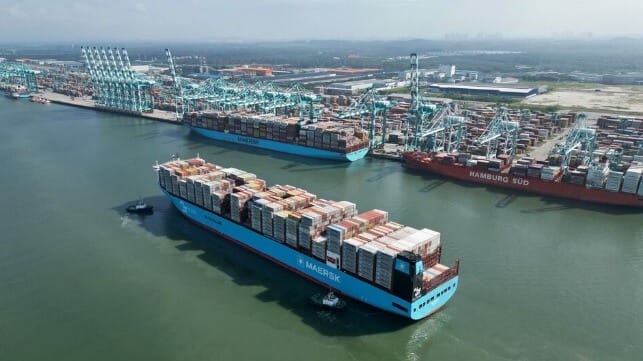
Maersk gave a preview of the pressures the container shipping sector experienced in the first quarter, reporting that it swung to a financial loss in the quarter in its shipping segment due mostly to continuing pressure on freight rates. The largest publicly traded carrier and logistics company, Maersk, among the first companies in the sector to report each quarter, is considered to be a bellwether of the industry.
During a briefing with CEO Vincent Clerc, he told reporters that the war was having a limited direct impact on the business as the Middle East accounts for a small portion of volumes. However, he cited the indirect impact coming from skyrocketing fuel costs, saying that Maersk has seen its monthly bunker costs jump by nearly two-thirds. He said that, at current rates on nearly $1,000 per metric ton, it is costing the company nearly $500 million more each month.
Clerc said the company was unable to absorb such a dramatic increase in costs and that it had no choice but to pass the fuel cost increases on to customers. He said it was not easy, but they had to take the step, even after strong cost controls across all parts of the company. He reported unit costs in the ocean segment had been brought down by seven percent.
Maersk said volumes remained strong and were up more than nine percent for its ocean shipping operations. It said the strengths spanned across most regions of its operations. In particular, it said it experienced “robust export growth” from China, which accelerated relative to the previous quarter.
However, it said freight rates had fallen an additional 14 percent this quarter. Clerc pointed to overall market volatility as well as industry oversupply, which he said continues to put pressure on rates. He pointed to the volume coming from new vessel deliveries as a key contributor to the overcapacity. Maersk’s outlook is that global container market volume growth will be maintained between two and four percent this year.
Maersk continues to take a long-term view of the market as it too added vessel orders to the already record orderbook in the segment. Maersk placed an order for eight 18,600 TEU vessels for delivery between 2029 and 2030, in keeping with its fleet renewal strategy. Utilization of the existing fleet, it reported, rose in the quarter to 96 percent. The company reports it has six ships trapped in the Persian Gulf.

that matters most
Get the latest maritime news delivered to your inbox daily.
Other segments of Maersk’s business, namely logistics and, in particular, AMP, its terminal operator, helped to offset the challenges in the shipping segment. The result was that earnings (EBIT) within shipping fell to a loss of $192 million for the quarter, while overall Maersk reported earnings (EBIT) of $340 million. Revenues were down to just under $6.7 billion.
While maintaining its full-year outlook, which was provided earlier, before the start of the war, Maersk highlighted that results would continue to be impacted by high volatility and uncertainty. It expects that while there could be a quick return for container shipping to the Red Sea and Middle East, the impact on the fuel markets will linger for many months. It said different scenarios on the timing of the reopening of the Red Sea and Strait of Hormuz are reflected in its current range in financial guidance.
