
Erratic Traffic Poses Real Risks for Strait of Hormuz Transits
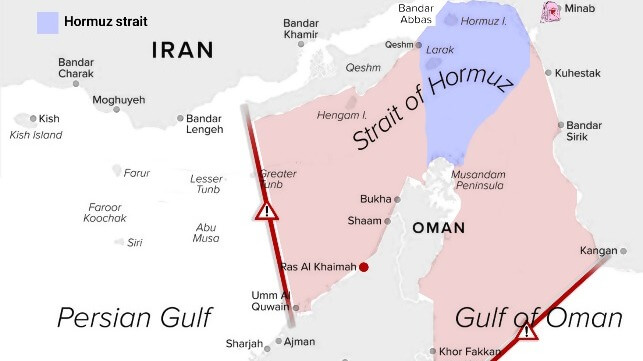
A new industry-written guide to transiting the Strait of Hormuz paints a picture of exceptional risk, and not just from the missile and drone attacks launched by Iran. While the shipping industry's leading associations think that transits are a responsible choice under the right circumstances, the navigational hazards on the route are real, and the consequences of a collision or grounding are elevated.
The new official guidance was released this week by ICS, BIMCO, Intertanko, IMCA, Intercargo and OCIMF, and it reflects the full spectrum of industry concerns. The kinetic threat is the headline risk factor in any discussion of the strait, and the guide's advice is to stay clear of the waterway for at least 12 hours after a confirmed attack and avoid mined areas.
But the other risk is the traffic situation that may develop during an opening of the waterway. The guidance advises operators to prepare for a rush, and to expect little regard for COLREGS. Conditions may include simultaneous, uncoordinated transits; erratic, nonstandard vessel maneuvers; close-quarters situations in confined waters, with limited sea room; a wide mix of vessel sizes and maneuvering characteristics; and elevated crew stress.
"During extreme traffic congestion periods, collision and grounding risks may materially increase. Both dimensions must be appropriately addressed in the pre-transit planning," the associations recommended.
In the event of a casualty, masters are advised that any oil spill control efforts should be secondary to ensuring crew life and safety. Given the hazards, a spill response vessel or a salvage tug might not be coming quickly; the industry consensus suggests that masters and vessels should be prepared to be self-reliant for the transit, and should not expect assistance from military forces.
The details of the preparations required are revealing. Before instructing the crew to make the run, owners should ensure that insurance is in order, contingency plans are in place, the crew is well-rested, and the ship is in top technical condition and well-provisioned. It may be best to disembark supernumeraries (like cadets or riding gangs) in advance, minimizing the number of personnel exposed to risk on board. Watertight doors and hatches should be kept closed to aid in damage control.
On the bridge, operators are advised to make sure that their officers are truly ready to navigate in a GPS-denied environment, ideally using radar range and bearing plotted on physical paper charts (a practice which has fallen out of use). "The planning assumption must be total unavailability – or unreliability – of the GNSS signal for the entirety of the transit," the guide advises. For the same reason, radar and visual monitoring should be used as primary tools for collision avoidiance, not just AIS. An enhanced bridge team should be standing watch, with the master or chief officer, one additional officer, a lookout and a helmsman present.

that matters most
Get the latest maritime news delivered to your inbox daily.
Transmitting AIS position data is up to the operator, but the guidance recommends taking measures to shut down crew cell phone transmissions. Mobile devices capture GPS positioning for a variety of reasons and this data can be hacked and exploited by a capable actor to track the ship. Phones should be in airplane mode, and nonessential positioning & networking services on the device should be turned off.
While waiting for a chance to transit, the associations recommend that operators pick lower-risk anchorage areas. For vessels that have an elevated risk of attracting an Iranian attack, like ships owned by American or Israeli interests, periodic repositioning from one spot to another is recommended in order to make targeting more difficult.
