


Denmark Wins Approval from EU as it Seeks to Convert to CfD Wind Licenses
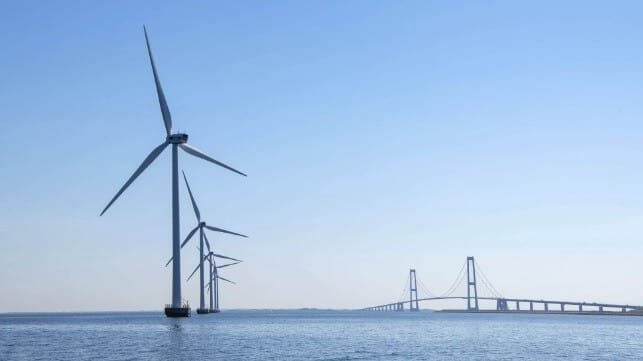
Denmark received a critical approval from the European Commission for its subsidy plan fr the next phase of the country’s development of offshore wind energy projects. After failing to receive bids in a December 2024 auction, the country’s Energy Agency pushed the government to adopt the two-way contract for difference (CfD) model, following the successful approach in the UK, which is gaining popularity in Europe.
The European Commission announced it has approved a €5 billion Danish scheme to support offshore wind energy, which it asserts is in line with the objectives of the EU’s Clean Industrial Deal. The measure, which was adopted in 2025, supports projects that will contribute to the transition towards a net-zero economy and to reaching the 2030 renewable energy target set at the EU level.
Denmark’s program will run for 20 years, encouraging the construction and supporting the operation of two offshore wind farms: Hesselø and North Sea I Mid. The Danish Energy Agency announced last November that it was starting the new tender for the projects and would include the CfD structure. Under the now-approved plan, the project operators will receive payments when the reference price is below this bid price and will have to pay the Danish authorities when the reference price is above the bid price. The state said there would be a cap of $8.5 bllion on the payments over the life of three projects it planned as the first CfD contracts.
Both of the wind farms are expected to be in operation by 2032. The Hesselø wind farm is expected to have a capacity of at least 800 MW and to generate around 3.2 TWh per year. It will be located east of Denmark and must establish a so-called “nature-inclusive” design. That requires the developer to integrate elements into the structures to create habitats that benefit marine life, such as artificial reefs or havens for species such as fish and shellfish.
The North Sea I Mid wind farm, to be located west of Denmark in the North Sea, is expected to have a minimum capacity of 1 GW and to generate around 4.6 TWh per year. The deadline for submitting proposals in the tender is May 2026.
The combined annual production of these two wind farms will represent the equivalent of around 25 percent of last year's total electricity production in Denmark.

that matters most
Get the latest maritime news delivered to your inbox daily.
The European Commission concluded that the Danish scheme is necessary, appropriate, and proportionate to accelerate the transition towards a net-zero economy and facilitate the development of the projects. While the industry welcomed Denmark’s transition to CfD contracts, it has raised concerns with existing development that do not have the subsidy contracts and onshore projects, which will not be eligible for CfDs.
Denmark has a long heritage in wind energy and was the pioneer in offshore wind power, launching its first offshore wind farm in 1991. The agency reported in April 2024 that Denmark had a total installed capacity of 2.7 GW of offshore wind power, with one additional wind farm under construction to add another 1 GW in 2027. Denmark was one of eight North Sea countries in October 2025 that recommitted to a pledge to build 120 GW of offshore power by 2030 and at least 300 GW by 2050. Denmark has a target for 14 GW of capacity by 2030.
