


At MEPC, Oman Proposes Ship Strike Study to Protect Whales in Arabian Sea
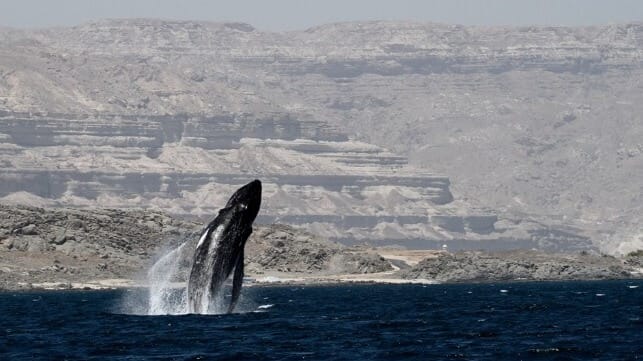
Tucked as Agenda Item 12 into the agenda of the 84th Session of the IMO’s Marine Environmental Protection Committee is a proposal tabled by Oman to create a Particularly Sensitive Sea Area off Oman’s Arabian Sea coast.
The proposal is based entirely on the threat posed to endangered sea species by ships travelling through the designated area, particularly by ships traveling along the coastline at speeds of above 10 knots per hour. The primary species at risk is the Arabian Sea Humpback Whale, but also endangered are Blue and Sperm whales, the Humpback dolphin, and Loggerhead, Hawksbill and Olive Ridley turtles.
The proposal calls for further study of the threat proposed to the endangered species, and for consideration of what measures could be introduced to reduce the death and injuries caused to these species by ship strikes.
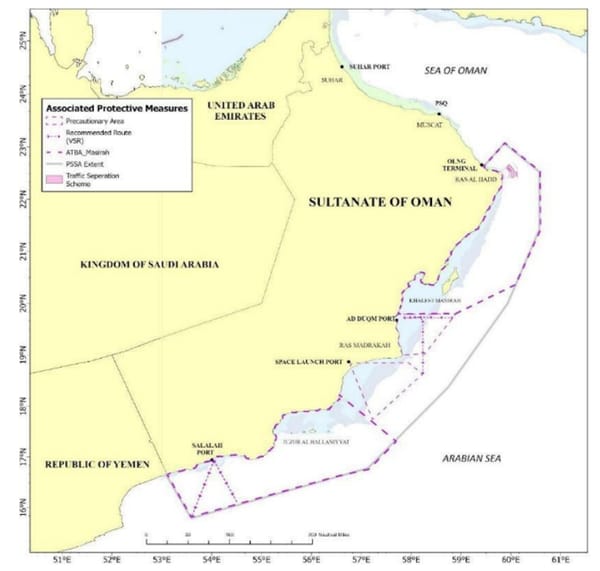
Two categories of restrictions appear to be under consideration. The first might introduce speed restrictions over two Precautionary Areas, one at the northern end and one at the southern end of the sea area between Ras al Hadd and the Yemeni border, both of which extend well beyond Omani territorial waters into its Exclusive Economic Zone. The second would impose stricter restrictions on particular breeding grounds, such as that for turtles off Ras al Hadd and for whales in the area of Masirah Island. Designated routes, reporting requirements and speed restrictions throughout the Particularly Sensitive Sea Area have been proposed, as well as approach channels for the ports of Duqm and Salalah, and to the LNG terminal at Qalhat.

that matters most
Get the latest maritime news delivered to your inbox daily.
The proposal is based entirely on environmental protection considerations. However, the sea area concerned has long presented security concerns. It is an area used by large numbers of stateless dhows, en route between the Gulf and the East African coast. It is known to have been used by IRGC arms and drugs shipments setting off from Bandar Abbas to Houthi-controlled elements in Yemen and various other proxy armed movements supplied by the IRGC, although these shipments have tended to keep well out to sea so as to avoid interception. To a lesser degree, the area is also used as an illegal immigration route by migrants coming off the Pakistani coast.
Oman has invested heavily in recent years in improving its coastal surveillance capabilities. Most of the 700-mile coastline between Ras al Hadd and the Yemeni border is rugged desert and sparsely populated, making it a wonderful tourist attraction but complicating the task of covering the coastline and its hinterland effectively. A new coastal surveillance radar system is being rolled out, and any reporting requirements imposed as a consequence of the creation of the Particularly Sensitive Sea Area will be a useful adjunct to strengthening Omani controls over its sovereign territories.
