


IMO Passes Non-Mandatory Safety Code for Autonomous Ships
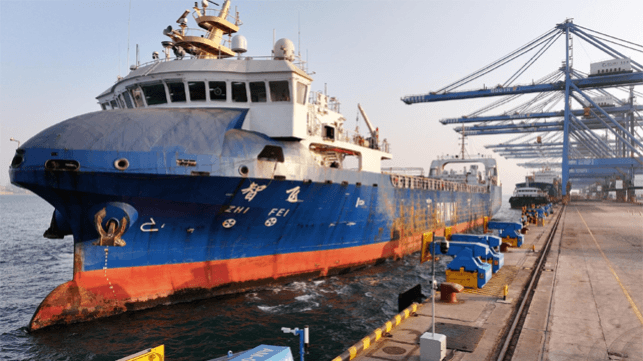
The IMO has taken a new step forward towards comprehensive regulation of unmanned shipping, building upon years of debate and detailed development work. At the latest meeting of the Marine Safety Committee, delegates approved a final text for the non-mandatory Maritime Autonomous Surface Ships code (MASS code), which codifies a set of safety standards for unmanned vessels in international trade. While the code is only a guideline for now, it is on track to become mandatory as early as 2028, and it gives a sense of what the requirements for unmanned shipping might soon look like in operation.
According to IMO, the purpose of the code is to regulate emerging technology and maintain safety while also enabling innovation. Autonomous ships - which entail scaled-up size and risk compared to autonomous boats - are still in their infancy, and this is the first set of specifications that applies globally to their development.
The MASS Code text has not yet been released, but a marked-up final draft from February shows the committee's intent. For now, the rules are largely goal-based, without the proscriptive specificity of a SOLAS regulation on lifeboat design or a VDR installation.
Safe navigation is the first item on the list for evaluating autonomous shipping. The MASS code incorporates by reference the familiar collision avoidance rules of COLREGS, with its human-focused recognition requirements for sounds, lights, shapes and vessel classes. To complement the standard COLREGS lookout requirement, the MASS code institutes a situational awareness requirement that the ship's self-navigation system must "continuously monitor all information necessary for safe navigation." More specific standards - like an ability to evaluate audible sounds and VHF hails, which most autonomous navigation systems cannot currently perform - are as-yet not part of the code.

that matters most
Get the latest maritime news delivered to your inbox daily.
The rules do outline a long list of equipment requirements that would be unique (and perhaps technically challenging) for unmanned ships. Without crew aboard, unmanned vessels would need to be designed differently for safety and for emergency response, including fallback operations in "reasonably foreseeable degraded states." This implies different standards for "structure, subdivision, stability and watertight integrity, fire protection, fire detection and fire extinction, life-saving appliances and arrangements, security, search and rescue, cargo handling, towing and mooring, machinery installations, electrical installations and external support systems."
Some of these standards will be challenging to achieve and maintain in a harsh marine environment, just as they are for current equipment. For safety reasons, anchor windlasses will have to be capable of raising and lowering autonomously or remotely during an emergency, without crew to remove the devil's claw or fan the windlass brake. Emergency tow arrangements will have to be configured to be made up without a crew to handle heaving lines and hawsers in rolling seas. Much of the supplier R&D work needed to meet the requirements will continue for years to come.
