
Supply Chain Vulnerability
We know all about the vulnerability of crude oil supply chains. Now it’s LNG’s turn.
(Article originally published in Sept/Oct 2026 edition.)
On the sidelines of the 81st United Nations General Assembly, officials from Qatar held an economic forum.
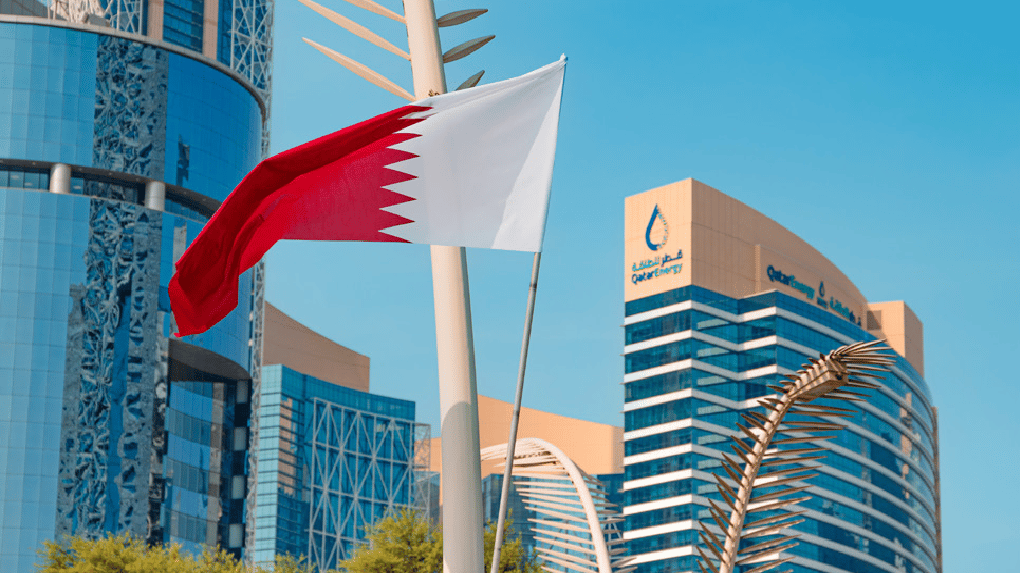
Qatar's Prime Minister and Minister of Foreign Affairs, Sheik Mohammed bin Abdulrahman Al Thani, opened the session and described the recent escalation in the Persian Gulf war as an "earthquake" that sent shockwaves through global security, maritime routes and energy supply chains. A major impact has been on Qatar's LNG production and shipments as well as its future expansion plans.
Entering 2026, Qatar was the third-largest LNG exporter with a capacity of 77 million tons per annum, trailing the U.S. with 102 mtpa and Australia with 88 mtpa. However, Qatar has the most aggressive export expansion program with plans to double its capacity to 142 mtpa by 2030. The U.S. also has an aggressive LNG export plan that will boost output to 125 mtpa in 2029 and potentially to 163 mtpa in 2031 if all proposed projects are built.
Impact of Iran War
The war in Iran has delayed Qatar's expansion plans, and attacks on facilities at Ras Laffan have cut its LNG export capacity. Furthermore, Qatar's ability to ship LNG cargoes is limited by the closure of the Strait of Hormuz to all ship traffic due to attacks on vessels attempting to transit the Strait.
Will this vulnerability cause LNG buyers to back away from Qatar and force the country to reduce its expansion? Such a move would affect the number of LNG carriers needed in the future.
In the early days of hostilities, Iran attacked its Persian Gulf neighbors for their support of the U.S. and Israeli attacks. The Ras Laffan LNG complex was targeted even though it had shuttered operations because it could not export cargoes. Two LNG trains were damaged, and QatarEnergy officials said it could take five years to repair the loss of 17 percent of the plant's capacity.
Given the uncertainty about the war's progress and possible resolution, Qatar continued to operate the Ras Laffan facilities at a low level, providing small LNG volumes for domestic customers. That decision reflected the technical reality that shutting the plant could require a two-month restart. A restart's duration depends on how warm the tanks are since they must be cooled to -162°C. At that temperature, LNG is 600 times smaller in volume than in its gaseous form, which is why it's an attractive way to ship natural gas.
During the lull in hostilities, Qatar has sent two LNG carriers previously loaded with cargoes through Hormuz, escorted by U.S. naval warships.
Buyers of Qatar's LNG have suffered. QatarEnergy declared force majeure on its supply contracts with European and Asian buyers. Fortunately, the company has a 70/30 LNG partnership with ExxonMobil.
The partnership began with the Ras Laffan plant but expanded when ExxonMobil decided to convert its Golden Pass, Louisiana, LNG receiving terminal into an export facility. The first of three LNG processing trains began shipments in April, allowing QatarEnergy to send its share of the six mtpa output to European LNG customers. The second train is expected to start up later this year with the third train beginning shipments in spring 2027. When all three trains are operating, Golden Pass will be shipping 18 mtpa of LNG.
As outlined at the Qatar Economic Forum, hostilities have delayed Qatar's LNG expansion plans. Shipments of critical equipment have been delayed, pushing back the start-up of the first phase of the North Field expansion to spring 2027. Qatar officials assured forum attendees and the media that the full expansion plan would continue. However, its future raises questions for Qatar and its LNG customers.
Export Vulnerability
Customers of Middle East energy – crude oil, refined petroleum products and LNG – have learned the vulnerability of exports through one of the world's critical shipping choke points. When the Iran war began, roughly 20 percent of the world's crude oil and petroleum supplies and a similar volume of LNG were lost to the global market. Initially, attention focused on crude oil exports as world oil prices jumped on the loss of such a large supply, but LNG prices soon followed.
Both the United Arab Emirates and Saudi Arabia increased their oil pipeline shipments, avoiding the Strait of Hormuz. The UAE shipped more oil through a land pipeline to Oman ports on the Gulf of Oman, outside the Strait of Hormuz. Saudi Arabia increased East-West oil pipeline shipments across the country from Persian Gulf shipping facilities to those at Yanbu on the Red Sea.
Oil tankers transit the Suez Canal, use the SUMED pipeline or exit the Red Sea via the Bab el-Mandeb passage to the Gulf of Aden to reach the market. Suez routes limit tanker size and add to the need for more tankers at the SUMED pipeline terminus in the Mediterranean.
Larger tankers could take cargoes through Bab el-Mandeb until the Houthis in Yemen, a front in the Iran-Saudi Arabia proxy war, began attacking them. The Houthis' attacks eliminated the Red Sea export option.
Fortunately, U.S. escorts for commercial ships from the Persian Gulf have ramped up. Between increased pipeline exports, tankers escorted by the U.S. Navy and Suez exports, much of the 20 million barrels a day of Middle East oil exports lost at the start of the war have been replaced.
Qatar remains optimistic about its long-term LNG expansion plans. Officials at the New York conference emphasized that Qatar has a 30-year record of not defaulting on its contracts. However, buyers considering future LNG suppliers may be less willing to sign long-term contracts with Qatar given the export vulnerability that has never before been questioned.
E.U.'s Methane Emissions Law
Another major issue for LNG exporters and European importers is the E.U.'s methane emissions law, scheduled to take effect on January 1, 2027. The law requires exporters to track and report their emissions, including leaks and flaring. Companies that inaccurately report these emissions are subject to fines of up to 20 percent of the company's annual global revenues.
The U.S., Qatar and other petroleum exporters to Europe have balked at complying with the E.U. environmental rule. To ease exporter fears, the European Commission has suspended fines for three years. However, exporters note that the rules are tricky, and the suspension does not make them immune from violations, which it could still assess.
The standoff comes as European gas storage volumes for the upcoming winter are well below the mandatory 90 percent level. Gas storage volumes in late September were about 70 percent full. Without a significant increase in gas injections, Europe could enter winter with only about 80 percent of its storage volume. That puts Europeans at risk of a longer, colder winter. European LNG buyers appear willing to gamble that El Niño will produce a warmer-than-normal winter.
Fears of the impact of the European methane law and its LNG buyers' strategy prompted French President Emmanuel Macron to write to E.U. officials asking them to suspend the methane law. He worries that there will not be enough gas this winter while petroleum prices remain elevated, putting pressure on financially stressed Frenchmen.
With a deficit-to-GDP ratio of more than five percent, France has little money to distribute to citizens to help ease the financial costs of high energy prices. Macron's plea to E.U. officials reflects the challenge European leaders face after embracing energy/environmental policies that have increased electricity bills, gasoline and diesel prices, and winter heating costs.
Asian LNG buyers are currently willing to pay more than Europeans. Long term, however, supply vulnerability will play a greater role in LNG customers' buying decisions. We're also learning that China has used its U.S.-LNG contracted supplies to curry favor with regional neighbors. China has re-exported U.S. LNG cargoes, acting as a market balancer.
Weaponization of Energy
Increasingly, we find that energy and its supply chain can be weaponized and used for diplomatic leverage. This is the new reality for energy, and especially for LNG. Energy flows and shifting market forces affect how many oil tankers and LNG carriers are needed.

that matters most
Get the latest maritime news delivered to your inbox daily.
Clarity on how many will be needed will not emerge until the energy market returns to a semblance of normality. Predicting that date is beyond our capability.
Energy analyst and commentator G. Allen Brooks is a Senior Fellow at the National Center for Energy Analytics and author of the widely read "Energy Musings" newsletter. His writings - including those for The Maritime Executive - can be found at http://www.energy-musings.com.
The opinions expressed herein are the author's and not necessarily those of The Maritime Executive.