


Oversized
Handling oversized, unwieldy cargo like huge gas generators or offshore wind blades is no small task.
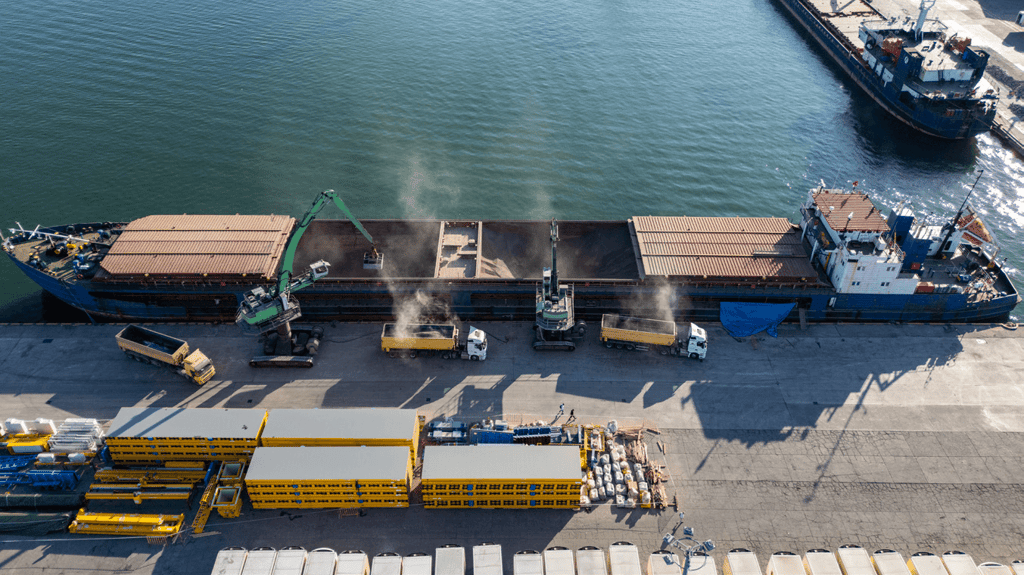
(Article originally published in July/Aug 2026 edition.)
The growing global demand for clean energy and more energy (think data centers) is driving the growth of heavy lift, special project and breakbulk cargoes through international seaports. Offshore wind projects require, among other components, huge blades and turbines that will eventually add clean power to major power grids in America and elsewhere.
While ports have announced increases in these cargoes, the infrastructure required to effectively handle these awkward pieces requires specialized equipment and knowledge.
For Carver Companies, with global headquarters in Albany, New York and main operations at the Port of Coeymans on the Hudson River just south of Albany, staying on top of what is needed to handle these cargoes is paramount.
"As infrastructure, energy and industrial projects continue to grow in size and complexity," says Carver's President of Sales & Business Development, Stephen Kelly, "demand for integrated heavy lift and project cargo solutions continues to increase."
The company has responded by investing in specialized equipment, waterfront infrastructure and marine logistics capabilities that help customers move oversized cargo more efficiently.
"Today's projects require much more than a crane and a dock," Kelly adds. "They require the right equipment, the right waterfront facilities and experienced people who know how to safely handle oversized cargo."
The company's integrated capabilities combine port operations, stevedoring, heavy lift, marine transportation, vessel repair and project staging under one organization.
And while long-term infrastructure investment continues to drive demand, global market conditions remain an important consideration.
"Fluctuations in ocean freight rates and international shipping costs can affect customers' decisions regarding the timing and volume of bulk cargo imports," says Kelly. "Maintaining flexible port operations and integrated logistics capabilities allows Carver to help customers adapt as market conditions evolve."
KEY COMMODITIES
At the Port of Baltimore, breakbulk and project cargoes continue to be key commodities, says Richard Scher, Director of Communications at the Maryland Port Administration.
"Our most recent volumes show we are up approximately 31 percent year-to-date from 2025," he states. "We handle a wide variety of breakbulk/project cargo such as power generation machinery like transformers and wind energy components, as well as subway cars and yachts. We continue to regularly handle heat recovery steam generator projects and are scheduled to do another one later this summer."
Baltimore also has direct-to-rail capabilities, allowing for seamless transfer from ship-to-train as well as two heavylift cranes capable of hoisting up to 200 tons each.
Another one of Baltimore's strategic advantages is its geographic location as the closest East Coast port to the Midwest with ideal connections to Interstate 95 and Interstate 70.
INFRASTRUCTURE INVESTMENT
The Port of Galveston has expanded its capabilities for roll-on/roll-off and other cargoes with the completion of a $106-million cargo infrastructure project including a new cargo berth and almost 30 more acres for cargo handling and laydown. A Wallenius Wilhelmsen roll-on/roll-off car carrier was the first ship to call at the 1,410-foot-long berth at Piers 39-40 on July 2.
"This is the first time in decades that the port has made a significant investment in its cargo business," notes Rodger Rees, Port Director & CEO. "Driven by cargo tenant demand, the expansion paves the way for major cargo growth and hundreds of new jobs, providing tremendous economic growth for the region. Additional land also allows us to consider other types of cargo not previously handled."
In addition to the new berth, work to repair and expand the cargo area also included enclosing two outdated slips, filling one slip to add six acres and demolishing a decommissioned grain elevator to add eight acres for cargo handling at Piers 30-32. A future phase will include filling the second slip to add another six acres.
Through June, roll-on/roll-off cargo was up 46 percent compared to last year. Almost 289,000 tons of heavy agriculture and construction equipment have moved across Galveston docks. BMW, Mini Cooper and Rolls-Royce new car imports were up 3.6 percent through June 2026. Wind turbine pieces were down by 66 percent in the first half of the year, but that cargo is expected to pick up in the second half of 2026.
SWEET TOUCH
The Port of San Diego is moving forward with two projects that will not only sweeten its bulk operations but improve the environment at the port and throughout surrounding communities.
With the approval of a lease agreement option and the authorization of a Coastal Development Permit (CDP), the port aims to bring a new bulk sugar facility to the Tenth Avenue Marine Terminal (TAMT).
California Sugar Equipment, a subsidiary of Mexican agro-industrial giant Zucarmex, plans to build a sugar-handling and storage facility that would allow up to 280,000 metric tons of raw sugar to be imported into San Diego each year. The proposed project supports both the port's economic development efforts and its clean-air goals.
It's also a first for the port.
"Zucarmex would be the first to use only electric trucks in its operations," notes Ann Moore, Chair of the port's Board of Commissioners, "making our terminal not only more efficient but also more modern and sustainable. It's exactly what we want from our maritime business partners."
Zucarmex has been importing raw sugar at TAMT since 2018 without any on-terminal equipment or storage. Currently, sugar is offloaded directly from vessels to trucks and transported to the company's existing Otay Mesa processing facilities. Discharging directly from ship to trucks requires many trucks to enable the ship to be unloaded and freed up as soon as possible.
With the proposed project, Zucarmex would be able to spread out its truck delivery schedule, needing fewer trucks, which would make the deployment of zero-emissions trucks economically feasible.
The project includes construction of an approximately 50,000-square-foot warehouse. Upon completion, Zucarmex would use a bulk discharge unloader and conveyor system to move raw, bulk sugar directly from the vessel to the warehouse. Electric trucks would transport the sugar to the Otay Mesa facility, thereby eliminating approximately 1,000 diesel truckloads per month.
A rooftop solar system on the warehouse would provide a renewable power source for onsite truck charging.
California Sugar Equipment has eighteen months to satisfy certain deliverables before a lease will be signed and construction started.
Another significant environmental event at the port occurred last October when Pasha Hawaii's MV Jean Anne (a U.S.-built, owned, flagged and crewed roll-on, roll-off vessel) connected to the first shore power system installed at the National City Marine Terminal (NCMT). It marked a first-of-its kind achievement in the U.S., according to the port, as well as the first-ever shore power connection for a domestic car/truck carrier.
"This milestone reflects Pasha's and the port's joint commitment to sustainability and partnership," said George Pasha, IV, President & CEO of the Pasha Group. Pasha also uses all-electric car haulers at NCMT, another first at any U.S. port, and runs the most advanced vehicle import/export facility on the West Coast, importing and processing approximately 400,000 vehicles annually from Europe, Asia and Mexico.

that matters most
Get the latest maritime news delivered to your inbox daily.
All four of the port's marine terminals now have shore power, allowing vessels to plug into the local electrical grid rather than relying on diesel power while at berth.
Tom Peters is the magazine's ports columnist.
The opinions expressed herein are the author's and not necessarily those of The Maritime Executive.
