


Interview: Joey D'Isernia, CEO & Chairman, Eastern Shipbuilding Group
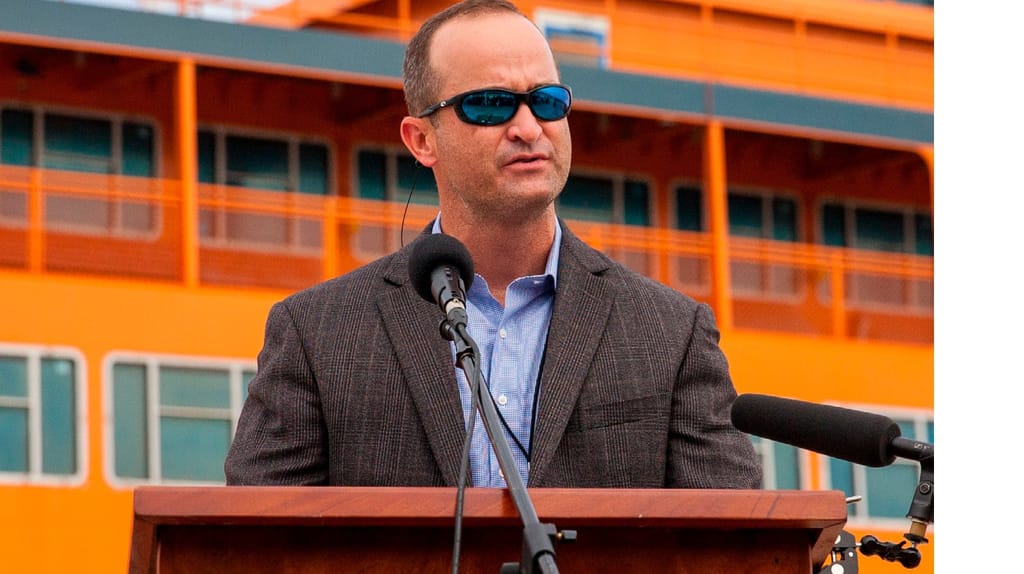
(Article originally published in May/June 2026 edition.)
Welcome, Joey, and congratulations on 50 years of shipbuilding excellence! Are there celebrations planned?
Oh yes, a whole year's worth! We've built it into all our various employee and community engagement events – company picnic, charity fishing tournament, employee appreciation lunches, end-of-summer celebration where we rent out an entire waterpark for our employees and their families. We like to stay close to our employees and engage with them, and we're highlighting our 50th anniversary in that manner and it's kind of representative of who we are.
Has anyone been around for the whole 50 years besides your dad?
He's probably the only one left. I mean, they're all around and for the most part happy in their retirement, but you know how shipbuilders are. They just like to keep going and going and going. But I think my father, Brian, is the last remaining original. We have several employees – superintendents and production managers – who have been with us for 30-40 years and are still here. We had two retire in recent years who were around the 45-year mark. So a lot of history, a lot of loyalty, and that says a lot about Eastern.
Okay. Give our readers a brief history of the company over the last 50 years.
Well, it's really interesting. My father didn't start out as a shipbuilder. He was actually a lawyer. He did that for a short period of time, didn't really like it and kind of moved on and did other things. He went on a couple fishing trips with some long-line crews in the Northeast, where he was from, and really liked it and got into that business.
Swordfish was what he was after, and when he heard they were in the Gulf of America too he came down here and did well and eventually wound up building his own boats. And so it started on one acre of leased land right here in Panama City on Watson Bayou. And over the years he built it up, built a lot of fishing vessels as the 200-mile limit opened up and the domestic fishing industry expanded. Then it was oilfield support vessels when that business took off in the late 1970s and early 1980s.
When things went down just as quickly as they spiked up, he quickly diversified into other things. So we've grown to who we are today, and I think we're the best mid-sized, Tier II shipyard and we're very, very good at building relatively large, very complex vessels, but we can also do smaller vessels. We just delivered a small 150-foot ferry to the Fisher Island Community Association in Miami. At the same time, we're building 350-foot trailing suction hopper dredges for the Corps of Engineers – so quite a diverse range of products.
We've also gotten into some significant government work like the Offshore Patrol Cutter for the U.S. Coast Guard. We're currently building fully outfitted modules for Huntington Ingalls that will become part of the next class of U.S. Navy destroyers and also some fully outfitted units for the San Antonio Class of amphibious support ships.
So from small, humble beginnings to bigger things, but we're still very much the same company in a lot of ways. Brian really instilled an incredibly solid base of values, kind of old-fashioned values that we still live by. We're a humble company. We try to stay humble and focused on execution. We try to do things right and with a high level of integrity. We're honest, even-handed, treat our customers right and they come back to us.
So that's a model for sustainable shipbuilding in my mind: Do it right, do it well, be fair and you'll get to do more of it. And that's where we're at.
How many projects are going on right now? How much work can you handle at the same time?
We just finished up the Fisher Island ferry. We have another project for a West Coast operator, Saltchuk Marine. We're doing four 80-foot harbor tugs for them. We're building a 6,000-cubic-yard hopper dredge for the U.S. Army Corps of Engineers. It's their medium-class hopper dredge. It'll be part of the Ready Reserve fleet.
We're building another 10,000-cubic-yard hopper dredge for a West Coast operator called the Dutra Group, great family company, privately held. They're very much like us, and we just hit it off from the beginning. We've got the Washington State Ferries project that we've been doing engineering work on since last August. We'll cut steel later this summer on the first of three hybrid-electric ferries capable of carrying 160 vehicles and 1,500-passengers. Washington State Ferries is the largest ferry operator in the U.S.
And then there's the work for Huntington Ingalls that I've already mentioned. So a lot going on, and I'm probably leaving some out.
Good to hear. How many employees and facilities are there?
Right now we have about 1,300 people across three facilities – two in Bay County, one in Gulf County. The Nelson Street yard is the original yard – a 48-acre site here in Panama City. Since about 2017 we've dedicated it to the construction of government vessels, and we've improved it dramatically over that period to expand capacity. It's on Watson Bayou, which is where the company started.
Then there's the Allanton yard, which is our biggest – about 300 acres, great for multiple vessel construction. It's at the east end of Bay County on St. Andrew's Bay. That yard has been in operation since about 1980, and we do all commercial construction there.
And then our newest facility is in Port St. Joe in Gulf County, which is a neighboring county just to the east of Bay County. We opened a new facility there in 2021 at the site of the former St. Joe Paper Mill that had been shut down and demolished in the mid-1990s. That's where we do final outfitting tests and trials of all our commercial vessels, and it's the site we've chosen to also expand into repair. We're working on funding for a 10,000-ton floating drydock and that'll be part of our expansion plans at that particular facility.
So that's kind of a high-level overview of our three yards, but they're all yards that we started organically from the bottom up and grew from nothing to what they are today, and it's been fun to be a part of that – at least from the time I started here in 2003.
And 20 years later you became CEO?
Yes, I became CEO in 2023 when my father retired and became Chairman Emeritus. Prior to that, I was President of the company for seven years, and I held a number of other positions before that.
What was your first job at the company?
I did some stints in the summers while I was in high school, learned how to weld, worked in the warehouse and other odd jobs. I used to come to work with my father on Saturdays and bring my bike and ride down to the launch basin with my casting net and fishing rod. So I grew up in the yard, been around it my whole life, but never really thought much about it. I guess it's kind of natural for a young person not to know what they're going to do when they grow up.
When I graduated from college, I had a degree in finance and was initially looking to go into the financial sector. At that time, there weren't a whole lot of opportunities that were exciting, and I really liked living in Bay County, so one day my father said to me, "Hey, why don't you work at the shipyard?"
And I said, "Well, okay, what would you want me to do?" And he said, "Well, I want you to manage construction of this harbor tug over here." And I said, "Whoa, whoa, whoa. Thank you, but I haven't really been paying attention to any of this. I don't know what I'm doing."
And his words were, "Well, you're going to have to learn."
And that's how it started. From the beginning, I took the attitude of "I'm young, I don't have experience in this, and the best thing I can do is help everybody around me get everything they need to do their job." So I didn't try to tell people how to do their job. They knew how to do it better than I did. And although I was a young guy with very little experience, all of our senior folks took me under their wing. And I worked hard for them, and they saw it and that earned their respect.
Days and months turned into years, and projects came and went, and I did contract work and estimating work and a lot of sales and eventually worked my way up to President and then CEO.
My attitude has always been not to act like I know everything about everything but instead being eager to learn and to support my teammates and help them do their job. And when I help them do their job, ultimately the shipyard, the company and everybody in it are going to be successful.
So it's all about not caring who gets the ball across the goal line – just get it across and help each other out. And it's worked out well. People respect me; I respect them, and we get along and we're a family and I think that makes us strong.
What's your biggest challenge right now?
Skilled labor. Skilled labor is not just our biggest challenge, it's all of U.S. shipbuilding's biggest challenge. It wasn't all that long ago when your biggest restraint was your facility size – how many launch slips you had, or how many launch positions or vessel erection positions or crane capacity, all these various things.
I think where we're at in U.S. shipbuilding today is that the biggest restraint is getting an adequate number of skilled shipbuilders in all the various crafts. That's the biggest challenge, and it didn't happen overnight. It's been going on for decades, and I'm glad that as a country we're paying attention and we're putting in place funding and legislation and different initiatives aimed at turning that around. And we're an important part of that, but it's absolutely the number one challenge right now for U.S. shipbuilding.
What do you like most about your job?
The people. Shipbuilders are some of the most amazing, resilient people. They can overcome just about anything. They're thick-skinned. They don't dwell on things. If there's an issue, a challenge, a problem, they instantly work on resolving it – getting around it, over it, under it, building a bridge over it. Whatever you got to do, it's just amazing to watch.
So I admire shipbuilders. I admire anybody who builds things, whether you're building them on a computer or with your hands or you're supporting the various parts of what it takes to put together a ship or a building or anything like that. I admire all those people. They're a big part of what makes America strong.
We come from a people who can build things and built this country and have maintained this country, and it's our turn to carry on that legacy and expand it, get us back in a lot of ways to the capacity that we used to have. And so the people are the best part.
The ships are incredible. Learning about them, bringing in new technologies, turning raw steel into a beautiful ship that has all sorts of automated features and can do incredible work at depths of 10,000 feet or supporting air missions, you name it. It's just really cool.

that matters most
Get the latest maritime news delivered to your inbox daily.
But the ships come and go. The people remain, and the relationships. And they're the best part of what I do, and you want them in your company. You want them in your friend group. You want them as part of your family. Good, solid people.
Jack O'Connell is the magazine's Senior Editor
The opinions expressed herein are the author's and not necessarily those of The Maritime Executive.
