
Six Estonian Maritime Companies Solving Retrofit and Port Challenges
As the maritime industry faces growing pressure to modernize fleets, improve energy performance, and prepare for tighter sustainability requirements, the search for capable partners is becoming more practical and more urgent.
The challenge is no longer only setting long-term goals, but addressing the bottlenecks that need attention now, from retrofit pressure and port electrification to energy efficiency, engineering capacity, and infrastructure readiness. In practice, that means looking at companies that solve specific operational problems, from fuel storage and onboard efficiency to shore power, engineering workflows, and port infrastructure.
“Estonian maritime companies are gaining attention because they combine engineering depth with flexibility and a strong implementation mindset, especially in areas like sustainability and energy efficiency. For international operators, that means partners who understand both innovation and the practical realities of delivery,” said Silve Parviainen, US Export Adviser at Enterprise Estonia.
Retrofit, efficiency, and onboard upgrades
One of the core challenges with methanol is storage volume: traditional tank solutions take up a great deal of space, and onboard space is never neutral – it affects layout, operations, range, and revenue potential. SRC, a company that works across the full retrofit chain, from design and engineering to final onboard installation, has an innovative solution for that. Their Methanol Superstorage technology allows vessels to carry close to double the methanol fuel volume compared with conventional tank arrangements, helping strengthen the business case for methanol and dual-fuel conversions. The Methanol Superstorage solution has now received RINA Type Approval, giving it added credibility.
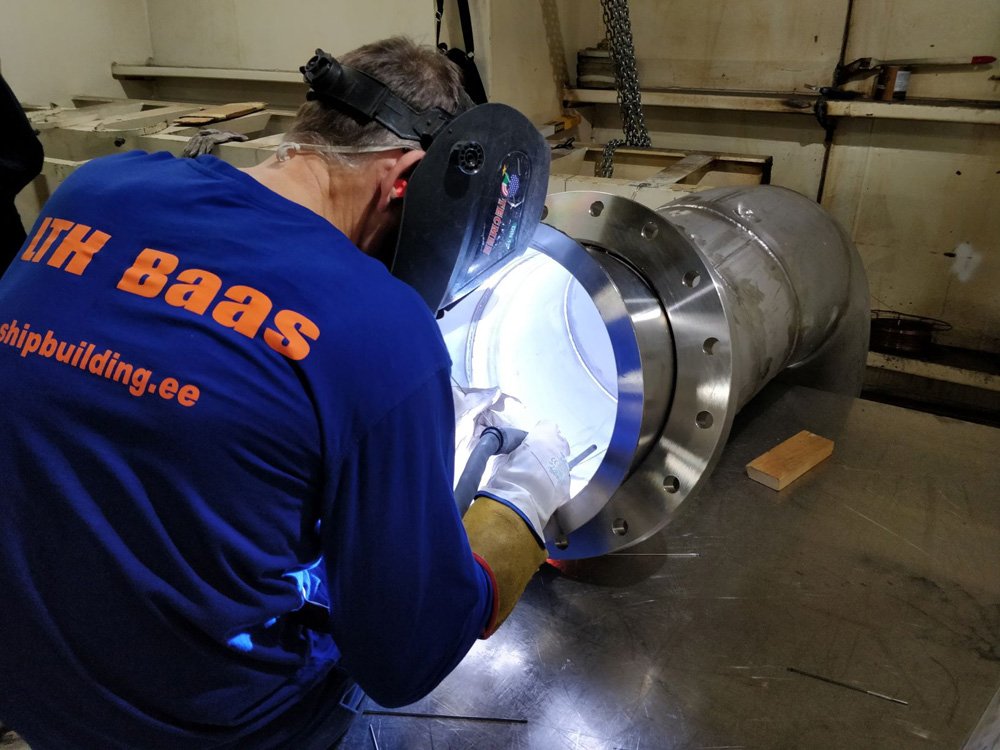
In addition to methanol challenges, the sector is facing a growing need for practical decarbonization through continuous onboard improvement. LTH Baas has extensive experience in passenger ship retrofits and newbuild outfitting, and its approach is rooted in a practical challenge facing the industry: operators are under growing pressure to improve energy efficiency in ways that make both technical and commercial sense.
LTH Baas is focusing on energy-efficient solutions that support that shift, from waste heat recovery to improving HVAC performance – one of the largest energy consumers onboard. Rather than treating decarbonization as a dramatic technological break, the company’s approach is based on practical evolution: step-by-step improvements that reduce energy waste and improve vessel performance in commercially sensible ways.
Another area where practical onboard choices matter is interior weight. In passenger vessels, lighter materials help improve overall efficiency, which makes weight-saving solutions valuable even in spaces like bathrooms. Eumar Design addresses that need with lightweight bathroom and interior solutions based on its proprietary GelCeramic Lightweight® technology, which has antibacterial properties and reduces weight by up to 50 percent. The company’s approach supports fuel efficiency, hygiene, durability, and onboard comfort, making it relevant for owners looking at long-term efficiency as well as aesthetics.
Digitalization and the use of AI are also becoming part of retrofit and operational competitiveness. Inspirators! develops AI-powered engineering tools for shipbuilding, offshore industries, and contract manufacturers, helping teams work faster and more accurately. Its FutuDraw Automatic BOM module generates bills of materials directly from specifications, drawings, and customer orders, allowing engineering teams to speed up workflows and reduce errors.
Smarter ports and more resilient infrastructure
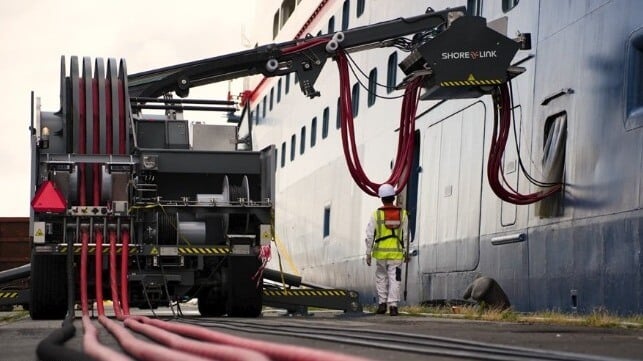
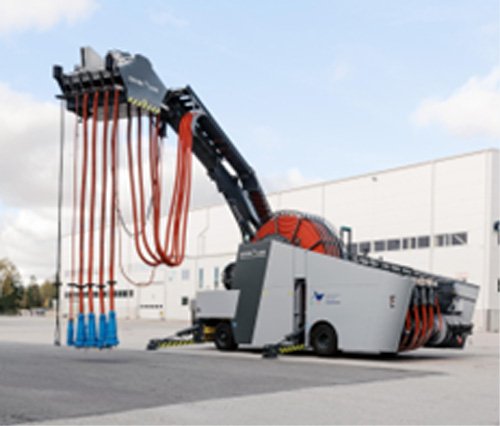
As ports face growing pressure to reduce emissions, one of the clearest near-term challenges is how to electrify vessels at berth in a way that is reliable and practical to operate. ShoreLink addresses that need through shore power and shore charging solutions designed to support port decarbonization. The company develops advanced cable management systems for a wide range of vessel types, including cruise ships, and its solutions are already in use internationally. As shore-side electricity moves from pilot concept to expected infrastructure, this is becoming an increasingly relevant part of the maritime transition.
Ports and other maritime infrastructure face another long-term challenge: concrete structures need to withstand water, pressure and time without becoming maintenance-heavy or vulnerable to failure. Primostar Group addresses that with advanced waterproofing and profile solutions designed for concrete and underground infrastructure in ports. Rather than relying on external membranes alone, the company focuses on long-life watertight concrete performance, controlled crack design and solutions that help reduce installation time, complexity and labor costs.
Taken together, these examples reflect a broader reality across the maritime sector: the transition will depend less on new ideas alone and more on how existing solutions can be implemented at scale. Much of the technology already exists, but the real challenge lies in making it commercially viable, practical to use and coordinated across ships, ports and infrastructure. That is also why many of the most relevant near-term measures are not futuristic concepts, but solutions that can be applied already today.
About Trade Estonia
As part of Enterprise Estonia, the official governmental business and innovation agency, Trade Estonia connects enterprises to a dynamic, innovation-driven economy, providing access to
global markets. Trade Estonia also serves as a gateway for foreign enterprises seeking sourcing opportunities in Estonia, offering e-consulting services and facilitating connections with leading Estonian companies.
This project is funded by the European Union – NextGenerationEU and organized in collaboration with the Ministry of Foreign Affairs of Estonia.

This article is sponsored by Trade Estonia.
The opinions expressed herein are the author's and not necessarily those of The Maritime Executive.
