
On Day One of Posidonia, NZF and Strait of Hormuz Are at Center Stage
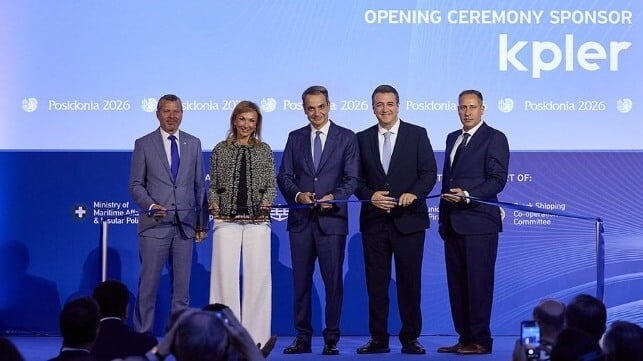
At the first day of the Posidonia conference in Athens, the contours of the Western shipping industry's biggest gathering became clear: This will be the biggest Posidonia ever, following on the heels of the biggest Marintec China conference ever - a sign of the industry's health and growth.
Against a backdrop of geopolitical uncertainty (and rising airfare prices), 2,200 exhibitors have descended upon the Athens Metropolitan Expo center in order to meet an estimated 40,000 attendees over the span of five days. Collectively, they are expected to spend more than $100 million on food, lodging and transport around the region - but the deals signed at the show should be worth far more.
On the first day, talk quickly turned - as might be expected - to the question of decarbonization and the future of the IMO Net Zero Framework (NZF). The regulatory scheme has critics in some quarters of Greek shipping, as it would have unpredictable effects on profitability and operations, and could create difficulty for planning fleet expansion.
In an opening keynote address at a Capital Link event on Monday, Greek maritime affairs minister Vasilis Kikilias called for IMO member states to go slowly, listen to shipowners and "be reasonable" on decarbonization policy. "This will allow us to gain time, to discuss, and gradually reach a real decision at the IMO on the important and serious issues. First and foremost, safety," Kiliakis told the audience. He was followed later in the day by three prominent tanker owners from Saudi Arabia and Greece, who voiced their opposition to the emissions plan, and by IMO Secretary General Arsenio Dominguez, who expressed confidence in its long-term success and pushed back on any "negativity" about the prospects for an emissions regulation system.

that matters most
Get the latest maritime news delivered to your inbox daily.
The situation in the Strait of Hormuz also figured prominently - especially the effects on seafarers trapped inside the Arabian Gulf. "The first objective is always to seafarers, to engage, so they can actually leave the conflict zone," said Dominguez.
Views on timing vary, but many owners appear confident that a ceasefire deal and a reopening of the waterway are within view. "I am quite optimistic that waiting for a couple of weeks or a month, a solution will be found," said leading Greek tanker owner Evangelos Marinakis hopefully.