


IMO Approved Echosounder and Speed Log System With a Single Sensor
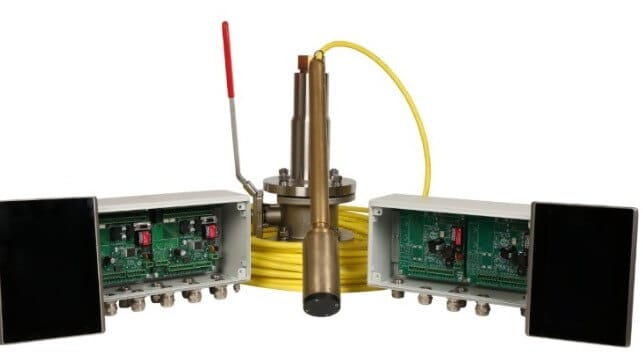
In an industry where vessel efficiency, space, and technical service cost optimization are becoming the new standard, Istanbul-based Elektro Deniz has been producing a solution that challenges traditional bridge structures. The EDEL-EMES60 product range, a pioneering combined Echosounder and Speed Log system, aims to replace the maritime industry’s reliance on redundant hull penetrations with a single-sensor approach. In addition to the combined configuration, the product family also offers standalone Echo Sounder and Electromagnetic Speed Log units, allowing operators to select the configuration that best suits their operational requirements.
Disrupting the "Separate Sensor" Norm
For decades, shipbuilders and operators have accepted a costly status quo: one transducer for water depth (Echo Sounder) and another for speed through water (Speed Log). This "separate-but-equal" approach has historically meant double the cabling, double the hull risk, and significantly higher dry-dock costs during maintenance.
The EDEL-EMES60 disrupts this paradigm. By merging these two critical navigational streams into a single integrated unit, Elektro Deniz provides a "out of box" solution that optimizes everything from the engine room wiring to the bridge display interface.
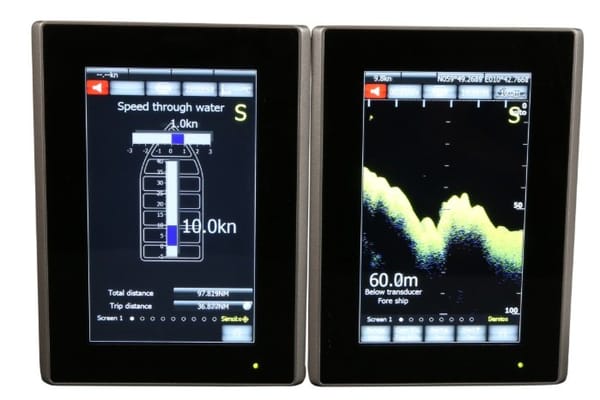
Strategic Advantages for Modern Fleet Management
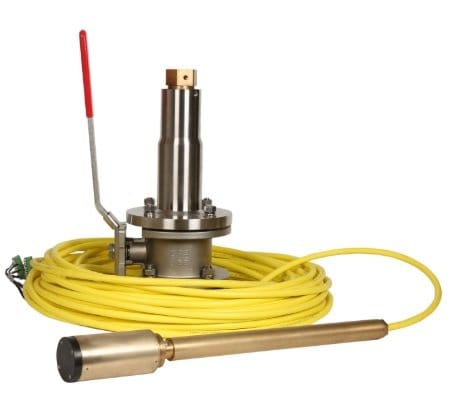
Minimized Hull Risk & Cost: Retrofitting a vessel often requires expensive dry-docking to drill new hull penetrations. The EDEL-EMES60 reduces the required penetration, lowering labor costs and structural risks, a critical advantage in shipyard workflows where every hour counts, by combining both echo sounding and speed logging capabilities into one unit. The system provides a dedicated sea valve assembly, enabling secure hull penetration management and facilitating safe servicing operations during maintenance procedures.
Operational Efficiency: With fewer components comes a reduced "mean time between failures." That means fewer points of failure, and smoother integration with bridge systems (e.g., ECDIS, autopilots). By simplifying the onboard electronics architecture, marine technicians can diagnose and maintain systems with greater speed and accuracy.
Remote Operation Capability: With additional designation and by supporting integration with remote command and control centers, the system can allow real-time data transmission and operational management from shore-based or centralized monitoring stations. The remote command and monitoring capability offers enhanced efficiency, safety, and centralized control, making it especially valuable for offshore operations, fleet management networks, and naval applications.
Global Regulatory Compliance: Safety is non-negotiable. Equipment installed on commercial vessels must comply with international safety standards, notably those outlined by the International Maritime Organization (IMO) and reinforced through SOLAS regulations. The system supports a wide range of modern and legacy I/O interfaces, including IEC 61162-1/2 and IEC 61162-450 (lightweight Ethernet), ensuring compatibility with existing navigation equipment. The EDEL-EMES60 product range carries IMO Wheelmark, MED-B, and MED-C certification and sticks by SOLAS regulations, ensuring that vessel operators meet international safety standards and gain easy approval from flag state authorities and classification societies.
Modular Versatility: Tailoring the Vessel Class
The EDEL-EMES60 series is built on a modular philosophy. This allows shipyards or retrofit specialists to specify the exact configuration needed for everything from small workboats to large commercial vessels.
The EDEL-EMES60 range offers distinct modular configurations to suit varied vessel needs, including a combined Echosounder & Speed Log unit, a standalone Echosounder (EDEL-EMES60-ES), and a standalone Speed Log (EMES60-SL). Each option serves different operational requirements, so the shipowners can select the most appropriate setup.
Combined Echosounder & Speed Log Unit: The base configuration that merges echo sounding and speed logging in one unit. Its dual-purpose transducer feeds data back to a unified processing module with industry-standard digital interfaces for bridge integration.
Echosounder (EDEL-EMES60-ES): For vessels or applications where only depth measurement is required, the echo-sounding variant provides IMO-compliant depth data with a robust transducer operating at marine-grade frequencies.
Electromagnetic Speed Log (EMES60-SL): Some operators prefer separate speed logging units, especially in fleets with specific performance tracking needs. The electromagnetic version delivers precise relative speed measurements with a rugged design and reliable performance by sea through water ( STW ) feature.
|
Configuration |
Best For |
|
EDEL-EMES60 |
New builds, yachts, and major refits seeking maximum integration. |
|
EDEL-EMES60-ES |
Vessels requiring robust, standalone, IMO compliant depth data. |
|
EDEL-EMES60-SL |
Performance-focused fleets need precise electromagnetic speed tracking. |
Beyond these configurations, Elektro Deniz engineers emphasize modular integration, allowing shipyards or retrofit specialists to specify the combination of displays, processing units, remote control, and interfaces needed for different vessel classes. This adaptability underscores the product line’s suitability for a range of applications, from small workboats to larger commercial and offshore support vessels.
The Future of Navigation is Integrated
As the maritime industry moves toward smarter, more connected vessels, the demand for compact, multi-functional hardware is increasing. The EDEL-EMES60 represents a significant step forward for shipyards looking to reduce complexity and for owners looking to future-proof their assets against rising operational costs.
For more information or sales enquiries, please contact Hanife Diktas, International Sales Manager at [email protected] / [email protected].
This content is sponsored by Electro Deniz.
The opinions expressed herein are the author's and not necessarily those of The Maritime Executive.
