
Wreck of 19th Century Schooner Resurfaces on New Jersey's Shores
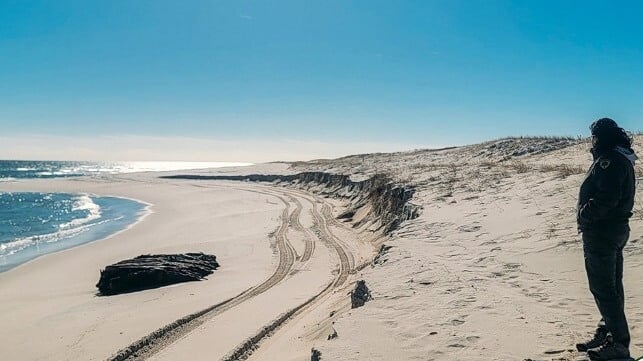
The shipwreck of a 19th century schooner has been uncovered by stormy weather on the beaches of New Jersey, a rare occurrence that rekindles the memories of trade between the U.S. and Latin America over a century ago.
New Jersey State Parks reports that the remnants of the Lawrence N. McKenzie schooner have become exposed and visible at Island Beach after weeks of rough surf and persistent wind and wave action.
Historical records at the New Jersey Maritime Museum indicate that the Lawrence N. McKenzie was a 98-foot schooner in the fruit trade. She was traveling from Puerto Rico to New York City when she wrecked on March 21, 1890. The schooner was transporting a cargo of oranges manned by a crew of eight, all of whom survived the casualty.
The records show the vessel was built in Essex, Massachusetts, in 1883 and listed her homeport as Provincetown. Valued at $9,000 when she was built, the vessel was declared a total loss when she was wrecked.
About 135 years later, the shipwreck has emerged from the sands again. The park explained that beach erosion during the winter months is a common occurrence at Island Beach, something that is part of a natural, cyclical process.
“Each year, high-energy waves and seasonal storms remove sand from the shoreline, resulting in narrower beaches and steeper profiles. Most beaches recover from the erosion during the calmer summer months — but for now, this winter’s erosion has revealed a glimpse into the park’s maritime history,” said New Jersey State Parks in a social media post.

that matters most
Get the latest maritime news delivered to your inbox daily.
The agency said that it is monitoring the area and reminded visitors to respect historic artifacts and cultural resources. Touching or removing pieces of the wreck are prohibited.
Island Beach is one of New Jersey's last significant remnants of a barrier island ecosystem that once existed along much of the coast. It is also one of the few remaining undeveloped barrier beaches on the northeastern coastline, and it attracts nearly a million visitors annually.