
Port of LA Displays Resilience, Achieving Third Best Year in 2025
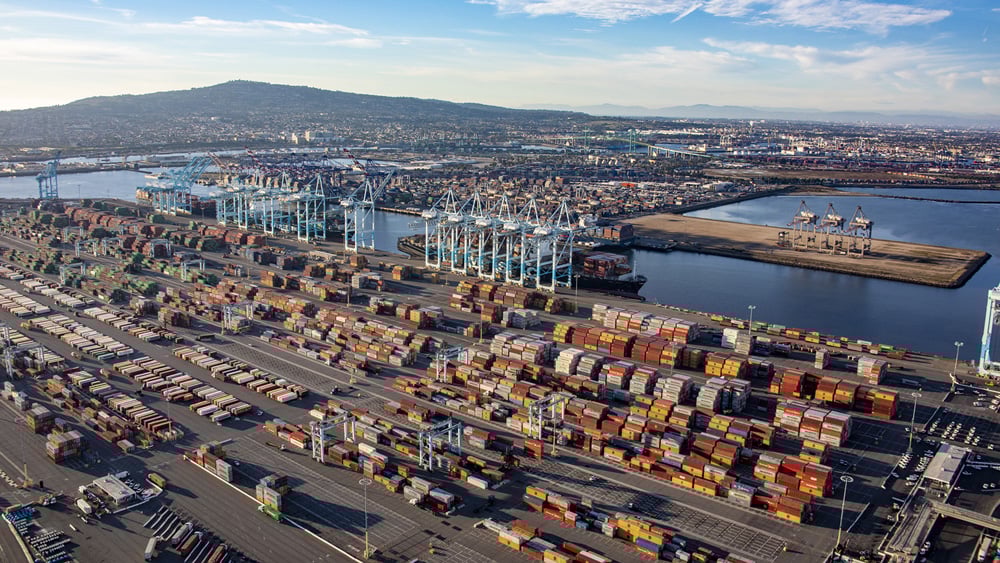
The busiest port in the U.S., Los Angeles, is feeling the pressures of a redrawn global trade map due to shifting policies. While recording flat growth in container throughput in 2025, a year the port contends was characterized by uncertainty and volatility, it still achieved its third-best year in history in its 118-year history.
Despite maintaining its position as the top U.S. port for the 26th consecutive year and the only North American port to exceed 10 million TEU in a year, Los Angeles saw its container throughput take a one percent dip to 10.2 million TEU.
For Los Angeles, which commands about 17 percent of the total containerized waterborne international trade in the U.S., 2025 presented a mixed bag. While June saw the port record an eight percent increase in throughput to handle 892,340 TEUs and go down in history as one of the busiest months, December was a rather bleak month, posting a 14 percent decline to 791,587 TEU.
While presenting the 11th annual State of the Port status report, Port of Los Angeles Executive Director Gene Seroka admitted that 2025 was a rollercoaster year characterized by accelerated dips in volumes to record highs, specifically due to the uncertainties caused by Donald Trump’s erratic tariff wars. In July, for instance, Los Angeles recorded another busy month after handling one million TEUs, 8.5 percent more than the same month in 2024, but it was largely because retailers and manufacturers rushed to bring in goods at an elevated pace due to concerns of higher tariffs.
“Shifting trade policies are creating uncertainty and volatility, and the maritime supply chain is at the center of it all,” said Seroka, adding that the positive takeaway from the year is that fact that cargo remains the lifeblood of the U.S. economy. “American farmers, manufacturers, retailers, and consumers all depend on how well we move that cargo.”
Seroka went on to outline his vision for the future, which he believes will be anchored on “Build Bigger and Build Smarter” investment priorities in line with anticipated future cargo demand. The port will focus on infrastructure, technology, community, and the environment.
Part of the infrastructure projects includes the proposed expansion of Pier 500 marine container terminal that is expected to significantly increase the port’s overall cargo capacity. The terminal will be constructed on a 200-acre site with two new berths and approximately 3,000 linear feet of new available wharf. It is designed to increase cargo efficiency in addition to allowing for bigger, next-generation containerships to call at the port.
“Pier 500 would be the first new container terminal to be developed at the port in a generation,” noted Seroka. “We envision it to be the greenest, cleanest terminal in the world. It will be an investment in our workforce, sustainability, resilience, and innovation—keeping us ready for the opportunities of tomorrow.”
Los Angeles also intends to implement other infrastructure projects, including a dedicated hub for chassis parking and container pick-up and drop-off, and expansion at Fenix Marine Services terminal on Pier 300. It also proposes wharf and rail upgrades at the LA TiL Container terminal.

that matters most
Get the latest maritime news delivered to your inbox daily.
Another key focus in 2026 will be on expanding the port’s growing cruise business. Having handled a record 1.6 million passengers and 241 cruise calls last year, Los Angeles is anticipating growth in its cruise business in the future. Pacific Cruise Terminals, a joint venture between Carrix and JLC Infrastructure, has been selected to develop a massive new cruise terminal to be located at the outer harbor.
Though Los Angeles remains focused on future growth, the plans are intertwined with environmental goals. The latest emissions report shows that the port had achieved the lowest emissions ever on a per-TEU basis of any port in the world. The port contends that upcoming projects are expected to help further those gains.