NTSB Calls for Better Regulation of USV Navigational Safety
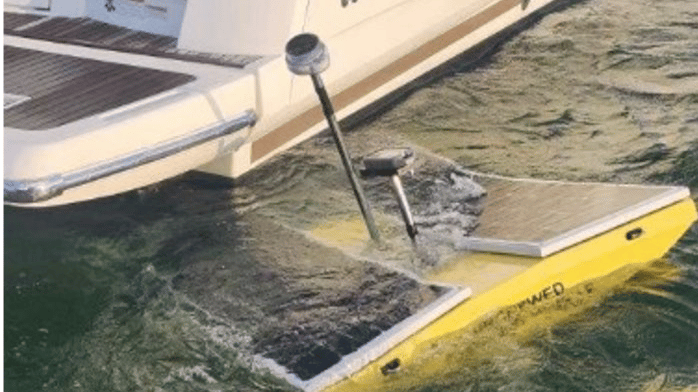
Following an inquiry into a 2024 collision, the National Transportation Safety Board has recommended changes to the manner in which small unmanned vessels are marked and operated in order to ensure safety of navigation.
The casualty involved a 16-foot research USV with low freeboard, the surfboard-shaped SeaTrac SP-48. On the evening of August 10, 2024, an SP-48 operated by a NOAA research center was operating on Lake Erie at a position about five nautical miles off Monroe, Michigan. It was under remote control by a pilot based on shore, who was working from his personal residence. The USV had its navigational cameras and video recording features turned off, and it was in a "hold mode" designed to keep it in position. The area of operation off Monroe is a transit route for larger recreational boats and sees regular traffic.
At about 1912 hours, a 45-foot recreational boat approached at about 20 knots and hit the USV, causing the boat to heel to one side and throwing the operator to the deck. Underneath the hull, the USV disintegrated from the force of the impact, and it caught up in and fouled one of the boat's propellers. The operator pulled back the throttles to all stop. Luckily the hull was intact and there was no flooding, and the boat was towed to a nearby Coast Guard station in Toledo for inspection.
The boat operator sustained minor injuries, the boat itself suffered about $100,000 in damage and the SP-48 was a total loss at a cost of about $186,000.
The vessel rapidly heeled, and this abrupt motion threw the operator from the conning station to the deck near the centerline of the vessel. The operator pulled himself up, grabbed the helm, and reached for the throttles immediately. He successfully positioned both throttles in the stop position, then contacted a towing service for assistance.
NTSB found that the recreational boat had been operating without AIS, radar or chart plotter turned on - making it fully compliant with regulations for a vessel of that size. The operator had six decades of boating experience and had completed safe-boating training multiple times. AIS would have revealed the SeaTrac USV's position and movements; the operators were unsure whether the USV would have shown up on radar, but NTSB concluded that the vessel's fiberglass construction meant that it would likely have had little radar return.
NTSB determined that the SeaTrac USV was minimally visible to boaters, with just one foot of freeboard in three-foot wave conditions. At one hour before sunset, and at cruising speed, the 45-foot boat's operator would have had a limited chance of spotting the USV, NTSB concluded.
"Because the operator of the recreational vessel could not easily perceive the [NOAA] USV, he could not act appropriately to avoid the collision," NTSB concluded. "Given [NOAA's] operation of the SeaTrac SP-48 USV in an area offshore frequented by recreational vessels, the USV’s visual, electronic, and auditory perceptibility were inadequate."

that matters most
Get the latest maritime news delivered to your inbox daily.
NTSB recommended that SeaTrac should modify the SP-48's design to make it more visible. It also determined that the NOAA operator had not adequately assessed the risk to navigation from operating the USV in the prevailing traffic in the area; further, the investigators concluded that the USV had not been adequately monitored while in "hold mode" and had been operating without a proper lookout, making it a hazard to navigation.
More broadly, NTSB advised the U.S. Coast Guard to "develop and promulgate a national framework of perceptibility, collision avoidance capability, and navigational safety standards for uncrewed surface vessels."