
Canada’s West Coast Ports Drive Trade Growth Beyond the U.S.
As it finds itself locked in a deepening trade war with the United States, Canada is successfully building its international trade. A newly released study sponsored by Canada’s West Coast ports shows that they are playing a critical role in growing foreign trade as the Canadian government highlights that it is investing in the country’s seaports.
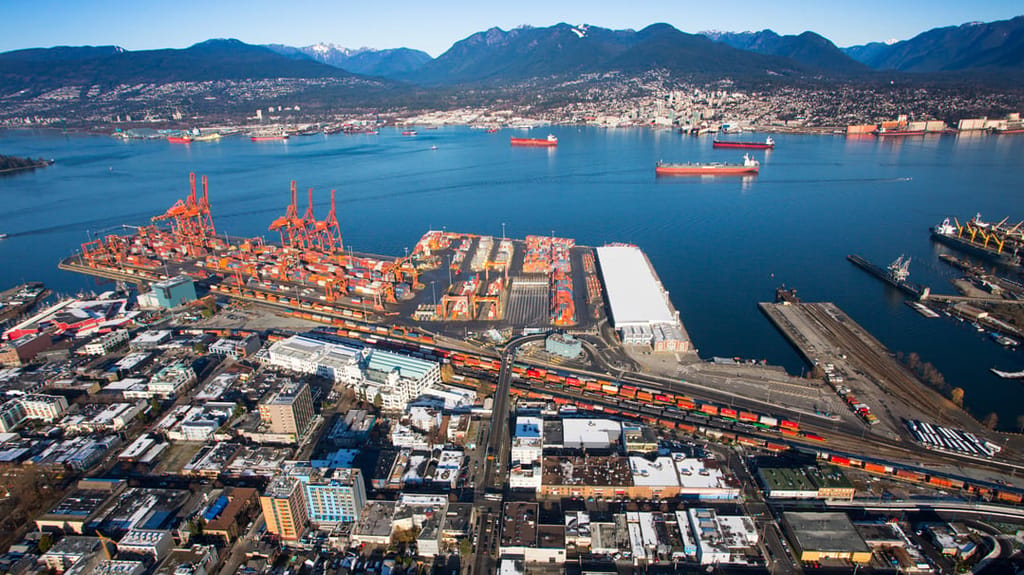
The Economic Impact of West Coast Ports study, released today, August 26, highlights that British Columbia’s maritime gateways at the ports of Vancouver, Prince Rupert, and Nanaimo (sponsors of the study along with two trade associations) serve as the backbone of Canada’s international trade. The three ports handled more than 200 million metric tonnes of cargo in 2025 worth C$409 billion (US$295 billion), of which C$270 billion was Canada’s trade with overseas trading partners, or nearly half of Canada’s trade with markets outside North America.
The ports highlight that they are moving record volumes of what Canadians make, mine, harvest, and grow to global customers in more than 170 overseas markets. They handle a diverse mix of cargo, supporting the movement of everything from bulk exports of Canadian energy, forestry products, potash, grain, and critical minerals to two-way container trade and imports of Asian-made vehicles, manufacturing parts and household necessities.
Not included in the study, but also a key contributor was the opening of Canada’s LNG export terminal. It is the only North American Pacific Coast LNG terminal and is expected to make strong inroads into Asian markets. It is being followed by others and offers the advantage of shorter distance and eliminates the need to transit the Panama Canal.
“West Coast ports like Vancouver have an outsized role to play as Canada looks to double exports to non-U.S. markets over the next 10 years in support of a thriving national economy,” said Peter Xotta, President and CEO, Vancouver Fraser Port Authority.
The Port of Vancouver, with its 29 major deep-water terminals, is active in five key sectors: auto, bulk, breakbulk, container, and cruise. To the north, the Port of Prince Rupert handles raw materials as well as containers, and the Port of Nanaimo, located 30 nautical miles from the Port of Vancouver, is emerging on the Pacific coast. It supports containers, auto, bulk, breakbulk, cruise, and logistics services.
Canada's new government highlights that it is “laser-focused on building a stronger, more independent, more resilient Canadian economy.” Speaking on Monday, August 24, Prime Minister Mark Carney highlighted the government’s commitment to the ports. In the east, he pointed to the expansion of the Port of Montréal at Contrecoeur with a new container terminal and at the Port of Québec to move more Canadian products to global markets.

that matters most
Get the latest maritime news delivered to your inbox daily.
Port of Vancouver officials highlight their planned Roberts Bank Terminal 2 to expand container capacity as well as the new federal Port of Vancouver Gateway strategy that is currently being developed. Similarly, the Port of Prince Rupert points to C$3 billion (US$2.2 billion) in ports underway that will expand capacity and support diversification.
The West Coast ports are highlighting their economic contribution to Canada and the role they are playing in expanding Canadian trade globally. The full report is posted online.
