
India Maps 5-Year Plan to Build Shipping Independence with 100 New Ships
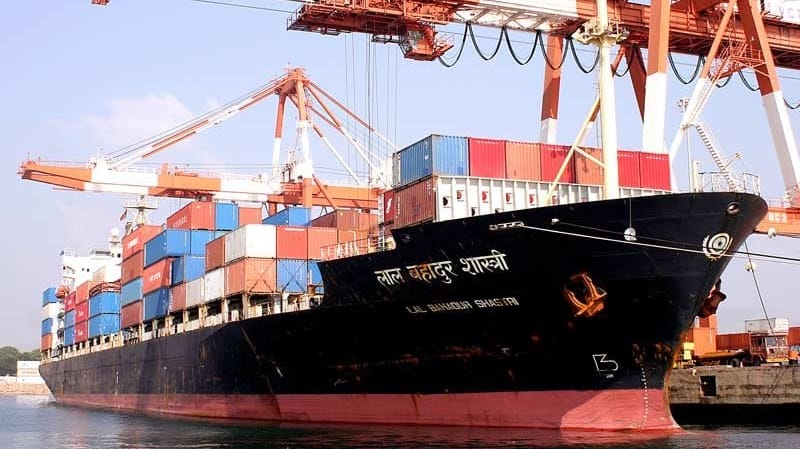
The Indian government continues to pursue its vision of expanding its national shipping capabilities as part of a plan to achieve greater independence and lower the amount of money spent on foreign shipping. The reconstituted National Shipping Board hosted a new dialogue to bring together members of the industry and government to map the strategy for shipping independence.
The National Shipping Board was first formed in 1958 with a goal of ensuring the industry was represented in India’s shipping policy. As part of Indian Prime Minister Narendra Modi’s vision to grow the shipping industry, the board was reenacted as part of the Merchant Shipping Act of 2025. It has a role to advise the Ministry of Ports, Shipping & Waterways.
During the day-long conference chaired by the Minister of Shipping, Sarbananda Sonowal, they brought together shipowners, financiers, government officials, and members of the community, including cadets from India’s maritime training institute.
They are looking to decrease dependence on foreign-flag shipping and shipping costs through the addition of up to 100 vessels over the next five years. The Prime Minister’s vision also calls for quadrupling India’s port capacity to 10,000 million tonnes by 2047.
The Union Minister of State for Ports, Shipping and Waterways, Shantanu Thakur, presided over a panel discussion titled "Augmentation of Indian Tonnage: Opportunities and Challenges.” It explored the challenges to achieving the goals of the government.
"India pays close to $75 billion every year in freight to foreign shipping lines, to move cargo as critical as our crude oil, our gas, our coal and our urea," said Shantanu Thakur. "That is not a performance problem for Indian shipowners, it is a competitiveness and demand-partnership problem.”
Panelists told the minister that flying the Indian flag remains 16 to 20 percent costlier than operating under a foreign one. They attributed the higher costs to India's tax on ship imports and maintenance services, tax deducted at seafarers' wages, tax on freight, and higher domestic capital costs, expenses foreign competitors do not carry. They also highlighted that Indian owners are still expected to match foreign freight rates to win cargo.
Another key issue that was discussed was the status of India’s seafaring workforce. Issues including wage taxation, pension gaps, and welfare provisions for seafarers were discussed. The government reports it is expanding training for seafarers. It looks to create wider employment pathways, address gender disparity, and equip the workforce with skills for emerging segments such as cruise shipping and advanced shipbuilding.
The government has already taken key steps, announcing new financing and support efforts. It also overhauled the cabotage regulations. During the conference, it pointed to the Container Manufacturing Assistance Scheme, highlighting that Maersk, for example, has now ordered containers built in India.

that matters most
Get the latest maritime news delivered to your inbox daily.
"I welcome the National Shipping Board's five-point roadmap, fiscal reform, assured cargo support, access to competitive financing, regulatory streamlining, and a genuine ease of doing business," Sarbananda Sonowal said. "Taken together, these are not five separate tasks; they are the architecture of a nation choosing, at last, to own its own trade.”
The panel proposed a five-pillar roadmap: fiscal reform, assured cargo support, access to competitive financing, regulatory streamlining, and improved ease of doing business (EODB). It said that if the measures are adopted, it could help India add 100 ships to its fleet within five years, and achieve its goal of ranking among the world's top five ship-owning nations.
