

US to Restart Iran Blockade and Become “Guardian of Hormuz,” says Trump
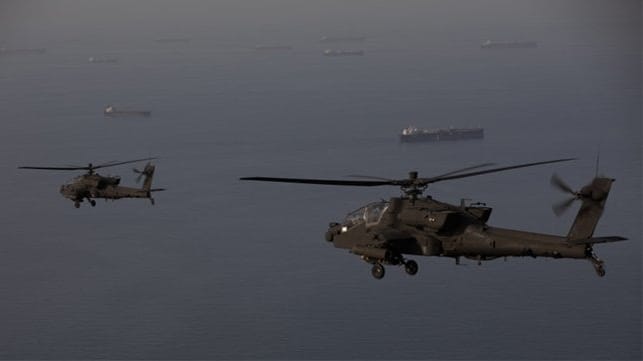
The United States is going to move decisively to take over the Strait of Hormuz and maintain, for a fee, the safe freedom of navigation, Donald Trump said in his latest social media posting. It comes after the United States launched a fourth round of strikes on Iran after yet another containership was struck attempting to make the passage out of the Persian Gulf.
Trump’s message announced the resumption of the blockade on Iranian ports, which had been anticipated in the past few days as a likely U.S. action. Observers on Friday spotted that both the carriers, USS Abraham Lincoln and USS George HW Bush, appeared to have been moved back into positions to support a resumption of the blockade.
The blockade reportedly will resume immediately, with Trump saying it would be “stopping Iran’s ships or customers from entering or leaving.” The blockade, which had started in late April, was suspended in mid-June when the Memorandum of Understanding was signed. U.S. Central Command reported that a total of 142 ships had been redirected and nine disabled for not following instructions. Trump had said last week that the ceasefire was over as far as he was concerned. CENTCOM later announced that the blockade will go into effect as of 4 p.m. ET on July 14.
“The U.S.A. will be, from this point forward, known as 'The Guardian of the Hormuz Strait’,” wrote Trump online. He asserted the Strait is open and remains open. He said all countries other than Iran and its customers will have access to the Strait.
After the United States’ asserting for weeks that there should be no fees for the transit, Trump today announced, “As a matter of FAIRNESS, (the US) will be reimbursed, at the rate of 20 percent on all cargo shipped, for any and all costs necessary to do the job of providing safety and security to this very volatile section of the world.” There was no explanation on how the process would work, but he said it would begin immediately.
Despite the protestations that the Strait is open and ships are making the transit, data shows that traffic is largely at a standstill. MarineTraffic’s analysis said there was a sharp decline over July 10-12, with vessel transits down approximately 52 percent week over week. Further, it says vessels are going dark or transiting on the Iranian route, with the Omani corridors at minimal levels.
Traffic overnight into Monday continued to fall, according to data from Windward AI. It said just three vessels had made the transit in the past 12 hours. Two were flying the flag of Comoros and coming from positions near Iran. The third had no IMO record.
Iran had said overnight that it was totally closing the Strait of Hormuz again after additional U.S. attacks. CENTCOM reported on Sunday morning having hit 140 targets and overnight said dozens more were struck. The statement cited strikes on air-defense systems, coastal, radar, missile and drone capabilities, and small boats used by the IRGC.
CENTCOM also reported that the United States, for the first time, uses one-way surface drones. It said the Bandar Abbas Naval base was struck using the drones and that a submarine and ship maintenance facility were damaged.

that matters most
Get the latest maritime news delivered to your inbox daily.
World markets were rattled by the news of the resumption of the blockade. Oil prices immediately jumped about five percent.
Iran, however, appeared to have rushed to get as much of its stored oil and products out of the Gulf, anticipating moves by the U.S.. TankerTrackers.com is now reporting Iran shipped more than 80 million barrels of crude and refined products during the 26-day pause in the blockade. It estimates the value of the shipments at more than $6 billion. TankerTrackers.com, however, reports Iran has as many as 30 million additional barrels of crude loaded that have not yet been shipped. It also notes that Iran has more than 60 million barrels of floating storage capacity available.