

Treasury Blacklists Six More LPG Carriers for Moving Iranian Gas
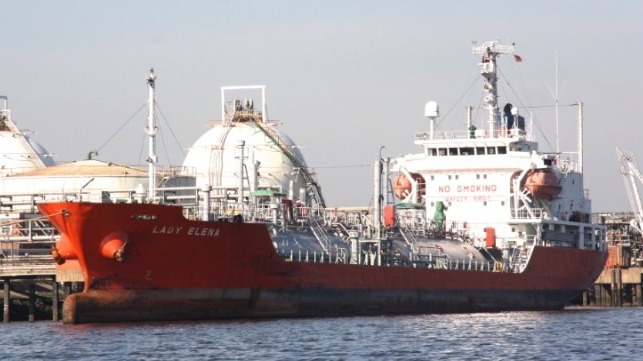
On Friday, the U.S. Office of Foreign Assets Control put sanctions on six more Iran-linked LPG carriers, adding to the long list of blacklisted vessels with connections to Iran's petroleum industry.
The vessels listed on Friday include the MD 23 (IMO 9158240), which has been moving Iranian LPG since 2023, according to the Treasury; Glendale (IMO 9139945), responsible for moving millions of barrels of LPG since 2020; Amir Gas (IMO 9167409); Gas Lagoon (IMO 9386304); Mile (IMO 8910897); and Gaz GMS (IMO 9131539).
"Iran’s economy is floundering and its military is decimated," said Secretary of the Treasury Scott Bessent in a statement. "Through Economic Fury, Treasury will continue to sever Iran’s shadow fleet, shadow banking networks, and access to global trade."
Also sanctioned were a variety of energy traders who operate out of the UAE's free zones, where much of the office infrastructure for gray-market Iranian and Russian exports can be found. Though it has been the biggest regional target of Iranian attacks, the UAE hosts countless "shadow fleet" shipowners and anonymous trading houses that make Iran's sanctions-busting exports possible. In this round, Treasury sanctioned Afghan national Sarbaz Abdul Zada and Turkish national Mohammad Shakol Mihandoust, who allegedly operate multiple front companies in the UAE and have exported millions of barrels of Iranian LPG into Asian markets. Frequently, these cargoes were misrepresented as "Omani" LPG in order to circumvent sanctions restrictions. Treasury named four of their firms: Sahel Star Oil and Gas Company LLC, Butani Trading LLC, Dundlod Trading FZE and ADH Energy FZE. Mihandoust allegedly has a China-based subsidiary as well, Shanghai Qianye Energy Co.

that matters most
Get the latest maritime news delivered to your inbox daily.
Treasury also revealed a new detail about the means that these sanctions-busting executives use to move abroad and set up networks of front companies. To avoid scrutiny, some Iranian expatriates who work in the black-market oil trade will buy new national identities using citizenship-for-investment schemes. In the specific case illustrated by Treasury, an Iranian exchange house broker allegedly selected a citizenship program operated by a Caribbean island nation that offers foreigners "robust legal protections, tax benefits, enhanced global mobility and citizenship for life" in exchange for a $200,000 real estate investment.
Top image: Stan Laundon / VesselFinder