


The Odds of Renewed Hostilities With Iran are Increasing
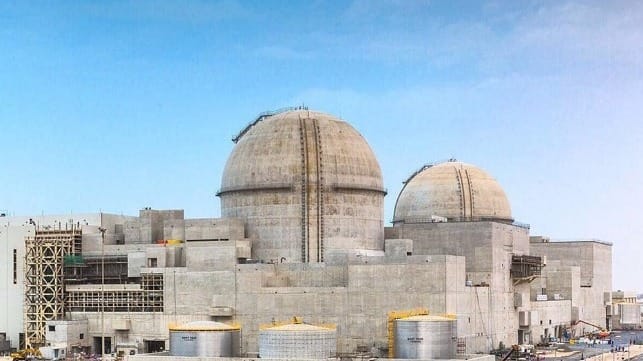
In a worrying harbinger of a possible collapse of the ceasefire in the Gulf, Iran (through its proxies) appears to have mounted an attack with three drones against the nuclear plant at Barakah, located on the coast 150 miles west of Abu Dhabi and close to Qatari and Saudi territory. A small fire was caused outside the nuclear site's secure area by one of the drones, but no damage was done to the reactors themselves, and they remain operational.
The nuclear reactors are probably the most significant targets in the United Arab Emirates, and the attack is a signal of very high tensions between Iran and the UAE. Only the fact that the attack was mounted with drones rather than missiles kept the profile of the attack just below that which would have entailed a full-scale response by the UAE military – which in turn would inevitably have brought in other members of the coalition ranged against Iran.
The four South Korean-built nuclear reactors at Barakah generate about 25% of the UAE’s total energy consumption, and are very heavily defended. The reactors were also constructed to withstand physical attacks.
Diplomatically, negotiations between Iran and the United States in Islamabad have been at an impasse for about a week, with President Trump’s visit to China a cause to delay any kinetic action. But with the talks in Beijing now over, with no obvious output regarding the ceasefire in Iran, the United States has in effect cleared the decks for its next move to resolve the crisis – one option being a resumption of military operations against Iran if there is not a greater willingness to negotiate.
Later on May 17, Saudi Arabia also intercepted three drones entering its airspace from the direction of Iraq. Taken with the likelihood that the drone attack on the UAE - which arrived from the west - was mounted from Houthi-controlled Yemen, this strengthens the assumption that these two coordinated attacks were orchestrated by Iran using its Axis of Resistance allies. Accordingly, the UAE has pointed the finger of blame at Iran for the attacks.
Separately, both Saudi Arabia and the UAE have differing agendas from that of the United States, and are less willing to compromise than the United States might be. Besides seeking payback for the expensive damage caused to key oil and gas infrastructure by Iranian drone and missile attacks (clearly aided by precise targeting information provided to the Iranians), at minimum the two leading Gulf states want to neutralize further threats to their countries once a settlement is reached. They also need to have free and unhindered access through the Strait of Hormuz, in accordance with the long-established and internationally-recognized IMO Traffic Separation Scheme. For these two countries, these are not "nice to haves," but a critical element of national security and economic prosperity, irrespective of what might be agreed between Iran and the United States. Both countries appear to be making preparations accordingly, and have demonstrated a willingness to launch retaliatory attacks on infrastructure targets in Iran in recent weeks.
Whether a move to break the ceasefire comes from Iran, Saudi Arabia, the United Arab Emirates or the United States, is anybody’s guess - the likelihood of it occurring is raised and currently very high.
For most parties to the conflict, maintenance of the current status quo cannot extend for many more weeks. The Iranian population is already feeling the impact of the blockade at street level. The plight of ordinary Iranians is unlikely though to move the Iranian hardline leadership. With Iran holding 125 million barrels of oil afloat, equivalent to about three months of export production, the Iranian leadership may think it can tough it out. But many of the protagonists may not want to wait that long, and hence a return to war may not be too far distant.

that matters most
Get the latest maritime news delivered to your inbox daily.
In this context, the US Air Force is continuing to make regular B-1B strategic bomber sorties from RAF Fairford in the West of England across France to the Eastern Mediterranean, employing the same flight paths that would be used should the ceasefire collapse and US attacks on Iran resume. These training flights not only keep flight crews well-prepared, but also generate a ‘normal’ level of activity which would make it difficult to identify an imminent attack. There are currently 15 B1-B Lancers at RAF Fairford, out of an operational fleet of about 40 aircraft in Global Strike Command. Open source aircraft trackers are also reporting heavy transport aircraft movements across Europe towards the Middle East.
Top image: Reactors at the Barakah power plant in the UAE (Wikiemirati / CC BY SA 4.0)

